
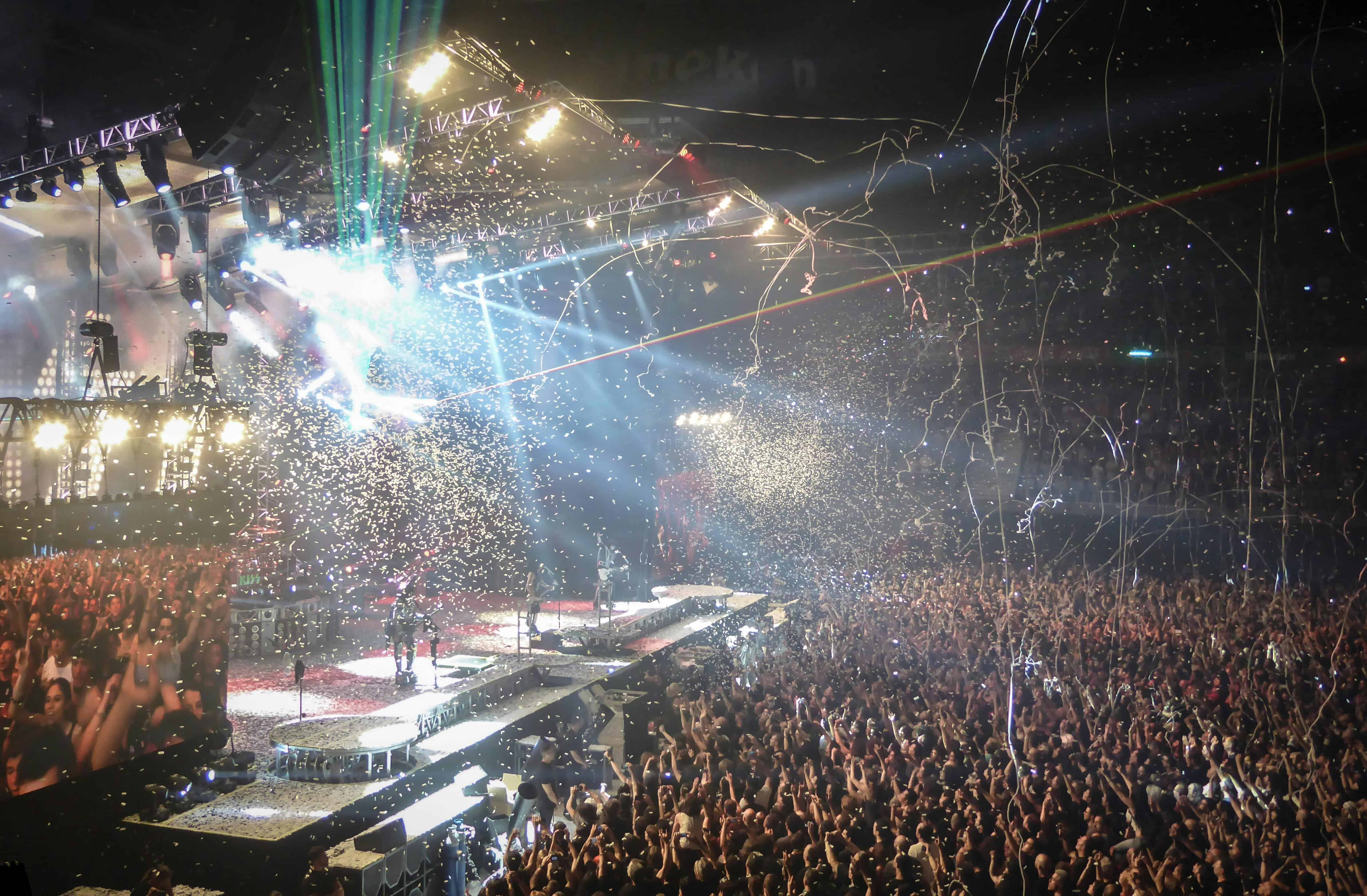
Why Concert Crowds Feel Uncomfortable Even When Nothing Is Actually Wrong
Most people assume crowd discomfort means something is about to go wrong. That assumption is what turns a manageable situation into a stressful one. In reality, most concert crowd discomfort comes from friction that your body doesn’t know how to resolve yet, not from danger.
Crowds feel fine when movement is predictable. Even when it’s packed, your body relaxes if pressure has somewhere to go. Discomfort shows up when movement stalls, when people stop without warning, or when you can’t tell whether the pressure around you will ease or increase. Your nervous system reacts to uncertainty faster than your thoughts can catch up.
This is why two crowds with the same number of people can feel completely different. One flows, sways, breathes. The other feels tense, sticky, and hard to read. The difference isn’t how close people are. It’s whether the crowd is functioning as a moving system or a stalled one.
When you don’t yet have language for what you’re feeling, your body fills in the gap with stress. Shoulders brace. Knees lock. Breathing gets shallow. None of that means the situation is unsafe. It means your body is waiting for information it hasn’t received yet.
Learning to read crowd movement gives your body that information. Once you can tell whether pressure is moving or stuck, whether you have options or not, the feeling usually settles on its own. You don’t need to force calm. You need clarity.
- Why Concert Crowds Feel Uncomfortable Even When Nothing Is Actually Wrong
- Where to Stand at a Concert If You Want Comfort and Control
- How to Read Crowd Movement Without Overthinking It
- Why Choke Points Are the Most Stressful Places in Any Venue
- How to Move in a Concert Crowd Without Making It Worse
- Concert Etiquette That Actually Improves Crowd Comfort
- How to Avoid Getting Separated From Friends in a Crowd
- What to Do If the Crowd Feels Too Tight
- When Crowd Discomfort Turns Into Panic
- Why People Regret Staying in a Bad Spot Too Long
- FAQ: Concert Crowd Questions People Actually Ask
Where to Stand at a Concert If You Want Comfort and Control
The best place to stand at a concert isn’t the closest spot to the stage. It’s the spot that gives you options. Comfort inside a crowd comes from having space to adjust, not from holding a position at all costs.
There are a few cues your body reads immediately, even if you’re not consciously thinking about them. Airflow matters more than people realize. When air can move, pressure feels lighter. Sightlines matter because seeing open space or exits reduces the feeling of being boxed in, even if you never plan to leave. Lateral space matters most of all. If you can step sideways without negotiating with three people, you’re in a spot that will stay manageable longer.
Edges of crowds tend to feel calmer because they allow pressure to escape outward. That said, edges stop being comfortable the moment they sit next to a bar line, bathroom entrance, aisle crossing, or stairway. Those areas look open, but they attract constant traffic, which creates sudden stops and unpredictable bumps.
The middle of the crowd is where intentions collide. Some people want to push forward, some want to hold space, others are just trying to pass through. That mix creates friction. It’s often why the middle feels more stressful than areas that are technically more packed.
A simple check you can do anytime is this: can you take one step sideways without effort or apology? If the answer is no, you’re already absorbing more pressure than you need to. Moving a little earlier, before discomfort spikes, almost always leads to a better experience than staying put and hoping the crowd settles.
How to Read Crowd Movement Without Overthinking It
You don’t need to analyze a crowd in detail to understand what’s happening. There’s only one question that matters, and your body usually knows the answer before your mind does: is the crowd moving, or is it stuck?
A crowd that moves as a system can be dense and still feel okay. Pressure comes in waves, releases, then redistributes. People sway, adjust, and make space without thinking about it. Even when you’re shoulder to shoulder, your body senses that pressure has somewhere to go.
A stuck crowd feels different. Movement stops, but pressure doesn’t. People brace instead of adjust. Small bumps don’t resolve, they stack. That’s when stress starts climbing, not because anything dangerous is happening, but because your body is being asked to hold force instead of sharing it.
Standing still for too long in a stalled area turns you into a pressure sink. Shoulders tighten. Knees lock. You might notice yourself holding your breath without meaning to. These are early signals that the spot you’re in has stopped working, not signs that you’ve done anything wrong.
The key is noticing those signals early. Small, calm adjustments made at the first hint of stiffness are far easier than trying to move once discomfort peaks. When you understand that feeling “off” usually means “stuck,” not “unsafe,” it becomes much easier to respond without panicking.
Why Choke Points Are the Most Stressful Places in Any Venue
Choke points are where concerts feel the worst, even when the crowd isn’t especially large. They form anywhere movement narrows or stops, not where the most people are standing.
Bars, bathrooms, stair landings, aisle crossings, and narrow gaps all interrupt flow. People slow down, stop to decide, or change direction, and the pressure behind them doesn’t get the message in time. What you feel isn’t danger, it’s compressed intention. Everyone wants through, and no one is sure how.
These areas are especially deceptive because they often look open. A gap appears, someone steps toward it, and suddenly multiple bodies are pulled in the same direction. Pressure stacks fast. Bumps repeat from the same angle. Your body reads this as instability, which is why stress spikes so quickly there.
One of the clearest signs you’re standing in a choke point is repeated contact from a single direction. If the same shoulder or hip keeps getting nudged, you’re probably on a path, not in a resting area. Holding your ground won’t fix it. You’re standing where movement needs to pass.
In these situations, pushing forward usually makes things worse. The faster fix is almost always lateral. Stepping a few feet to the side removes you from the path entirely and drops the pressure immediately. It can feel counterintuitive, but sideways movement solves more crowd stress than force ever will.
How to Move in a Concert Crowd Without Making It Worse
Most crowd frustration comes from moving in ways that increase resistance instead of releasing it. Forward pushing feels logical when you want space, but it usually creates more pressure because you’re meeting people who are bracing in the opposite direction.
Sideways movement works differently. When you move laterally, you’re not fighting the main flow of the crowd. You’re slipping out of it. Even one or two calm steps to the side can change how pressure feels on your body, because you’ve stopped absorbing force and started redistributing it.
Timing matters too. Between songs, people stop, turn, and surge all at once. Lines form. Bottlenecks thicken. Moving during songs often works better because the crowd is already in motion. Rhythm creates tiny openings that don’t exist during silence, and patient movement blends into the flow instead of disrupting it.
You don’t need big moves. In fact, big moves usually draw attention and resistance. Small adjustments, followed by a pause to reassess, are more effective. Two steps sideways, settle, feel the difference, then decide if you need to move again.
What makes crowds tense isn’t someone calmly relocating. It’s sudden stops, sharp pivots, and forceful forward progress. When your movement stays smooth and predictable, people around you adjust without thinking about it.
Concert Etiquette That Actually Improves Crowd Comfort
Most people think concert etiquette is about being polite. In reality, it’s about not interrupting flow. When movement stays smooth, tension drops on its own. When it doesn’t, even small issues feel personal.
Stopping abruptly in high-traffic areas is one of the fastest ways to create friction. If you need to pause, step slightly to the side first. That one habit alone prevents a surprising amount of stress, both for you and for the people behind you.
Passing through a crowd works best when it happens sideways before it happens forward. Lateral movement lets others adjust without being forced into each other. Forward pushing asks people to make space they don’t have, which is why it creates resistance so quickly.
Phones have changed crowd dynamics whether anyone likes it or not. When screens go up, sightlines shrink and people behind lose visual orientation. That doesn’t mean filming is wrong, but it does mean placement matters more. Shifting a step or two so you’re not blocking someone’s entire view keeps tension from building.
Good etiquette isn’t about correcting others or enforcing rules. It’s about choosing positions and movements that let the crowd keep doing what it’s already trying to do.
How to Avoid Getting Separated From Friends in a Crowd
Getting separated in a concert crowd is normal. It doesn’t mean the group failed or that anyone did something wrong. Crowds move unevenly, and small shifts add up faster than people expect.
The instinct to stay shoulder to shoulder feels safe, but it’s fragile. The moment one person needs to move or gets nudged, the whole structure breaks. A loose formation lasts longer than a tight one because it can adapt to pressure instead of resisting it.
Before the show, it helps to agree on one simple regroup rule. Not a complicated plan, just something clear enough to remember when it’s loud. A meeting spot near the edge of the venue, a specific landmark, or even a time-based check-in works better than trying to stay physically attached all night.
If you do lose each other, chasing through the crowd almost always makes it worse. Moving against flow increases separation and stress at the same time. Stopping, holding your position, and reconnecting from there is usually faster and calmer.
Being okay with brief separation changes the entire experience. When you know you can regroup without panic, the crowd stops feeling like something you need to control.
What to Do If the Crowd Feels Too Tight
When the crowd starts feeling tight, the first instinct is usually to push forward or tense up. Both make the sensation worse. Tightness isn’t always about how many people are around you. It’s about whether pressure has a place to go.
The first thing to notice is whether the pressure is moving or stalled. If it’s moving in waves, you can usually wait it out and move with the rhythm. If it’s stalled, your body will feel like it’s bracing, holding force instead of sharing it. That’s your cue to change position.
In stalled areas, sideways movement is almost always the fastest fix. Look for air, visibility, or a slight opening rather than a clear path forward. Even a small lateral shift can reduce pressure enough for your body to relax.
If movement isn’t possible, give it a moment before escalating the situation. Crowds often release tension on their own once people settle or music resumes. Leaving your spot early, before discomfort spikes, is far easier than trying to extract yourself once stress has peaked.
Tightness doesn’t mean you’ve failed at choosing a spot. It just means the crowd has changed. Adjusting early is part of staying comfortable, not a sign that something is wrong.
When Crowd Discomfort Turns Into Panic
Crowd panic usually doesn’t start in the mind. It starts in the body, when discomfort begins to feel inescapable. Pressure builds, movement stalls, and suddenly your nervous system decides it needs an exit now, even if nothing objectively dangerous is happening.
The key difference between discomfort and panic is the sense of being trapped. Once your body believes there are no options, stress escalates quickly. That’s why trying to reason your way out of panic inside a crowd rarely works. Your body isn’t asking for reassurance. It’s asking for space or change.
In most cases, the fastest reset is physical, not mental. Changing position, even slightly, gives your nervous system new information. Stepping sideways, moving toward air or visibility, or stepping out for a single song can be enough to bring your baseline back down.
It’s important to recognize that needing a reset doesn’t mean the crowd is unsafe or that you can’t handle concerts. It means your body reached its limit in that moment. Giving yourself permission to adjust without judgment often prevents panic from fully taking over.
If panic is a recurring pattern regardless of crowd conditions, that’s when the issue stops being about the venue and starts being about anxiety itself. That’s a different conversation, and it deserves its own attention without turning every crowd into a threat.
Why People Regret Staying in a Bad Spot Too Long
Most concert regret doesn’t come from missing the front or leaving early. It comes from staying in a spot that stopped working and convincing yourself to endure it.
Once you’ve invested time and effort into getting somewhere, it’s hard to move. Letting go of a position can feel like giving up progress, even when your body is clearly asking for relief. People tell themselves it will get better after the next song, or once the crowd settles, or once the headliner comes on.
The longer you wait, the harder it feels to change your mind. Discomfort becomes familiar, and moving starts to feel riskier than staying. That’s usually the moment when stress peaks, not because the crowd changed, but because you ignored the early signals.
People rarely regret moving too early. They regret staying until their experience narrowed to managing discomfort instead of enjoying the show. Relief almost always feels obvious in hindsight.
Learning to move when something feels off isn’t impatience or weakness. It’s good crowd literacy. The goal isn’t to prove you can endure a bad spot. It’s to stay present for the parts of the night that actually matter.
FAQ: Concert Crowd Questions People Actually Ask
Where should I stand at a concert if I want space?
Stand where you have lateral options and clear sightlines. This usually means the sides or back of the main crowd, but away from bars, bathrooms, aisles, and stairways. Space comes from being able to adjust, not from being far from the stage.
What do I do if the crowd feels too tight at a concert?
Stop trying to move forward. Forward pressure usually increases resistance. Shift sideways toward airflow or visibility instead. Even a small move can change how pressure feels. If movement isn’t possible, wait for the crowd to sway with the music and move with it.
Is it normal to feel overwhelmed in a concert crowd?
Yes. Most overwhelm comes from stalled movement and uncertainty, not danger. When you understand whether pressure is moving or stuck, the feeling usually eases without needing to leave.
How do I avoid getting separated from friends at a concert?
Agree on a simple regroup rule before the show. If you lose each other, stop moving and reconnect from there instead of chasing through the crowd. Chasing almost always creates more separation.
What is proper concert etiquette in crowds?
Preserve flow. Don’t stop in paths. Move sideways before moving forward. Be aware that filming affects sightlines and spacing for people behind you. Smooth, predictable movement keeps tension low.
Is it better to move during songs or between songs?
Often during songs. Between-song moments create sudden surges and bottlenecks. Music gives the crowd rhythm, which makes small, patient movements easier.
What are the worst places to stand at a concert?
Near choke points like bar lines, bathrooms, stair landings, aisle crossings, and narrow gaps. These areas create sudden pressure spikes that feel worse than steady packed sections.
How do I stay safe in a general admission crowd?
Choose spots with airflow, visibility, and lateral space. Pay attention early and move before discomfort escalates. Comfort is a form of safety.
If you found this piece insightful, consider supporting my work – every contribution helps fuel more in-depth stories, reflections, and meaningful content. Support here!