
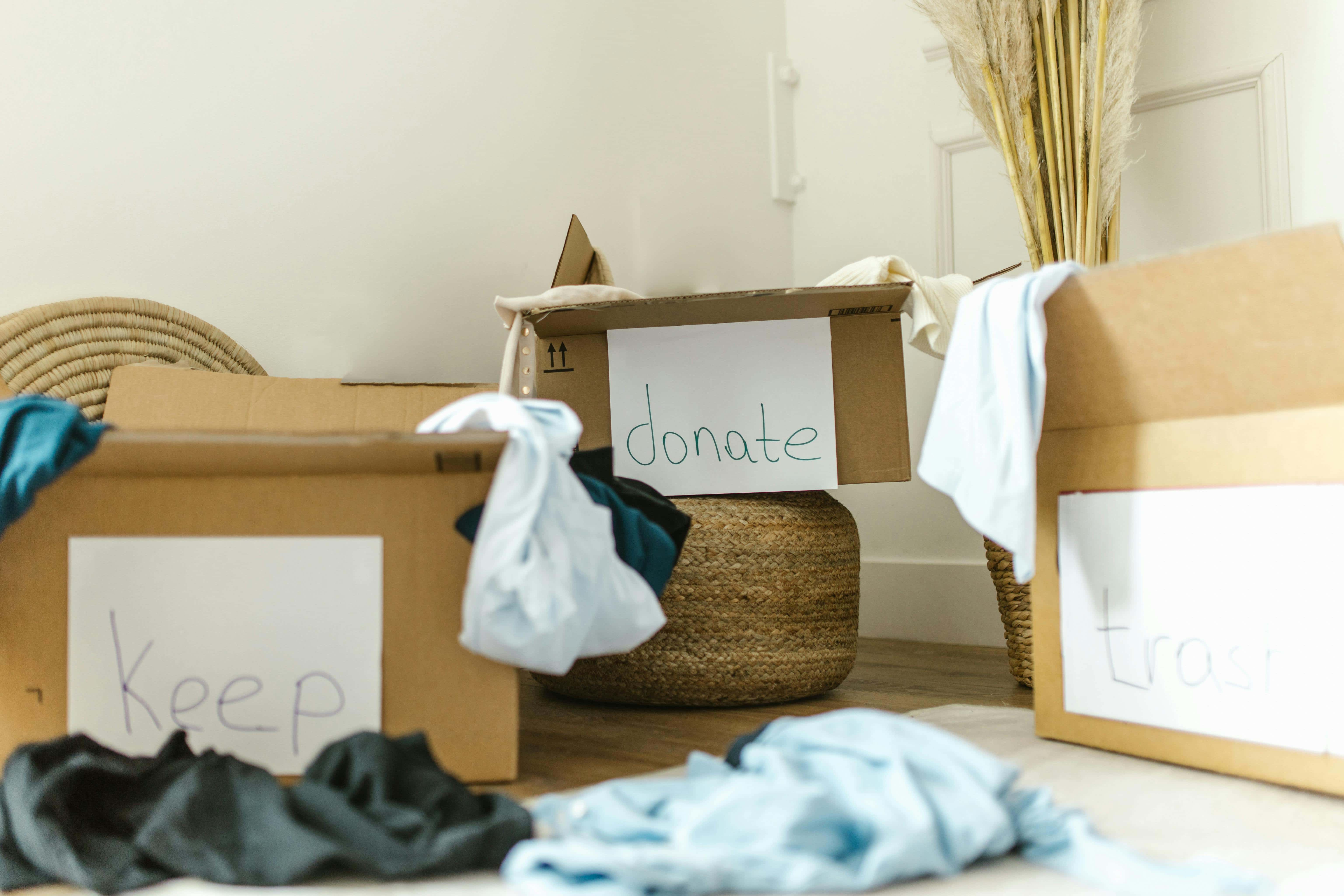
The Grief Nobody Names When You Simplify
Most people expect simplicity to feel like relief. The assumption is straightforward: fewer objects should mean fewer thoughts, and a cleaner space should naturally lead to a lighter inner life. When that relief does not arrive, when the environment looks calmer but something inside feels unsettled, the experience can be confusing and quietly disorienting.
What often surfaces in that moment is grief. Not a single loss, but several layered together. Grief for versions of yourself that no longer fit. Grief for futures you once imagined but did not live. Grief for people who are gone, relationships that ended without closure, and time that feels unfinished. Objects frequently held these losses without calling attention to themselves. They did not create the grief, but they helped contain it.
When those objects are removed without understanding the role they were playing, the meaning they carried does not vanish. It becomes visible. The emptiness many people feel after simplifying is not the absence of things. It is the exposure of unprocessed loss that no longer has a place to rest.
The common response to this discomfort is to treat it as resistance or weakness. The impulse is to push past it, to remove more, to tighten control. That approach misunderstands what is happening. The unease is not a sign that simplicity has failed. It is a signal that something meaningful was being held together quietly, and that its removal requires attention rather than force.
Simplicity does not have to erase history or flatten attachment. It can allow meaning to remain while loosening dependence. When detachment is approached as a relationship to what mattered, rather than a demand for absence, simplification becomes steadier. It no longer asks you to deny loss, but to carry it with more clarity and less weight.
- The Grief Nobody Names When You Simplify
- Detachment Is Not Emotional Distance: When Avoidance Looks Like Self-Control
- Why Deprivation Creates a Vacuum: Objects as Silent Grief Holders
- Detachment Is a Relationship to Things, Not a Number You Aim For
- Identity Continuity: The Missing Variable in Most Decluttering Advice
- Pleasure and Detachment Are Compatible: The Difference Between Savoring and Self-Soothing
- How Non-Attachment Was Misread as Coldness
- Why Detachment Changes Buying Behavior Without Turning Life Into Self-Denial
- Luxury, Taste, and Attachment Migration: When Meaning Moves Instead of Disappearing
- What Healthy Detachment Actually Feels Like
- Detachment Is Not Emptiness. It Is Load-Bearing Clarity
- Frequently Asked Questions About Detachment, Minimalism, and Emptiness
Detachment Is Not Emotional Distance: When Avoidance Looks Like Self-Control
Detachment is often confused with emotional distance because the two can look similar on the surface. Both reduce visible reactivity. Both create a sense of order. Both can make life appear calmer from the outside. The difference only becomes clear over time, when one produces stability and the other produces numbness.
Emotional distance works by pulling away from contact. Feelings are muted, desires are restrained, and anything that might create vulnerability is kept at arm’s length. This can feel like strength, especially in cultures that reward composure and self-management. The problem is that distance does not resolve emotion. It merely removes you from it. What gets labeled as calm is often just disconnection.
Detachment works in the opposite direction. It allows emotion to arise without immediately organizing life around it. You can feel longing without chasing it. You can feel grief without collapsing into it. You can enjoy something without needing it to secure your sense of self. Detachment does not shrink experience. It creates enough internal space for experience to move through without taking over.
This distinction matters because avoidance often hides inside disciplined lifestyles. A sparse home, a controlled routine, or a strict philosophy can become ways to reduce emotional friction rather than ways to live more clearly. When this happens, simplicity feels sterile. Life becomes quieter, but also flatter. The nervous system is less agitated, yet also less engaged.
True minimalism does not require emotional withdrawal. In many cases, it demands the opposite. Letting go responsibly requires staying present with what arises when supports are removed. Avoidant minimalism removes the supports and leaves. Intentional minimalism removes them while staying.
If simplifying your life led to a sense of distance from yourself rather than greater steadiness, the issue is not that you failed to detach. It is that detachment was confused with disappearance. Real detachment does not make you harder. It makes you more available without being overwhelmed.
Why Deprivation Creates a Vacuum: Objects as Silent Grief Holders
Objects are often dismissed as sentimental distractions, as if their only value lies in nostalgia or habit. In reality, many objects do far more structural work than people realize. They stabilize unresolved grief, hold together fractured timelines, and quietly support identities that are still forming or dissolving. When life moves faster than emotional processing allows, objects become stand-ins for integration.
People rarely grieve just one thing when they declutter. They grieve who they were before a rupture and who they thought they would become after it. They grieve relationships that ended without closure, places that can no longer be returned to, and periods of life that feel unfinished. Objects often sat at the center of these experiences, not because they were sacred in themselves, but because they were present when meaning had nowhere else to land.
Deprivation removes these structures without addressing what they were holding. The result is not freedom but a vacuum. The environment looks lighter, yet the inner life feels suddenly unsupported. This is where many people misinterpret what is happening. The emptiness is assumed to mean there is still too much attachment, too much weakness, too much reliance on things. The instinct is to remove more, believing that enough absence will eventually turn into clarity.
What is actually happening is a collapse of containment. Meaning that was being carried informally by objects is exposed without context or language. Grief surfaces without orientation. The nervous system registers this as loss, even if the conscious mind insists that nothing important was taken away. This disconnect between logic and feeling is what makes post-decluttering emptiness so unsettling.
Detachment without deprivation does not ask you to preserve everything. It asks you to recognize when an object is functioning as a temporary holder for something unfinished. Once that role is understood, release becomes possible without collapse. Without that understanding, removal creates emptiness not because the object was necessary, but because the meaning it carried was never given another place to go.
Detachment Is a Relationship to Things, Not a Number You Aim For
It is easy to assume that attachment is measured by quantity. More objects must mean more attachment, and fewer objects must mean freedom. This logic feels intuitive, which is why it persists. Yet many people discover that even in sparse environments, anxiety, rigidity, or longing can remain intact. The problem was never the number of things. It was the relationship to them.
Attachment shows itself not in ownership, but in destabilization. When an object is lost, judged, unavailable, or changed, what happens internally matters more than what is on the shelf. If your sense of self tightens, collapses, or becomes defensive, attachment is present regardless of how minimal the environment looks. Scarcity can intensify this response just as much as excess.
Detachment changes the nature of the relationship. Objects are allowed to have function, beauty, and usefulness without being asked to secure identity or continuity. You can care for them without organizing your worth around them. Loss becomes inconvenient rather than threatening. Change becomes manageable rather than disorienting.
This is why chasing numerical targets often fails. When simplification is driven by counts, categories, or aesthetic ideals, the deeper work is bypassed. The symbolic hunger remains and simply migrates elsewhere. It may attach to routines, to taste, to productivity, or to the idea of being someone who has transcended attachment altogether.
Detachment does not require owning more or less. It requires clarity about what role something plays in your life and what it is not meant to do. When that clarity is present, the environment can change without shaking the structure of the self. The room may look different, but the person inside it remains coherent.
Identity Continuity: The Missing Variable in Most Decluttering Advice
Most advice about letting go assumes a stable sense of self. It imagines a person who knows who they are, where they are headed, and what they value, and simply needs to remove distractions along the way. This assumption quietly breaks down during periods of transition, which is when many people are drawn to simplifying in the first place.
During change, identity becomes less settled. A career shifts, a relationship ends, a place is left behind, or a long-held version of life dissolves. In these moments, objects often step in to preserve continuity. They act as narrative anchors, reminders that a former self existed, that certain experiences were real, and that life has not completely fragmented. This is not dysfunction. It is an adaptive response to uncertainty.
Forcing detachment during transition can therefore feel like erasure. When objects that bridge past and future are removed too quickly, the person is left without a sense of narrative flow. Life can start to feel like a series of disconnected scenes rather than a coherent story. The discomfort that follows is often mislabeled as attachment or fear, when it is actually disorientation.
This is why some people feel worse after simplifying during periods of change, while others feel relieved. The difference is not discipline or courage. It is timing. Detachment requires enough internal stability to tolerate release. When stability is still forming, objects often provide temporary scaffolding.
Healthy detachment during transition does not demand immediate release. It allows certain objects to remain until identity catches up with change. Once continuity is restored internally, those same objects often lose their charge naturally. Letting go then feels like a completion rather than a loss.
Pleasure and Detachment Are Compatible: The Difference Between Savoring and Self-Soothing
Pleasure is often treated with suspicion in conversations about detachment. Enjoyment gets framed as indulgence, and desire is assumed to weaken discipline. This framing creates an unnecessary conflict. Detachment is not threatened by pleasure itself. It is threatened by the role pleasure is asked to play.
When pleasure is used to regulate instability, it becomes compulsive. Objects, experiences, or upgrades are relied on to soothe anxiety, reaffirm identity, or distract from grief. In this state, pleasure carries urgency. It promises relief, reassurance, or transformation. Once it fades, the need returns, often stronger than before. Deprivation tends to intensify this cycle by turning pleasure into something forbidden or earned.
Clean pleasure feels different. It does not promise to fix anything. It is enjoyed fully and allowed to end. The absence of urgency is what makes it compatible with detachment. You can savor without gripping because nothing essential is at stake. Enjoyment becomes an experience rather than a strategy.
Detachment supports this shift by removing the emotional labor placed on objects and experiences. When pleasure is no longer responsible for stabilizing the self, it becomes lighter. People often notice that they enjoy fewer things more deeply, rather than many things anxiously. Desire softens without being suppressed.
This distinction explains why extreme simplicity often backfires. When pleasure is stripped away without addressing what it was compensating for, desire does not disappear. It waits. Detachment does not ask you to renounce enjoyment. It asks you to stop asking enjoyment to carry what it was never meant to hold.
How Non-Attachment Was Misread as Coldness
Non-attachment is often misunderstood because it has been flattened into emotional austerity. In many modern interpretations, it is treated as a way to stay untouched, unbothered, and above the mess of wanting or losing. This version promises safety. If you do not care too much, nothing can hurt you too much. The appeal is understandable, but it misses the point entirely.
Non-attachment was never meant to eliminate feeling. It was meant to prevent collapse. The distinction matters. Caring deeply while remaining intact requires more capacity, not less. It asks for enough internal structure to hold grief, longing, and pleasure without needing permanence or control. Coldness, by contrast, is a withdrawal of investment. It protects by shrinking the field of experience.
This misreading often comes from fear rather than wisdom. Many people reach for non-attachment after loss, disappointment, or betrayal, hoping it will make them immune. What they are seeking is not freedom, but insulation. When non-attachment is used this way, it becomes rigid. Rules replace awareness. Detachment hardens into a posture rather than remaining a living relationship.
True non-attachment allows contact. You can love without ownership. You can miss without clinging. You can want without building your identity around the outcome. This is not emotional minimalism. It is emotional literacy. It does not remove vulnerability, but it changes how vulnerability is held.
When non-attachment is practiced as presence rather than withdrawal, it does not make life smaller. It makes it more navigable. Feelings move through without taking over. Loss is felt without erasing continuity. Care remains possible without demanding guarantees.
Why Detachment Changes Buying Behavior Without Turning Life Into Self-Denial
Most conversations about spending assume that behavior needs to be controlled. Budgets are tightened, rules are set, and impulse buying is framed as a failure of discipline. What often goes unexamined is why the urge to buy feels urgent in the first place. Detachment shifts this question from behavior to function.
A large portion of impulsive or excessive spending is not driven by desire for the object itself. It is driven by a need for regulation. Buying becomes a way to steady the self when identity feels uncertain, when grief is unacknowledged, or when life feels incoherent. Objects are asked to reassure, to promise movement, or to signal that something has changed. In this context, restraint feels punishing because it removes the coping mechanism without addressing the instability underneath.
Detachment alters this dynamic by reducing the symbolic load placed on purchases. When objects are no longer responsible for providing reassurance, status, or a sense of becoming, the urgency to acquire them softens. The shift does not feel like restriction. It feels like relief. Buying becomes quieter because it no longer has to do emotional labor.
This is why people who develop genuine detachment often notice changes in spending without trying to optimize for them. They buy fewer things, but the reduction is a byproduct, not a goal. Decisions feel clearer. Regret decreases. Satisfaction per purchase increases. The relationship to money becomes less moralized and more grounded.
Detachment does not turn life into self-denial. It removes the pressure placed on objects to fix what is internal. When that pressure lifts, consumption naturally aligns with use, taste, and need rather than with anxiety or compensation.
Luxury, Taste, and Attachment Migration: When Meaning Moves Instead of Disappearing
Attachment rarely vanishes on its own. When it is not examined, it relocates. This is why many people experience a shift after decluttering where excess is replaced not with emptiness, but with refinement. Fewer items remain, but each carries more weight. What looks like discernment can quietly become a new site of attachment.
This migration is not inherently unhealthy. Taste can be an expression of clarity. Choosing well-made, aligned objects can reflect a stable relationship to value and use. The problem arises when luxury is asked to anesthetize loss or stabilize identity. In that case, refinement does not reduce attachment. It concentrates it. Fewer objects become heavier because they are now responsible for signaling worth, success, or coherence.
This pattern often goes unrecognized because it wears the language of intention. Words like quality, investment, and timelessness provide cover for unresolved attachment. The environment looks composed, but the emotional stakes remain high. Damage, loss, or judgment around these items still threatens the sense of self.
Detachment clarifies whether luxury is chosen or compensatory. When meaning has been integrated internally, taste becomes lighter. Objects can be appreciated without being defended. They enhance life without being asked to prove it. Luxury becomes an expression of alignment rather than a substitute for stability.
Understanding attachment migration prevents a common trap. Simplification is not complete simply because clutter is gone. What matters is whether meaning has been relocated consciously or left to bind itself to new forms. Detachment does not remove desire for beauty or quality. It removes the need for objects to carry identity on your behalf.
What Healthy Detachment Actually Feels Like
Healthy detachment is often described in abstract terms, which makes it hard to recognize in real life. It does not feel dramatic or elevated. It does not announce itself as enlightenment or mastery. It feels, instead, like steadiness. A quiet reliability in how you meet change, loss, enjoyment, and choice.
One of its clearest signs is enjoyment without panic. You can appreciate what you have without worrying about how long it will last or what it says about you. Pleasure no longer carries the pressure of permanence. When something ends or breaks, the disruption is practical rather than existential. You feel disappointment, not disorientation.
Another sign is loss without identity collapse. Letting go may still hurt, but it does not unravel your sense of continuity. You do not need to immediately replace what is gone to feel whole again. There is space between the event and your sense of self. That space is what allows grief to move without taking everything with it.
Healthy detachment also shows up as ownership without defense. You no longer feel the need to justify your choices, explain your taste, or preempt judgment. Objects are allowed to be what they are: useful, beautiful, imperfect, temporary. They are not extensions of your worth, so they do not require protection at that level.
Perhaps most importantly, healthy detachment creates continuity that does not depend on environment. You can move, simplify, accumulate, or change rhythms without feeling like you are starting over as a person. Life can shift without demanding reinvention every time. The internal structure remains intact even as the external one evolves.
Detachment, when it is working, does not make life smaller. It makes it more resilient. It allows you to participate fully without needing everything to stay the same.
Detachment Is Not Emptiness. It Is Load-Bearing Clarity
People do not grieve objects when they simplify. They grieve selves, futures, relationships, and time. Objects were never the point. They were the structures that quietly carried what had not yet been metabolized. When those structures are removed without understanding, the result feels like emptiness, but it is closer to exposure than absence.
Deprivation mistakes this exposure for a flaw. It assumes that if discomfort appears, something went wrong and must be corrected through further removal. Detachment takes a different approach. It recognizes that what surfaced was already there and that clarity comes from relating to it differently, not from erasing it faster.
When detachment is practiced with awareness, meaning is not destroyed. It is redistributed. Identity becomes less dependent on form. Pleasure becomes cleaner. Loss becomes survivable without reinvention. Change becomes something you move through rather than something that resets you entirely.
The goal was never to have less life. It was to stop asking objects to do the work of holding everything together. Detachment does not empty you out. It builds an internal structure strong enough to carry meaning without needing so much external weight.
Frequently Asked Questions About Detachment, Minimalism, and Emptiness
Why do I feel empty or sad after decluttering?
Because decluttering often removes objects that were quietly holding unresolved grief, identity transitions, or unfinished emotional material. The sadness is not caused by the absence of the object itself. It comes from the sudden exposure of loss that no longer has a place to rest. What feels like emptiness is often unprocessed grief coming into awareness.
Is detachment the same as minimalism?
No. Minimalism is a structural or aesthetic choice. Detachment is a relational one. You can live minimally and remain deeply attached, or live with more and be genuinely detached. When minimalism works well, it is usually supported by detachment. When it feels hollow, detachment is often missing.
Can minimalism be healthy and not avoidant?
Yes. True minimalism often requires emotional presence. It involves staying with discomfort long enough to understand it rather than using removal to escape it. Avoidant minimalism reduces stimulation to avoid feeling. Intentional minimalism reduces distraction while remaining emotionally engaged.
How do I let go of things without feeling like I’m losing myself?
By understanding what the object was holding before releasing it. Objects often preserve identity continuity during periods of change. When that role is acknowledged and integrated internally, letting go no longer feels like self-erasure. Release becomes completion rather than loss.
Can I enjoy nice things and still practice detachment?
Yes. Detachment removes dependency, not enjoyment. You can savor objects, experiences, and comfort without asking them to secure your worth or stability. Clean pleasure feels present and finite. It does not carry urgency or promise transformation.
Why do I impulse buy more when I’m stressed or overwhelmed?
Stress destabilizes identity and coherence. Buying temporarily restores a sense of movement, reassurance, or self-definition. Detachment reduces this pattern by strengthening internal stability, so objects no longer need to perform emotional regulation.
Does non-attachment mean not caring anymore?
No. Non-attachment means caring without collapsing when things change. It allows love, grief, and desire to exist without demanding permanence or control. Indifference is not non-attachment. It is withdrawal.
How do I know if I’m practicing healthy detachment or just numbing out?
Healthy detachment increases steadiness without reducing vitality. You still feel pleasure, grief, and interest, but they do not dominate your sense of self. Numbing reduces both pain and aliveness. The difference is not how calm you look, but how intact you feel over time.
If you found this piece insightful, consider supporting my work – every contribution helps fuel more in-depth stories, reflections, and meaningful content. Support here!