
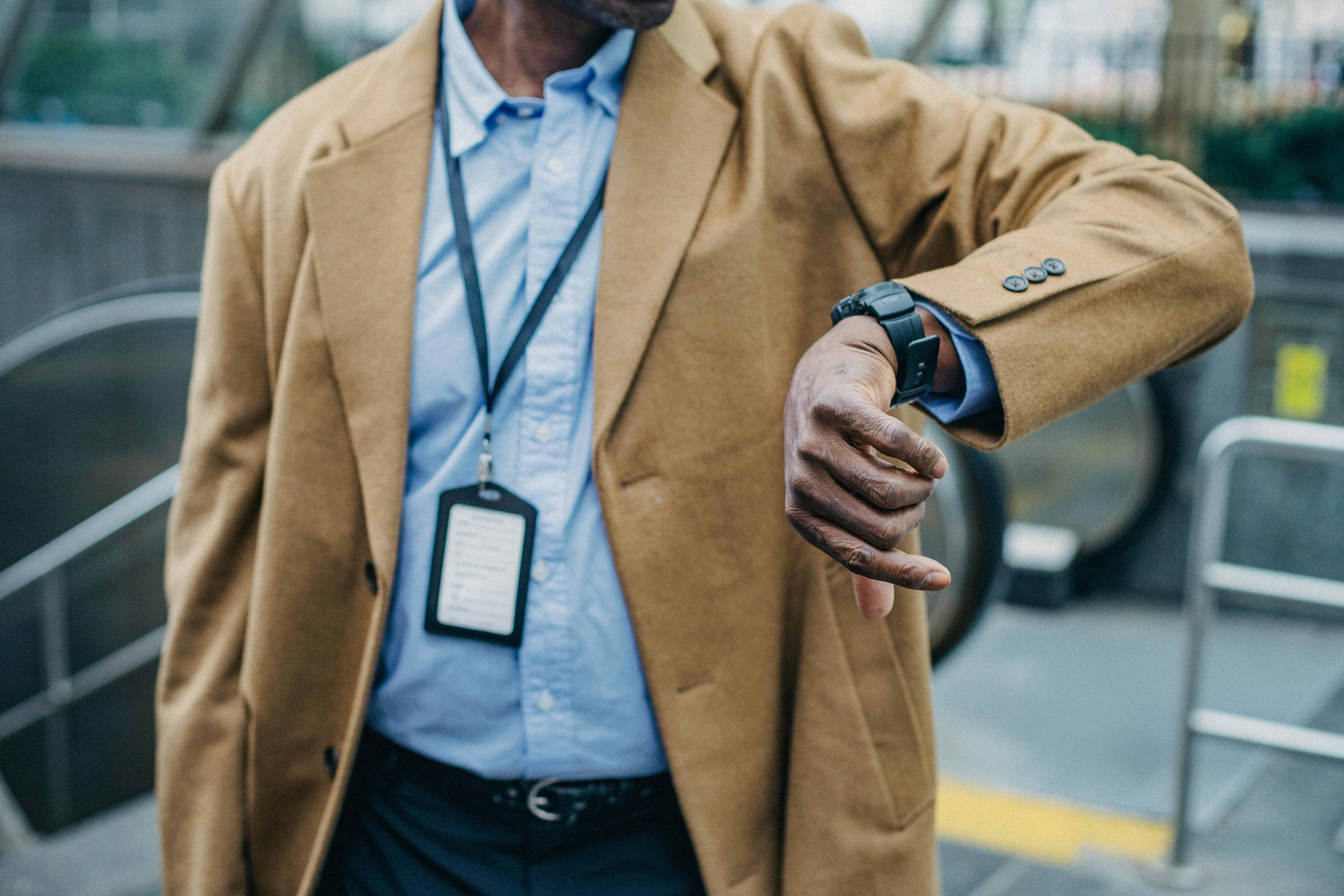
I hate Filipino Time.
Not in a cute, eye-roll way. Not in a “haha yeah that’s just how we are” way. I hate it because it quietly ruins things that didn’t need to be ruined. I hate it because it drains excitement before anything even starts. I hate it because it turns anticipation into waiting, and waiting into resignation, and then asks you to pretend you’re still having a good time.
And before anyone rushes to get defensive, yes, I get it. I’ve been late too. I’m not pretending to be morally pure about time. But when I know I’m going to be late, I say it. Early. I give a real heads-up. I don’t disappear and let someone else sit there guessing, checking their phone, recalculating how much they should still care.
That’s the part that gets me.
Filipino Time isn’t just about being late. It’s about how casually we make other people absorb the cost of that lateness. It’s about how waiting gets normalized, while communicating somehow feels optional. It’s about how the person who shows up on time ends up paying emotionally so everyone else can stay comfortable.
What makes it worse is that we all know this already. We complain about Filipino Time constantly. We joke about it. We roll our eyes at it. And then we keep doing it anyway. Not because we don’t understand the problem, but because calling it “culture” feels easier than dealing with the discomfort of changing our behavior.
This isn’t about discipline. It’s not about professionalism. It’s not about being uptight or killing the mood. It’s about joy. About moments that could have started full and alive, but instead begin half-deflated because someone had to wait, and someone else never thought to warn them.
Filipino Time isn’t evil. But it’s not harmless either. And pretending it doesn’t affect anyone is how it keeps quietly ruining things we actually care about.
What Does Filipino Time Actually Mean in Practice?
It’s usually described as lateness, but that description barely scratches the surface. Lateness is only the visible outcome. What actually shapes the experience is the expectation underneath it.
In practice, Filipino Time functions as an unspoken agreement that start times are provisional. A time gets stated, but it isn’t always treated as binding. It becomes a loose reference point rather than a commitment. People move toward it gradually, assuming adjustments will happen along the way and that no explicit renegotiation is needed.
What often goes unnamed is the role this creates for the person who arrives earlier. They aren’t just waiting. They’re managing the emotional awkwardness of being there first. They soften their anticipation. They avoid calling attention to the delay. They perform patience so the moment doesn’t feel tense or accusatory. Waiting becomes part of the social labor.
This is why the pattern doesn’t feel neutral to everyone involved. Responsibility gets distributed unevenly. One person’s flexibility relies on another person’s restraint. Someone gets to remain relaxed while someone else quietly recalibrates how much they care. Because this recalibration happens silently, it’s easy to pretend no cost exists.
The arrangement only holds when timing doesn’t materially affect the experience. When arrival order doesn’t matter. When nothing meaningful is paused. When no one is left alone holding the space. Once timing starts to matter, the same behavior stops feeling generous and starts creating friction.
It also explains the inconsistency. The same people who drift into social plans can be precise when the stakes are clear. Flights are caught. Interviews are attended. Appointments are kept. Not because time suddenly becomes important in principle, but because the cost of delay can’t be passed on to someone else.
So what this really describes isn’t an inability to be punctual. It’s a shared expectation that someone will absorb the friction, and that it doesn’t need to be acknowledged. Filipino Time survives not because people don’t understand time, but because the burden of adjustment is usually invisible.
Why Filipinos Are Late (Habit Meets Material Reality)
Lateness doesn’t exist in a vacuum, and pretending it does flattens the problem instead of explaining it. Material conditions matter. Long commutes. Unpredictable traffic. Work schedules that bleed into personal time. Caregiving responsibilities that don’t clock out cleanly. These realities shape how people move through the day, and ignoring them turns the conversation dishonest fast.
But material conditions explain variability, not the entire pattern.
Everyone navigating those constraints still makes choices about how they manage them. Some build buffer time. Some communicate early when things start slipping. Others wait, hope it works out, and rely on the assumption that people will understand. Over time, that difference matters more than the constraint itself.
What often happens is this: difficult conditions normalize delay, and normalized delay lowers the urgency to plan ahead. When traffic is always bad, prep time gets compressed instead of expanded. When work is always demanding, updates get postponed instead of sent. The problem isn’t that obstacles exist. It’s that they become reasons not to adjust behavior around them.
This is where habit and material reality intersect. Constraints don’t force silence. They don’t require disappearing. They don’t prevent a heads-up that arrives early enough to let others recalibrate. Those are choices layered on top of circumstance.
And this is why the frustration doesn’t come from lateness alone. It comes from feeling like the burden of adjustment always flows in one direction. One person absorbs traffic, fatigue, and unpredictability by showing up later. Another absorbs it by waiting, wondering, and shrinking their expectations in real time.
Material conditions make punctuality harder. They don’t make consideration impossible. The tension shows up when those two truths get blurred together, and difficulty quietly turns into entitlement.
Is Lateness Disrespectful, or Does It Depend on Who Pays for It?
This is where the discussion usually derails, because people hear the word “disrespectful” and assume it’s an accusation about character or intention. It isn’t. Most lateness has nothing to do with malice, indifference, or a lack of care. Life slips. Schedules collide. Energy runs out. All of that is real.
What actually determines whether lateness becomes disrespectful is not why it happened, but where the cost lands.
When a delay is communicated early, when expectations are adjusted together, and when no one is left alone holding the moment, the inconvenience stays shared. Everyone recalibrates at the same time. No one has to guess. No one has to keep checking their phone, wondering whether they should still be there, or how much longer they’re expected to wait without looking needy or annoyed.
The dynamic shifts when that adjustment only happens on one side. One person arrives late. Another arrives on time and absorbs the awkwardness in silence. They manage their anticipation, soften their disappointment, and keep the mood intact so no one else has to feel uncomfortable. The delay becomes invisible, but the emotional labor doesn’t.
This is why Filipino Time stops feeling benign in certain situations. Not because people were late, but because someone else quietly paid for that lateness with their time, energy, and presence. The cost wasn’t acknowledged. It was simply assumed.
Respect, in this context, has very little to do with clocks and everything to do with distribution. Who had to adjust? Who had to wait? Who carried the uncertainty so the rest could stay relaxed? Once the answers to those questions become predictable, the issue stops being abstract and starts being personal.
Lateness becomes a problem not when plans shift, but when consideration doesn’t move with them. And that’s the point where flexibility turns into imbalance, and imbalance, over time, starts to feel a lot like disregard.
When Filipino Time Is Actually Fine
There are situations where flexible timing works, and pretending otherwise would be dishonest. Not every plan needs to start sharply. Not every gathering is diminished by staggered arrivals. In some contexts, looseness around time reduces pressure instead of creating it.
Casual meetups are the clearest example. Barkada hangouts where people drift in and out, family gatherings where food keeps coming and conversations overlap, afternoons that don’t hinge on a single moment beginning. In these cases, arrival order doesn’t define the experience. No one is holding the room alone. No one’s excitement is suspended while waiting for permission to start enjoying themselves.
In those settings, Filipino Time functions less like a problem and more like a shared understanding. Everyone knows what kind of event it is. Expectations are aligned. Flexibility feels mutual rather than imposed. The experience expands to accommodate people instead of demanding that people compress themselves around a strict schedule.
The trouble starts when that same looseness gets applied to situations where timing actually structures the experience. When something has a clear beginning. When anticipation matters. When one person showing up late stalls everyone else. What works in low-stakes settings doesn’t automatically translate upward, but it often gets treated as if it should.
This is why arguments about timing so often talk past each other. One side is remembering moments where flexibility felt humane and forgiving. The other is remembering moments where it felt dismissive and draining. Both are real. They’re just happening in different conditions.
Flexibility isn’t the enemy. Misapplied flexibility is. Filipino Time only works when it matches the kind of moment it’s being used for, and when no one is quietly asked to sacrifice their experience so the rest can stay comfortable.
When Flexible Timing Quietly Ruins the Experience
The damage rarely announces itself. No one storms out. No one makes a scene. The moment just starts thinner than it should have, and everyone pretends that’s normal.
This usually happens in situations where timing isn’t just a detail but the backbone of the experience. Trips that require coordination. Reservations that keep ticking. Shows, screenings, ceremonies, or anything with a clear beginning. These moments depend on people arriving together, emotionally and physically. When that doesn’t happen, the experience doesn’t pause gracefully. It leaks.
What gets lost first is anticipation. The energy that builds before something begins has a shelf life. When someone is left waiting, that energy gets spent managing uncertainty instead of excitement. Should I still be excited? How long do I wait before I look foolish? Do I start without them, or would that make me seem cold? None of these questions add to joy. They drain it.
By the time everyone finally arrives, the moment technically exists, but it’s already compromised. Conversation has to restart. Attention has to be pulled back together. The person who waited has to decide whether to acknowledge the delay or swallow it. The group moves on, but something subtle has already shifted.
This is why people say lateness “kills the mood” even when no one can point to a specific offense. The loss isn’t dramatic enough to argue about. It’s cumulative and quiet. Each delayed start teaches people to expect less, to invest less, to care with one foot out the door.
That’s the real cost. Not anger, not conflict, but the slow erosion of presence. When flexible timing gets applied to moments that need structure, it doesn’t just inconvenience people. It teaches them not to fully show up next time.
Why Punctuality Suddenly Appears When Consequences Are Real
This is the part that makes most defenses fall apart, because it exposes the inconsistency. The same people who drift into social plans can be remarkably precise when timing carries weight. Flights are boarded. Interviews are attended. Appointments are kept. Deadlines are met. Somehow, the clock becomes legible the moment delay has a clear cost.
That contrast matters.
It shows that the issue isn’t an inability to manage time or some deep cultural disregard for it. It’s prioritization under pressure. When consequences are immediate and personal, behavior adjusts. Buffer time appears. Communication happens. Urgency kicks in before things unravel, not after.
Social plans rarely carry that kind of clarity. The cost of being late is diffuse. Someone waits. The group shrugs. The moment stretches. Nothing visibly breaks, so the behavior survives. Over time, this teaches people that precision is optional unless something tangible is at stake.
This is where frustration starts to calcify. Not because people expect perfection, but because they can see that effort is situational. That punctuality is available, just selectively deployed. It becomes hard not to feel like certain moments, and certain people, are treated as more optional than others.
The problem isn’t that everyone should behave like they’re catching a flight. It’s that shared experiences also carry value, even if the consequences of delay are quieter. When those quieter costs are ignored long enough, people stop investing energy where it doesn’t seem to be protected.
The Social Hesitation Behind Arriving Late
There’s another layer underneath habit and consequence that people are more reluctant to name, because it feels personal rather than practical. Arriving early can feel exposing. You’re there before the mood has settled, before the energy is clear, before you know whether this was actually worth showing up for. Being first means absorbing awkwardness without witnesses.
Arriving later reduces that risk. You get to read the room before fully entering it. You see who came, how many showed up, what kind of night it’s shaping into. You can decide how much of yourself to bring, how long to stay, or whether to fully commit at all. The uncertainty shifts away from you and onto the person who arrived earlier.
This is also where fear of missing out quietly enters the picture. Showing up exactly on time locks you into one version of the night. Arriving later keeps options open. If the event turns out dull, awkward, or poorly attended, you can tell yourself you didn’t really miss much. If it turns out great, you still get to step into it without having invested early. Lateness becomes a way to hedge against disappointment.
What looks like indifference is often selective caution. People aren’t trying to be rude. They’re trying not to feel foolish for caring too soon, or choosing wrong, or committing to a moment that never quite arrives. Staying uncommitted feels safer than committing early and finding out the vibe doesn’t match the expectation.
But that safety isn’t free. Someone else absorbs the discomfort instead. Someone waits. Someone manages the silence. Someone keeps the energy intact long enough for others to decide whether it’s worth joining. The emotional risk doesn’t disappear. It just changes hands.
This is why repeated lateness can start to feel personal even when no insult was intended. The same person ends up holding the uncertainty again and again. Over time, they learn that being early doesn’t signal care. It signals willingness to carry the burden.
Understanding this doesn’t excuse the behavior, but it does explain it. Lateness here isn’t only about clocks. It’s about hesitation, fear of missing out, and the quiet transfer of social risk from one person to another.
Being Late Happens. Going Silent Is What Breaks Trust.
This is where the frustration sharpens, because most people aren’t asking for perfection. They’re asking not to be left guessing.
Delays happen. Traffic spikes. Work runs long. Energy dips. None of that is shocking, and most people are far more understanding than they’re given credit for. What changes the emotional temperature is silence. No update. No warning. Just the quiet assumption that others will wait and adjust on their own.
Silence does something specific. It removes agency. The person who showed up on time doesn’t get to decide what to do with their evening anymore. They’re stuck in limbo, constantly recalculating. Do I wait a bit longer? Do I leave and look rude? Do I say something and risk sounding needy? The delay might be yours, but the discomfort becomes theirs.
This is why Filipino Time starts to feel less like flexibility and more like disregard in certain moments. Not because someone was late, but because they disappeared and let someone else absorb the uncertainty. A real heads-up changes everything. It gives the other person information. It lets them make a choice instead of quietly enduring one.
There’s a meaningful difference between saying you’re running late and letting someone find out by waiting. One acknowledges the shared plan. The other quietly opts out of responsibility while keeping the benefits of being included.
Over time, repeated silence teaches people a lesson they don’t usually say out loud. That their time is elastic. That their presence is optional. That showing up early doesn’t earn care, it earns more waiting. That’s when trust starts to thin, not through conflict, but through pattern.
Lateness can be human. Silence makes it relational.
Why Being the On-Time Person Slowly Becomes Exhausting
What makes this dynamic wear people down isn’t a single bad experience. It’s repetition. It’s realizing that the same person, or the same few people, almost always absorb the inconvenience so everyone else can stay relaxed.
Showing up on time starts as a neutral choice. You respect the plan. You arrive ready. You assume others will do the same. But when you’re consistently the one waiting, that neutrality erodes. You begin every plan with a quiet calculation. How long will this take to actually start? How much energy should I invest this time? Should I even bother being early anymore?
Over time, reliability turns into unpaid emotional labor. The person who arrives on time manages the awkward pauses, keeps checking their phone, and holds the space so the moment doesn’t collapse before others arrive. Meanwhile, latecomers walk into a situation that’s already been stabilized for them. They get the benefit of a warmed-up room without having to sit through the discomfort of waiting.
This imbalance teaches a subtle lesson. Being punctual doesn’t get rewarded with ease or appreciation. It gets rewarded with more responsibility. And when care consistently leads to inconvenience, people start pulling back not out of spite, but out of self-preservation.
That’s how enthusiasm thins. Not because anyone became bitter overnight, but because being dependable stopped feeling mutual. The cost of showing up early began to outweigh the satisfaction of doing so. Eventually, people either arrive later themselves or stop initiating plans that depend on shared timing.
This is one of the quiet ways Filipino Time sustains itself. Not through indifference, but through fatigue. When reliability feels lonely, fewer people are willing to offer it.
Why Everyone Complains About It and Still Keeps Doing It
Almost everyone has complained about this at some point. The jokes, the eye rolls, the shared frustration. People know the pattern. They feel its effects. And yet, nothing really changes.
The reason is simple and uncomfortable. Tolerating delay usually feels cheaper than confronting it.
Calling someone out risks tension. It risks being labeled uptight, dramatic, or “too serious.” Waiting, on the other hand, only costs time and a bit of emotional energy, and those costs are easy to downplay. So people swallow the irritation, make a joke, and move on. The moment passes, and the behavior survives.
There’s also safety in diffusion. When many people arrive late, responsibility gets diluted. No single person feels accountable. The delay becomes ambient rather than personal. It’s easier to complain about a pattern than to address an individual, especially in cultures where social harmony is prized and directness can feel abrasive.
Labeling the behavior as cultural adds another layer of protection. Once something is framed that way, challenging it can feel like rejecting identity rather than addressing logistics. Culture becomes a shield that prevents uncomfortable conversations, even when everyone involved privately agrees that the situation is frustrating.
So the cycle repeats. People complain to bond, not to change anything. The behavior continues because the social cost of addressing it still feels higher than the personal cost of enduring it. Until those costs flip, waiting remains the default solution, and frustration stays quietly normalized.
The Long-Term Cost: When Plans Stop Feeling Real
The damage doesn’t show up all at once. It accumulates quietly, the way habits do when no one interrupts them. Over time, repeated delays teach people to emotionally hedge before they even leave the house.
Plans start to feel tentative instead of solid. Invitations come with an unspoken asterisk. You don’t fully commit your energy because you’ve learned that the start time probably isn’t real anyway. Excitement gets rationed. Anticipation gets dulled on purpose so disappointment doesn’t sting as much.
This shift changes behavior in subtle ways. People stop planning anything that requires coordination. They choose activities that can be done alone or started without others. Group plans become looser, shorter, less meaningful, not because people don’t care, but because caring has repeatedly come with friction.
What gets lost isn’t just efficiency. It’s trust in shared moments. When timing feels unreliable, presence becomes conditional. People show up half-there, already preparing to adapt, already bracing for delay. The moment technically happens, but it doesn’t land with the same weight.
This is the quiet cost of normalized lateness. Not anger, not conflict, but a thinning of collective enthusiasm. When plans stop feeling real, joy becomes provisional. And once that happens, people stop reaching for experiences that require them to fully show up together.
How to Deal With It Without Becoming Controlling
Most people hesitate to address lateness because they don’t want to turn into the rigid one in the group. No one wants to sound like a manager, a parent, or someone who takes things too seriously. That fear is understandable. But doing nothing isn’t neutral either. It just shifts the burden quietly onto whoever keeps showing up on time.
The first shift isn’t about enforcement. It’s about clarity. Saying “we meet at seven” is vague if the unspoken rule is flexibility. Saying “we’re leaving at seven” or “the reservation is at seven and we’ll order when we arrive” makes the stakes visible without lecturing anyone. You’re not demanding punctuality. You’re explaining how the moment will unfold.
The second shift is letting things start when they’re supposed to. Not with resentment, not with sarcasm, and not with punishment. Just movement. When events consistently wait for late arrivals, lateness gets rewarded. When things proceed calmly, people learn where the real timeline sits.
The third shift is choosing context wisely. Some people are great for slow, fluid plans and terrible for time-sensitive ones. That’s not a moral judgment. It’s information. Protecting your experience sometimes means matching people to the kind of plans they actually respect, instead of hoping they’ll change for the sake of harmony.
None of this requires confrontation or control. It requires deciding what you’re willing to absorb and what you’re not. Boundaries aren’t about forcing others to behave differently. They’re about refusing to keep paying the same cost quietly.
Bottom Line: It’s Not About Time, It’s About Care
This conversation keeps getting stuck on minutes and clocks because that’s easier than naming what’s really at stake. Time is just the surface. What people react to is care, or the absence of it, as it shows up in small, repeatable ways.
Flexibility can be generous. It can make space for imperfect lives, uneven energy, and the reality that not everything runs on a clean schedule. But flexibility stops being kind when it relies on someone else’s silence. When one person is expected to wait, absorb the awkwardness, and downplay their disappointment so everyone else can stay comfortable.
That’s why this issue doesn’t go away with jokes or better time management tips. It’s relational. It asks a quieter question: whose experience matters enough to be protected?
Showing up on time isn’t about control or discipline. Communicating when you can’t isn’t about shame. Both are forms of consideration. They say, “I see you. I know this moment matters to you too.”
Filipino Time will probably always exist in some form. Culture doesn’t change overnight, and it doesn’t need to. But treating it as harmless by default is how it keeps hollowing out moments that could have felt full.
Care doesn’t require perfection. It requires effort, honesty, and the willingness to not let someone else keep paying for your delay.
If you found this piece insightful, consider supporting my work – every contribution helps fuel more in-depth stories, reflections, and meaningful content. Support here!