
Author’s Note
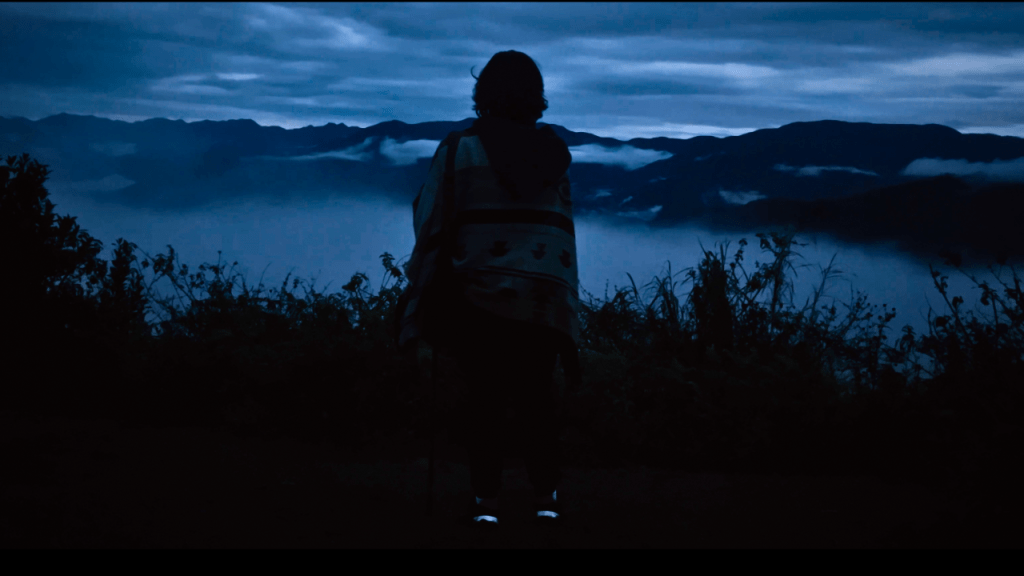
This piece is a written contemplation of In the Breath of the Mountains: Two Weeks in Sagada, a cinematic reflection on solo travel in Sagada, burnout, feeling stuck in life, and the quiet tension of returning to a 9–6 you’re no longer sure you want. The film follows two weeks of travel not as a guide to Sagada, but as an exploration of pressure, misalignment, and the belief that time away will automatically bring clarity. This essay expands on what the camera could not fully articulate. You can watch the full film on my YouTube channel, Drew Mirandus.
The Lie I Took With Me About Solo Travel and Burnout
I didn’t book two weeks of solo travel in Sagada because I wanted adventure. I booked it because I was burned out and quietly convinced that distance would fix something I couldn’t fix at home. On paper, my life looked responsible. I had a 9–6. I showed up. I hit deadlines. I followed structure. I told myself that if I stayed consistent long enough, something would eventually move in my favor. That progress would become visible. That the gap between effort and result would close. But it didn’t. And after a while, the exhaustion stopped feeling dramatic and started feeling structural.
It wasn’t the kind of burnout that announces itself with collapse. It was subtler than that. It felt like constantly leaning forward, bracing against a version of failure that hadn’t happened yet. I checked my bank account and saw numbers that didn’t reflect how hard I had been trying. I listened to feedback at work and heard that what I was doing still wasn’t enough. Even rest carried a quiet condition attached to it. Even creating something came with an evaluation waiting behind it. I didn’t just feel tired. I felt stuck in life in a way that made every decision feel like it needed to justify its existence.
So I framed the trip as clarity. I told myself that solo travel in Sagada would give me space to think, that being away from my 9–6 routine would reorganize something internally. I believed that if I removed myself from the noise long enough, I would come back with direction. I would either feel renewed enough to continue or brave enough to leave. I expected insight to arrive simply because I had changed locations.
That was the lie.
Not that I needed a break. I did. Not that burnout was real. It was. The lie was believing that a week or two away would automatically resolve misalignment, that clarity works like weather and will clear if you just wait long enough. Before the bus even left the terminal, I was already measuring the trip against the version of myself I hoped to return as. I wasn’t just traveling. I was expecting to be repaired.
And that expectation followed me into the mountains.
- Author’s Note
- The Lie I Took With Me About Solo Travel and Burnout
- The 9–6 Burnout I Didn’t Want to Come Back To
- Why Feeling Stuck in Life Isn’t Always About Your Job
- The Addiction to Visible Progress and the Need for Proof
- The Illusion of Control When You’re Burned Out
- Performance Anxiety, Comparison, and the Pressure to Be Interesting
- Does Solo Travel Actually Give You Clarity?
- What Solo Travel in Sagada Did Not Fix
- What Softened When I Stopped Bracing Against Failure
The 9–6 Burnout I Didn’t Want to Come Back To
There’s a difference between being tired of work and realizing you may not want the structure at all. For a long time, I told myself I was just overworked. That what I was feeling was temporary burnout. That if I optimized my schedule, improved my output, or pushed through another quarter, the dissatisfaction would settle. That’s the story people who are “doing the right thing” tell themselves. It keeps everything intact. It keeps the 9–6 respectable. It turns exhaustion into something noble.
But somewhere along the way, I started noticing that my fatigue wasn’t only about workload. It was about alignment. I wasn’t just drained by tasks or deadlines. I was drained by the rhythm itself. The repetition. The performance metrics. The constant calibration of effort against evaluation. Every week felt like a cycle of proving, adjusting, proving again. Even when I did well, the relief was brief. The bar moved. The next expectation appeared. There was always something to optimize, something to fix, something to measure.
And the more I tried to perform my way into stability, the more unstable I felt.
It’s uncomfortable to admit that you might not want the very structure you worked hard to enter. There’s guilt in that. There’s fear. There’s the practical voice that reminds you of bills, savings, stability, responsibility. I’m not naïve about that. I know what it means to walk away from something predictable. I know the risk attached to dissatisfaction. But during those weeks before Sagada, I could feel a quiet resistance building inside me. Not dramatic rebellion. Just a steady recognition that this might not be the shape of life I want long-term.
The problem was that I didn’t have an alternative. I didn’t have a clean exit. I didn’t have a fully formed plan. So instead of confronting that directly, I told myself I just needed time away. I told myself solo travel would help me think clearly about whether I was truly burned out or just ungrateful. I hoped the mountains would hand me a definitive answer: stay or leave.
That’s a heavy expectation to put on a place.
Why Feeling Stuck in Life Isn’t Always About Your Job
It would be convenient to blame everything on work. To say the 9–6 drained me, that corporate burnout hollowed me out, that the solution was simply to change environments. That story is clean and satisfying. It gives the discomfort a clear villain. But the longer I sat with it, the more I realized that my exhaustion wasn’t confined to office hours. It followed me home. It showed up in how I rested, how I created, how I made decisions. It showed up in the way I measured everything.
Feeling stuck in life isn’t always about the job itself. Sometimes it’s about the way you live inside it. I had developed a habit of bracing, of staying one step ahead of a version of failure that hadn’t even materialized. I was constantly calibrating. Was I doing enough? Was I moving fast enough? Was this choice strategic? Was this rest productive? Even my attempts at slowing down carried evaluation. I wasn’t just working during work hours. I was performing competence in my own head at all times.
The strange thing about that posture is that it disguises itself as responsibility. It feels mature to anticipate problems. It feels disciplined to push forward. It feels safe to stay vigilant. Over time, tension starts to feel like proof that you care. The absence of tension starts to feel irresponsible. I mistook that tightness for progress. I thought the pressure meant I was building something solid.
But bracing all the time doesn’t make you prepared. It just makes you tired.
And if you’re tired long enough, you start believing the fatigue is your personality.
The Addiction to Visible Progress and the Need for Proof
I didn’t just want rest. I wanted confirmation. I wanted something I could point to and say, “See? This is working.” That hunger for visible progress had been quietly shaping how I experienced everything long before I got on a bus. Effort didn’t feel real unless it produced something obvious. If I worked hard, I wanted results that looked different. If I rested, I wanted energy that felt measurable. If I traveled, I wanted clarity that could be articulated.
Without proof, I struggled to trust movement.
That mindset followed me into Sagada. I wasn’t only observing what was happening. I was evaluating it. Was this transformative enough? Was this meaningful enough? Was this the moment where something would shift? Even in beautiful places, the old reflex was still there, waiting for a reveal. I had trained myself to believe that effort deserved spectacle, that if I put in energy, the universe owed me something cinematic in return.
The problem with that belief is that most real change doesn’t announce itself. It rarely looks like a breakthrough. It rarely arrives with a clean narrative attached to it. More often, it looks like ambiguity. Like disappointment. Like effort without visible payoff. And if you’re addicted to proof, ambiguity feels like failure.
I started noticing how often I had done this in my life. How often I dismissed small shifts because they weren’t dramatic. How often I needed progress to be obvious before I allowed myself to believe I was moving. I treated life like a performance review. If I couldn’t clearly see improvement, I assumed none had happened.
But the mountains weren’t interested in performing for me. They didn’t clear on cue. They didn’t rearrange themselves into symbolism. They just existed. And I had to confront the uncomfortable truth that maybe I was the one demanding spectacle from something that never promised it.
That realization didn’t feel profound. It felt embarrassing.
The Illusion of Control When You’re Burned Out
Burnout has a strange relationship with control. When you feel unstable internally, your instinct is to tighten externally. You prepare more. You plan more. You try to eliminate variables. You convince yourself that if you manage the details carefully enough, you can avoid unnecessary damage. It feels responsible. It feels strategic. But most of the time, it’s fear wearing a polished mask.
I didn’t realize how much of my life had been built around staying dry. Around minimizing risk. Around stepping carefully enough that nothing unpredictable could disrupt the fragile sense of progress I was trying to maintain. Even outside of work, I approached decisions with the same mentality: anticipate the worst, brace for it, move in ways that reduce exposure. I believed that if I stayed controlled enough, I would be safe from collapse.
But control has limits, and exhaustion exposes them quickly.
There were moments during the trip when the ground wasn’t stable, when the terrain shifted under my feet, when the smarter move wasn’t to preserve comfort but to move forward anyway. I could either waste energy trying to protect what would inevitably get wet, or I could accept the discomfort and continue. That small decision felt insignificant at the time, but it mirrored something larger. I had spent so long trying to avoid feeling unstable that I forgot instability is part of movement.
The same thing applied to how I had been living. I kept telling myself I needed more preparation before making any real change. More savings. More certainty. More proof that I wouldn’t regret it. But preparation can quietly become paralysis. You can prepare forever and still feel unready.
Control isn’t the same as clarity. Sometimes it’s just hesitation stretched out over time.
And burnout feeds on hesitation.
Performance Anxiety, Comparison, and the Pressure to Be Interesting
I used to think performance anxiety only applied to presentations, interviews, or public speaking. But the more honest term might be existential performance. The need to be interesting. The quiet pressure to contribute something meaningful in every room. The instinct to shape your story as it’s happening so that it lands well when you retell it later.
That pressure doesn’t disappear just because you leave your usual environment. If anything, solo travel can amplify it. You start narrating the experience in real time. You wonder what this will mean later. You calculate whether this moment is reflective enough, dramatic enough, transformative enough. You’re not just living it. You’re curating it.
I caught myself doing that more often than I’d like to admit. Even in simple conversations, there was a reflex to offer something compelling, something insightful, something that proved I was evolving. Silence felt risky. Fading into the background felt like losing relevance. I had internalized the idea that if I wasn’t contributing, I was diminishing.
But there were moments during those two weeks when I didn’t feel the need to insert myself. When I listened without preparing a response. When I allowed a conversation to move without trying to shape how I fit into it. That restraint felt unfamiliar at first, almost uncomfortable. Then it felt relieving.
It made me realize how much of my exhaustion came from constantly managing my image, even privately. From trying to be impressive in subtle ways. From measuring my experience against other people’s narratives and wondering whether mine held up.
Comparison is quiet, but it’s relentless. It can turn even rest into competition. It can make solitude feel like something you have to justify. And if you’re already burned out, that layer of performance becomes unbearable.
Letting go of it, even briefly, didn’t make me enlightened. It just made me less tense.
And that was new.
Does Solo Travel Actually Give You Clarity?
Somewhere in the back of my mind, I believed that solo travel in Sagada would eventually produce a moment of clarity. Not necessarily a grand epiphany, but at least a sentence I could take home with me. A direction. A decision. A clean answer to the question of whether I should stay in my 9–6 or begin planning an exit.
That moment never arrived.
There was no scene where everything snapped into focus. No sunrise that rearranged my priorities. No quiet revelation that made my next steps obvious. The mountains did not hand me a plan. They did not confirm that I was meant for something bigger, nor did they assure me that staying put was the mature choice. They remained indifferent to my internal debate.
At first, that felt disappointing. If you travel hoping to fix burnout or feeling stuck in life, you expect at least some emotional payoff. You expect the discomfort to convert into clarity. But the longer I stayed, the more I noticed that the absence of answers wasn’t empty. It was quiet.
And quiet is different from clarity.
Clarity suggests resolution. Quiet simply removes the noise. It doesn’t tell you what to do. It only stops shouting long enough for you to notice how loud you’ve been inside your own head. Without constant reaction, without the pressure to decide immediately, something subtle shifts. Not direction. Not certainty. Just space.
I didn’t return home with a five-year plan or a resignation letter drafted in my notes app. I didn’t suddenly know how to fix my career burnout or restructure my life. What I came back with was less dramatic and harder to explain. I came back with the awareness that urgency had been driving me more than intention.
And awareness doesn’t feel like clarity at first. It feels like responsibility.
What Solo Travel in Sagada Did Not Fix
Two weeks of solo travel in Sagada did not erase my debt. It did not remove the pressure of returning to a 9–6 I still feel uncertain about. It did not suddenly transform burnout into passion or replace confusion with a clear alternative. When I got home, the same responsibilities were waiting. The same inbox. The same expectations. The same structure.
There’s a version of this story that would be easier to tell. The one where travel resets everything. The one where I come back certain and brave and decisive. But that isn’t what happened. I opened my laptop on Monday and nothing magical occurred. No new energy surged through me. No grand realization justified the time away. The external circumstances of my life remained exactly as they were.
What changed was not the structure. It was my awareness of it.
The trip didn’t fix burnout. It exposed how much of it came from bracing against imagined outcomes. It didn’t solve the tension of the 9–6. It made it harder to ignore that the tension might not be temporary. It didn’t provide clarity about my future. It removed the fantasy that clarity would arrive on demand.
That distinction matters.
Travel can create distance, but distance is not a solution. It’s a mirror. If you go somewhere expecting to be repaired, you will probably return disappointed. If you go somewhere willing to see what you’ve been avoiding, you might come back unsettled instead.
I didn’t come back healed.
I came back unable to pretend I hadn’t seen the misalignment.
And that is a quieter, heavier kind of change.
What Softened When I Stopped Bracing Against Failure
Nothing dramatic shifted when I returned. I didn’t wake up lighter. I didn’t suddenly love the structure I’m questioning. I didn’t feel fearless. What changed was subtler than that, and almost easy to miss. The constant forward lean, the internal tightening I had mistaken for ambition, wasn’t as automatic.
For a long time, I had been bracing against a version of failure that hadn’t happened yet. I was living as if collapse were inevitable, as if the only responsible posture was vigilance. That vigilance shaped how I worked, how I rested, how I traveled. It shaped how I interpreted silence and how quickly I rushed to fill it. It shaped the urgency behind every decision. I thought tension meant I was serious. I thought pressure meant I cared.
What softened was that reflex.
I still have responsibilities. I still have bills. I still don’t have a perfect alternative to the 9–6 I’m unsure about. But I notice now when I start tightening. I notice when I’m demanding visible proof before allowing myself to trust movement. I notice when I treat uncertainty like a verdict instead of a condition of being alive.
That awareness doesn’t resolve anything externally. It doesn’t hand me a blueprint. It doesn’t guarantee I’ll make bold changes. But it interrupts the automatic bracing. It creates a small gap between pressure and reaction.
And in that gap, there’s less defensiveness.
Less panic about the future I haven’t lived yet.
Less insistence that every experience must justify itself.
The mountains didn’t fix my life. They didn’t give me clarity about what comes next. What they did, quietly, was expose how much of my exhaustion came from gripping too tightly.
I came home to the same life.
It just didn’t feel like a verdict anymore.
If you found this piece insightful, consider supporting my work – every contribution helps fuel more in-depth stories, reflections, and meaningful content. Support here!
