
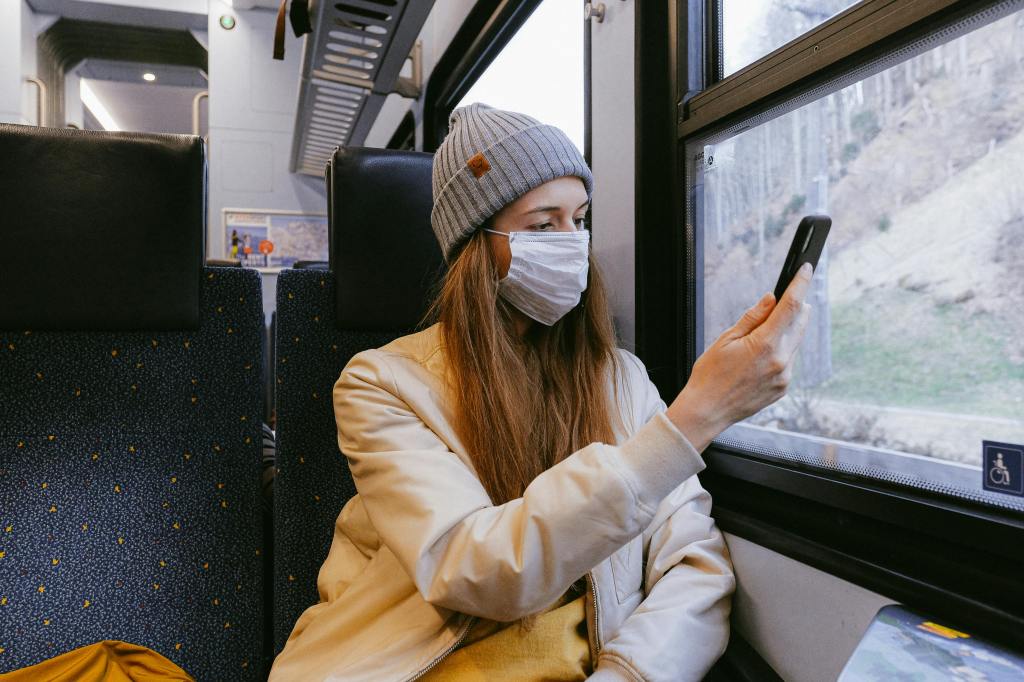
You Want Freedom, Not Fear
You picture it often: waking up in a new city, sunlight spilling through the curtains, no one waiting for you, no schedule except the one you make. The idea of solo travel feels like oxygen. You move at your own rhythm, follow your curiosity, and start to hear yourself again.
Then the fear creeps in. You scroll through stories of thefts, scams, and disappearances. You read threads warning women not to walk alone, not to trust strangers, not to go out after dark. The excitement fades into hesitation. The freedom you imagined starts to look fragile.
Traveling alone will always involve risk. But risk is not the same as danger, and fear is not the same as paranoia. Fear keeps you alert. Paranoia convinces you that the world is waiting to hurt you. The line between the two is awareness – knowing what deserves attention and what deserves release.
Safety is not about hiding from experience. It is about moving through it with presence and calm. You can walk alone without being careless, and you can prepare without living like something bad is guaranteed to happen. Real security comes from clarity, not control.
Solo travel asks for two things: trust in yourself and respect for your surroundings. When those meet, fear becomes focus. You stop waiting for safety to appear and start becoming it.
Is Solo Travel Actually Safe, or Are You Just Scared Because of the Internet?
When most people ask if solo travel is safe, they are not really looking for statistics. They are looking for reassurance that they will be okay in a world that often feels unpredictable. The truth is that safety is rarely a simple yes or no. It is situational, personal, and shaped by where you are, how you move, and what you believe about the world.
Online, fear spreads fast. Scroll long enough and you will find endless clips warning travelers about hidden cameras, drink spiking, or scams that happen once in a decade. The internet thrives on extremes. It magnifies rare dangers until they start to feel common, especially for women and queer travelers who already know what it means to move cautiously. The quiet, uneventful stories, the ones where people go, explore, and come home safely, rarely make it into your feed.
The result is a loop. You plan a trip, research every possible risk, and end up more afraid than before you started. Preparation turns into obsession, and awareness turns into avoidance. It is easy to forget that most of the world is full of ordinary people living their everyday lives, not waiting to harm you.
Fear is not useless. It signals that something matters to you. The challenge is to let it inform your decisions without letting it control them. Ask yourself what kind of traveler you want to be: one who moves with curiosity and attention, or one who builds a life around staying untouched. The world does not become safer when you avoid it. It becomes safer when you learn how to meet it wisely.
Redefining Safety So It Works in Real Life
Most people talk about safety as if it means nothing bad will ever happen. But that kind of safety does not exist. The truth is that travel, like life, is a mix of control and uncertainty. Trying to remove every risk only makes you smaller. Learning to move with awareness makes you stronger.
Safety is not only physical. It has emotional and practical layers too. Physical safety is about protecting your body and your belongings. Emotional safety is about staying steady enough to think clearly when things shift. Practical safety is about knowing your options if something goes wrong. Together, they create a sense of confidence that does not depend on luck or luxury.
You can prepare wisely without obsessing. You can set boundaries without closing yourself off. You can stay cautious without becoming suspicious of everyone you meet. What matters most is not memorizing every rule, but developing a calm awareness that travels with you. It is the quiet trust that says, “I can handle myself.”
When safety comes from self-trust instead of control, the world starts to feel open again. You stop measuring places by how dangerous they seem and start noticing how capable you have become.
Prepare Like a Real Traveler, Not a Movie Hero
Before any trip, there is a fine line between being ready and being scared. Real preparation is quiet. It gives you peace of mind without feeding fear. You do not need to study every crime statistic or memorize every scam. You only need to know what helps you move with calm awareness.
Learn what you need, then stop researching
Spend some time understanding the basics: local customs, transport routes, emergency numbers, and how people usually get around. Watch how locals dress, read recent reviews, and note areas that travelers mention feeling uneasy in. Once you have the essentials, close your tabs. Endless research rarely brings peace; it only adds to anxiety. Trust that what you have learned is enough.
Make one clear safety plan
Have a simple routine that covers the basics. Tell one trusted person your itinerary and when you plan to check in. Keep digital and physical copies of your passport, ID, and travel insurance. Save emergency contacts and embassy numbers on your phone and on paper. Ask yourself what you would do if your phone died or if you lost your bag, then prepare lightly for those moments. Confidence grows when you know what to do, not when you know everything that could go wrong.
Pack light to stay flexible
Mobility is freedom. When your bag is manageable, you can move quickly, take public transport with ease, or change accommodations without stress. Keep your valuables close, spread your money into different pockets, and store a photocopy of your important documents separately. You do not need fancy gear to stay safe. You only need to know where your things are and how to leave if something does not feel right.
Preparation is not about control. It is about giving yourself enough stability to relax once you arrive. When you travel with clarity instead of clutter, awareness replaces worry.
Solo Travel Safety on a Budget
Safety often gets framed as something you buy, not something you practice. Advice like “take a taxi everywhere” or “book the best hotel” assumes everyone has the same resources. In reality, many solo travelers rely on public transport, shared rooms, and small guesthouses. You can travel safely on any budget if you learn to read your surroundings and make simple, informed choices.
Pick safe budget stays, not the prettiest ones
Before booking, look for reviews that mention good lighting, helpful staff, and solid locks. Scan for words like “secure,” “friendly,” and “clean,” and pay attention to mentions of the area’s atmosphere. Choose places where staff are present and visible, even if the décor is plain. A modest, well-run guesthouse is safer than a trendy hostel that treats guests like a crowd.
Handle night arrivals smartly
Sometimes buses, ferries, or flights arrive after dark, and that is unavoidable. Plan ahead. Save the route from your station to your stay, message your accommodation before you leave, and let someone know when you expect to arrive. Sit near families or other travelers, and keep your small bag on your lap or under your feet. When you arrive, walk with purpose and know exactly where you are going. Confidence makes a difference.
Use simple, low-cost safety tools
You do not need to spend a fortune to feel secure. Carry a basic lock for hostel lockers, a local SIM or eSIM for connection, and a small power bank. Write down your accommodation’s address in the local language and keep it in your pocket. A whistle or doorstop can help you feel more at ease in shared spaces. None of these tools guarantee safety, but they make you more prepared and less dependent on others.
Safety on a budget is about awareness, not appearance. The fewer assumptions you make about how “safe” a place looks, the more grounded your decisions become. You do not need wealth to travel wisely. You only need attention and calm judgment.
Intuition vs. Anxiety: How to Tell the Difference
When you travel alone, you start to notice every sound, every face, every small shift in the air. It can be hard to tell whether what you feel is intuition or anxiety. Both speak through the body, but they come from very different places.
Anxiety screams, intuition nudges
Anxiety makes you check the lock three times, replay the worst scenarios, and scan crowds for danger that might not be there. It feeds on uncertainty. Intuition feels quieter. It is a small, steady voice that tells you to walk a different way or leave a conversation that feels off. Anxiety imagines, while intuition observes.
Practice small decisions
The best way to know the difference is through practice. Start with minor choices: where to sit, when to leave, which street to take. When something feels wrong, act on it, even if it turns out to be nothing. Each small decision builds trust in your instincts. With time, you begin to recognize the difference between real warning and old fear.
Treat every uneasy feeling as information, not proof
If your stomach tightens or your chest feels heavy, do not rush to label it as overthinking. Pause and notice what triggered it. Sometimes it is simply fatigue or overstimulation. Other times, it is your intuition asking you to move. Respond first, reflect later. Safety is not about proving your fear right or wrong; it is about respecting what your body is trying to tell you.
When you stop fighting fear and start listening to it with curiosity, you gain a sense of quiet control. Intuition does not make travel predictable, but it makes it human.
Everyday Solo Travel Habits That Keep You Grounded
Safety is built through small routines that make unfamiliar places feel manageable. You do not need to move through every day on high alert. You only need habits that help you stay present and aware.
Walk like you belong
Even if you feel nervous, move with purpose. Look up routes before you leave and take screenshots so you are not staring at your phone while walking. Step aside when checking directions instead of standing still in the middle of a street. People notice confidence more than they notice unfamiliar faces. When your movements are deliberate, you blend in naturally.
Build small familiarity
Find one café, store, or corner shop near where you are staying and visit it regularly. Learn a few names or greetings. These small anchors give you a sense of place and people who might recognize you. Familiarity creates quiet protection. It tells your nervous system, “I know where I am.”
Use your phone wisely
Your phone can make travel easier and safer, but it can also keep you distracted. Download maps and translation apps for offline use, and keep ride-hailing or emergency apps ready. At the same time, avoid walking with headphones in or your head buried in a screen. Awareness comes from seeing, hearing, and noticing your environment.
Every habit that keeps you grounded also keeps you safe. The more attention you give to the world around you, the less space fear has to grow.
Boundaries That Keep You Safe Without Closing You Off
Traveling alone opens you to new connections, but it also requires learning when to step back. You can be kind without being available to everyone. Boundaries are not walls. They are the quiet lines that let you stay open and safe at the same time.
Use calm exit phrases
You do not owe long explanations when something feels off. Prepare a few short, believable responses that let you leave any situation easily. Phrases like “I already have plans,” “I am waiting for someone,” or “I am heading back now” work in most situations. Say them with calm certainty, not apology. Most people respect confidence when they hear it.
Guard personal details
Be mindful of what you share about your location, plans, or accommodations. You never need to tell a new acquaintance where you are staying or how long you will be in town. Keeping small details private is not secrecy. It is self-respect. If someone insists on knowing more, change the subject or excuse yourself.
Stop apologizing for saying no
Many travelers, especially women and queer people, feel pressured to seem polite even when uncomfortable. Politeness can cost safety. You are allowed to walk away, ignore a message, or refuse an invitation without guilt. No is a complete sentence. You do not need to soften it to be safe.
Boundaries protect your ability to connect genuinely. When you stop giving energy to people who make you uneasy, you create space for those who make you feel at ease. Real openness comes from feeling secure in your own limits.
Dealing with Harassment and Unwanted Attention
Even when you do everything right, you might still face uncomfortable encounters. Harassment is never your fault, and it does not mean you were careless. The most important thing is to act early, stay visible, and remember that you have the right to take up space.
Notice patterns early
Unwanted attention often starts subtly. Someone keeps showing up where you are, asks questions that get more personal, or ignores your first “no.” Pay attention to patterns instead of isolated moments. When something feels off, it usually is. Trust that early signal and create distance before the situation grows heavier.
Create distance right away
If a person makes you uncomfortable, move closer to staff, other travelers, or families. Change seats, cross the street, or step inside a public place. Physical movement changes dynamics fast. You do not owe an explanation. Leaving is a valid and effective boundary.
Use your voice when you need to
If someone touches you or blocks your way, speak clearly and loudly. Say “Stop” or “Don’t touch me” in a firm tone. Drawing attention can interrupt the situation and make it easier for others nearby to intervene. Ask for help from staff, security, or anyone nearby. Most people want to help once they understand what is happening.
Harassment can shake your sense of ease, but it does not have to define your trip. Each time you act to protect yourself, you remind your body that it is capable and worthy of safety.
What to Do If You Feel Unsafe or Something Happens
Feeling unsafe can make your mind race. The goal is to bring yourself back to small, clear actions. You do not need to be fearless to respond well. You just need to move from panic to presence.
Move to a public, well-lit area
If your instincts warn you about a person or place, get to safety first and analyze later. Walk toward other people, stores, or transportation hubs. The more visible you are, the less power fear has over you.
Reach out immediately
Call or message someone you trust and stay connected until you feel calm again. Let them know your location and what is happening. Hearing a familiar voice can steady your breathing and remind you that you are not alone.
Inform staff or locals nearby
If you are in a hostel, café, or public space, tell the nearest staff member what is going on. Ask for help without hesitation. Many travelers stay silent because they fear making a scene, but asking for help early often prevents things from getting worse.
Change locations if needed
If a space feels wrong, leave. Move to a different hostel, hotel, or neighborhood even if it costs more or disrupts your plans. Your comfort is worth the inconvenience. Safety is not about enduring discomfort; it is about responding to it.
Reflect and recover later
Once you are safe, take time to rest and process. Talk to a trusted friend or write down what happened if that helps you release it. You are not weak for needing a pause. Every time you respond quickly and clearly, you strengthen your ability to protect yourself again.
How to Stop Paranoia from Taking Over
When you travel alone, it is easy to fall into a spiral of “what ifs.” A few stories online can make the world feel more dangerous than it is. Paranoia grows quietly. It starts as caution and turns into constant scanning for threats that are not there. The goal is not to stop being careful, but to learn how to come back to the present.
Curate what you consume
What you watch and read shapes how safe you feel. Limit social media content that thrives on shock value and danger. Replace fear-driven travel videos with grounded, realistic ones. Read firsthand stories from travelers who describe normal days, not only the worst moments. Information should prepare you, not paralyze you.
Create routines that calm your body
Familiarity reduces fear. Start each day with one small ritual that tells your body it is safe: a morning stretch, a short walk, a check-in message to someone at home. End the day by journaling or reflecting on what went well. Routine gives the nervous system a pattern it can rely on, even in new places.
Focus on what is real, not what is possible
When fear starts to spiral, bring your attention to your surroundings. Notice the temperature, the colors, the sounds, the smell of food nearby. These simple observations pull you back into what is actually happening instead of what your mind imagines. Most of the time, you are safer than your thoughts suggest.
Track proof that you can handle things
Each time you navigate public transport, say no to an uncomfortable offer, or find your way after getting lost, that is evidence of competence. Keep those small victories in mind. They remind you that fear does not mean danger. It just means you care about staying safe.
Paranoia loses strength when presence returns. The more you practice grounding yourself, the more you realize that calm awareness is stronger than constant fear.
The Real Confidence of a Solo Traveler
Confidence is not about walking through the world as if nothing can happen to you. It is about knowing that if something does, you will respond with clarity instead of panic. Real confidence grows quietly, not from the absence of fear, but from the proof that you can keep going even when you feel afraid.
Each trip teaches you something different. You learn how to read people, how to handle discomfort, and how to stay grounded when plans fall apart. These skills build a kind of safety that no gadget or checklist can replace. They turn self-doubt into calm action.
You do not have to be brave all the time. Some days, confidence looks like taking a break, changing plans, or asking for help. What matters is that you keep choosing to participate in the world instead of hiding from it. Every time you travel alone, you strengthen the relationship you have with yourself.
Safety is not the opposite of freedom. It is what allows freedom to last. When you move with awareness and self-trust, the world stops feeling like a place to survive and starts feeling like a place to live.
FAQs About Solo Travel Safety
Is it safe to travel alone for the first time?
Yes. Most solo trips are safe when you prepare wisely and stay aware of your surroundings. Start with a destination that feels manageable, like a city known for tourism or strong infrastructure. Learn the basics, trust your instincts, and build confidence one trip at a time. Every successful experience expands your sense of safety.
How can I stay safe when traveling alone as a woman?
Choose accommodations with strong security reviews, avoid sharing your live location, and pay attention to how people interact with you. If someone makes you uncomfortable, leave early without hesitation. Carry yourself with quiet confidence, and remember that politeness should never come before safety.
How can LGBTQ+ travelers stay safe when traveling solo?
Research local laws and attitudes before you go. Connect with LGBTQ+-friendly hostels, cafés, or verified communities, and use online groups to find safe spaces. Avoid public affection where it may draw unwanted attention. Your comfort and identity matter; safety begins with choosing environments that honor both.
What are the most important solo travel safety tips on a budget?
You can travel safely without spending much. Read hostel and guesthouse reviews carefully, arrive during the day if possible, and use offline maps and messaging apps. Split your cash in different spots and keep backup IDs on hand. Awareness and preparation cost nothing but make a major difference.
How do I stop being paranoid when traveling alone?
Limit the content you consume about danger. Too many “safety horror stories” can distort your perspective. Replace them with balanced information and focus on what you can control: your awareness, your routines, and your preparation. The more you practice calm observation, the quieter paranoia becomes.
How do I calm anxiety before or during a solo trip?
Prepare essentials early: documents, tickets, contacts, and routes. When anxiety appears, breathe slowly and ground yourself in the present moment. Focus on sensory details, like what you can see or hear, to remind your body that you are safe. Reach out to someone you trust for reassurance when needed.
What safety apps or tools help solo travelers the most?
Download Google Maps for offline navigation, TripWhistle for local emergency numbers, and translation apps for smoother communication. A local SIM or eSIM, small lock, and power bank are simple but useful. Use tools that enhance independence instead of those that keep you constantly on edge.
What should I do if I feel unsafe in my hostel or Airbnb?
If something feels wrong, trust it immediately. Leave the room and move to a public or common area. Contact the host, staff, or platform support to explain the issue, and relocate if you still feel uneasy. It is better to change plans than to ignore discomfort.
How can I make friends safely while traveling alone?
Join local tours, hostels with community events, or creative classes. Meet new people in public spaces first and avoid revealing personal details too soon. Genuine friendships come from shared experiences, not quick intimacy. Pay attention to how you feel around someone; comfort is your guide.
What should I do if someone harasses me while traveling?
Stay visible and get to a public place quickly. Speak firmly, say “Stop” or “Do not touch me,” and draw attention if necessary. Ask nearby people or staff for help. Once safe, take a moment to breathe and remind yourself that someone else’s behavior is not your fault.
What countries are best for first-time solo travelers?
Destinations often recommended for beginners include Japan, Portugal, Thailand, and New Zealand. They combine friendly locals, reliable transport, and tourism infrastructure that supports independent travelers. Safety is not about perfection but about choosing places where learning feels easier.
How can I keep my belongings safe while traveling alone?
Use a crossbody bag that stays in front of you, and avoid leaving valuables unattended. Keep your passport and emergency cash separate, and use hostel lockers with your own lock. Back up photos and important documents to the cloud before every trip.
What is the biggest mistake solo travelers make about safety?
Overplanning from fear or ignoring their intuition to seem brave. Safety comes from balance: prepare enough to feel secure, then let go of what you cannot control. Listening to yourself is smarter than trying to appear fearless.
How do I rebuild confidence after a bad experience while traveling?
Pause before your next trip and reflect on what happened with kindness instead of blame. Start again somewhere familiar to rebuild ease. Confidence returns through action, not avoidance. One difficult moment does not erase your ability to explore.
Can anxious people still enjoy solo travel?
Yes. Anxiety does not mean you are unfit for solo travel. It simply means you will plan with more intention. Once you start moving, you will see that preparation and awareness are already forms of courage. Anxiety can coexist with adventure.
How do I handle loved ones who worry too much about me traveling alone?
Share your plans, your contact schedule, and your safety habits in advance. When people understand that you have prepared responsibly, their fear often softens. Reassure them that caution and curiosity can exist together, and that this trip is part of how you grow.
If you found this piece insightful, consider supporting my work – every contribution helps fuel more in-depth stories, reflections, and meaningful content. Support here!
