
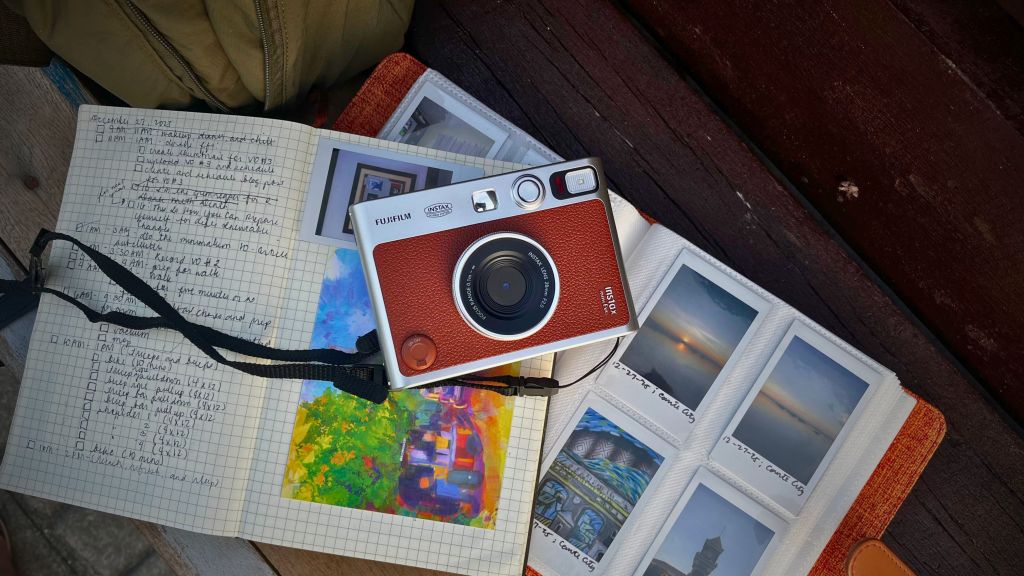
Why Physical Media Still Matters (And Why I Chose the Mini Evo)
For most of my life, my photos lived where they were easiest to keep. On my phone. Occasionally backed up. Rarely revisited with intention. Over time, that arrangement started to show its cracks. Phones get stolen. Devices break. Hard drives corrupt without warning. Entire chapters disappear, not because they weren’t meaningful, but because they were treated as replaceable by default.
Even when nothing was technically lost, something else was missing. Looking at photos on a screen never felt precious in the way I wanted it to. Scrolling through a camera roll is efficient, but efficiency flattens experience. There is no pause, no threshold you have to cross. The act of remembering becomes casual, almost disposable, even when the memory itself is anything but.
The shift toward caring about physical media didn’t come from theory. It came from confrontation.
The first came from family photos. The few physical images we still have from my childhood carry a kind of gravity that digital files don’t replicate. You don’t stumble upon them accidentally. You encounter them. You hold them. They age with you. And that’s when it became uncomfortable to realize how many of my more recent memories with my family existed only as files on a device designed to be replaced every few years. Moments that mattered deeply were stored in a format that assumed impermanence.
The second moment came from a completely different direction. Watching Beyoncé’s Coachella performance and learning that parts of it were shot using older formats like Super 8. There was a noticeable difference in texture and presence. It didn’t feel like nostalgia for nostalgia’s sake. It felt intentional. The medium itself was doing part of the emotional work. That curiosity led me to buy a vintage Panasonic Palmcorder that uses VHS-C tapes and start shooting video again. Suddenly, motion had weight. The footage felt fragile, but it also felt real in a way that endless digital clips never quite do.
That experience exposed a gap I hadn’t fully acknowledged before. I had found a way to anchor moving images, but still photos were still floating. I didn’t have a system for preserving stillness. I didn’t have a practice that treated photographs as objects meant to be kept, revisited, and aged alongside me.
Digital memory often presents itself as permanent, but in practice it’s fragile in a different way. Files vanish quietly. Platforms shift. Accounts get locked or deleted. Images posted online slowly stop feeling like they belong to you, because they were created with visibility in mind rather than remembrance. Long before the Instax Mini Evo entered my life, that tension was already there. I just hadn’t found a tool that aligned with how I wanted to relate to my own memories.
What made the Mini Evo matter wasn’t novelty or convenience. It was how naturally it integrated into moments that felt worth preserving without demanding that everything be saved. I didn’t reach for it during spectacles or peak moments. I reached for it during transitions. When people were changing. When places felt like they were about to disappear from my life. When I wanted to mark the passing of something without announcing it.
The Mini Evo doesn’t promise to capture everything. It asks you to decide what gets to stay. That friction, that moment of choice, turned out to be the entire point.
- Why Physical Media Still Matters (And Why I Chose the Mini Evo)
- Build Quality, Design, and the Tactile Experience
- Shooting Experience: Digital First, Physical Later
- Printing Experience and Film Reality: Preserving Evidence, Not Souvenirs
- Image Quality (In the Context That Actually Matters)
- Battery Life, Storage, and Practical Use
- Long-Term Use: What Changed Over Time
- Who This Camera Is For (And Who It Isn’t)
- What the Instax Mini Evo Makes Possible

Build Quality, Design, and the Tactile Experience
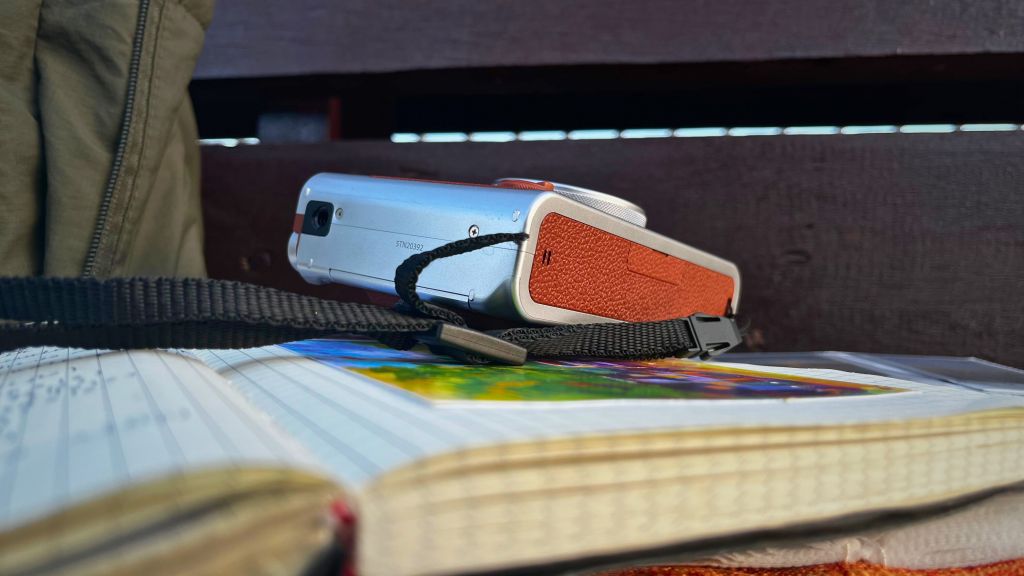
At first contact, the Instax Mini Evo does not try to impress through heft. The body is predominantly plastic, compact in size, and noticeably light in the hand. For some people, that immediately reads as toy-like, especially if you’re used to heavier cameras or metal-bodied devices. In my case, the size amplified that impression. With larger hands, the camera doesn’t naturally anchor itself through weight or bulk, and if it’s sitting on a table unused, it doesn’t assert its presence at all.
That lightness, however, serves a functional purpose. The Mini Evo is easy to carry, easy to slip into a small bag, and never feels like a burden to bring along. Over longer days, especially when paired with other gear, the lack of weight becomes an advantage rather than a compromise. It’s a camera that doesn’t punish you for deciding to bring it, which matters more than initial impressions once it becomes part of a routine.
The design leans heavily into a retro-inspired aesthetic, but not in a purely decorative way. The dials are physical, textured, and deliberately placed. They aren’t there to simulate nostalgia. They actively shape how you interact with the camera. Adjustments require touch and movement rather than taps and swipes, which immediately slows the shooting process. Instead of reacting instinctively the way you do with a phone, you’re encouraged to pause, adjust, and think through composition and settings.
That friction is subtle but persistent. It creates space to experiment. I find myself more willing to try variations, linger on framing, and make small changes rather than firing off multiple versions of the same shot. The interface doesn’t rush you, and it doesn’t try to hide its mechanics behind software decisions. What you change is what you get.
The print lever is the clearest example of how the Mini Evo’s design reinforces intention. Printing is not an extension of shooting. It is a separate, physical action. Pulling the lever feels deliberate, and that separation changes behavior over time. My process naturally evolved around this. If the moment feels immediate or emotionally charged, I commit quickly, but I take my time during the shooting itself. If the situation allows for reflection, I shoot freely and defer printing until later, often at the end of the day or after an event. Printing becomes a closing ritual rather than a reflex.
From a purely functional standpoint, the camera’s controls remain consistent over long-term use. There isn’t a feature that initially feels gimmicky and later redeems itself, nor is there something that shines early and fades with familiarity. The design is straightforward and predictable, which helps it settle into everyday use rather than demanding constant attention.
What stands out most over time is how the Mini Evo requires intention to engage. It does not invite mindless use. You don’t reach for it absentmindedly the way you do a phone. Using it feels like a decision, not a habit. That threshold is small, but it fundamentally changes the relationship between the photographer and the act of taking a photo. The camera doesn’t compete for attention. It waits for it.
Shooting Experience: Digital First, Physical Later
Living with the Instax Mini Evo slowly reorganized how I assign roles to my devices. Over time, my phone drifted almost entirely toward video and utility photography. It became the tool for motion, quick documentation, and images meant to live on screens, whether for stories, clips, or moments that benefit from 4K clarity and immediacy. The Mini Evo settled into a different role. It became reserved for moments that felt contained, quieter, and worth holding onto in a more deliberate way.
This separation wasn’t intentional at first, but it became consistent. With the Mini Evo, shooting is never the end goal. Every image exists digitally first, stored internally or on a microSD card, viewable on the rear LCD before any commitment is made. That hybrid structure fundamentally changes how you approach photography. You’re free to experiment, adjust, and reshoot, but you’re always aware that not every image needs to cross into physical form.
Technically, the shooting experience reflects that balance. The Mini Evo uses a small digital sensor paired with a fixed lens and relies heavily on its digital preview screen. You’re not guessing exposure or composition. You see exactly what you’re working with before making a decision. I review photos every single time, not out of habit, but because that review stage is where meaning is assigned. The screen becomes less about checking sharpness and more about asking whether an image deserves permanence.
Low-light conditions make this process even more intentional. The Mini Evo is not a low-light powerhouse, and it doesn’t pretend to be. Noise becomes more noticeable, detail softens, and technically perfect results are harder to achieve. Instead of treating those conditions as a limitation to avoid, they’ve pushed me to slow down even further. In low light, I become more particular with framing, timing, and subject choice. I shoot knowing that the image needs to carry mood and truth rather than technical perfection. When a low-light photo works, it’s because it captured something fragile or transitional that wouldn’t have translated the same way in harsher clarity.
That awareness changes how I judge images across the board. On a technical level, I’m more critical than I would be with phone photos. If an image is going to be printed, it needs to represent what was actually there. Exposure, composition, and balance matter more when the photo is no longer disposable. At the same time, I’m more forgiving in terms of narrative. I don’t need every image to be clean or sharp. I need it to be honest. If it communicates the feeling of the moment, imperfections become part of its accuracy rather than flaws to correct.
From a usability standpoint, the Mini Evo’s hybrid nature makes this workflow feel natural. Shooting digitally first removes pressure. There’s room for mistakes and hesitation. Printing later restores weight. The camera allows you to explore freely without consequence, but it draws a clear line when it’s time to commit. That line is what separates it from both purely digital cameras and traditional instant cameras that force every shutter press into a physical outcome.
Over time, this rhythm becomes intuitive. The Mini Evo doesn’t rush you, but it also doesn’t let you stay careless for long. It quietly teaches you to separate capture from preservation, and that distinction is where the shooting experience truly comes into focus.
Printing Experience and Film Reality: Preserving Evidence, Not Souvenirs
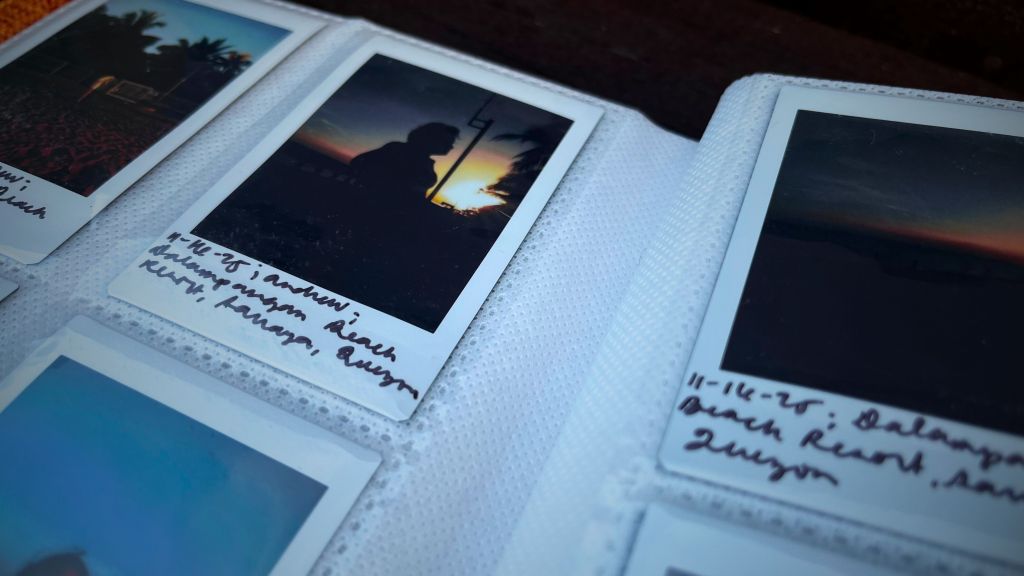
Printing on the Instax Mini Evo does not feel like a reward or a flourish at the end of shooting. It feels closer to preservation. The act itself carries weight because it turns an image into evidence that something existed, that a moment passed, that a version of the world was once arranged this way. That feeling has remained consistent since I started using the camera. It hasn’t softened or become casual with time.
From a practical standpoint, the printing process is straightforward and reliable. Once an image is selected, pulling the print lever initiates the process, and the camera feeds out Instax Mini film at a steady pace. The print develops gradually, with colors and contrast settling in over the next few minutes. There’s no surprise here, which is a good thing. Consistency matters when printing becomes part of a system rather than a novelty.
Instax Mini film itself sets clear boundaries. Each sheet has a cost, and that cost is not abstract. Whether you buy film in smaller packs or bulk boxes, every print carries a tangible price. Over time, this reinforces the idea that printing is not a default action. It’s a decision. That financial friction works in tandem with the physical act of printing to slow things down. You’re not discouraged from printing, but you are asked to mean it.
Color reproduction and exposure tend to lean toward the familiar Instax look. Highlights can blow out if you’re not careful, shadows can compress, and contrast often feels gentler than what you see on the digital preview. Instead of fighting that, I’ve learned to work with it. When an image prints well, it’s because it was chosen with those tendencies in mind. Printing becomes less about chasing accuracy and more about selecting images that translate well into this specific physical language.
Battery impact is also worth mentioning. Printing consumes noticeably more power than shooting, which subtly reinforces separation between the two actions. Long shooting sessions are rarely a problem, but heavy printing will drain the battery faster. In practice, this encourages batching. I often shoot throughout the day and print later, treating printing as a deliberate phase rather than something that happens continuously. That rhythm aligns naturally with the idea of preserving evidence after the fact.
What matters most, though, is how printing reframes ownership. A printed photo doesn’t ask to be shared. It doesn’t need validation. It exists independently of platforms, algorithms, or screens. Once printed, the image belongs fully to you, for better or worse. It can be lost, damaged, or destroyed, but that vulnerability is visible and honest. Unlike digital files, which often disappear silently, physical loss is felt, noticed, and remembered.
In that sense, printing with the Mini Evo is not about nostalgia or decoration. It’s about marking reality. Each print is proof that you were there, that something changed, that time moved forward. The camera doesn’t dramatize that act. It simply makes it possible, and then gets out of the way.
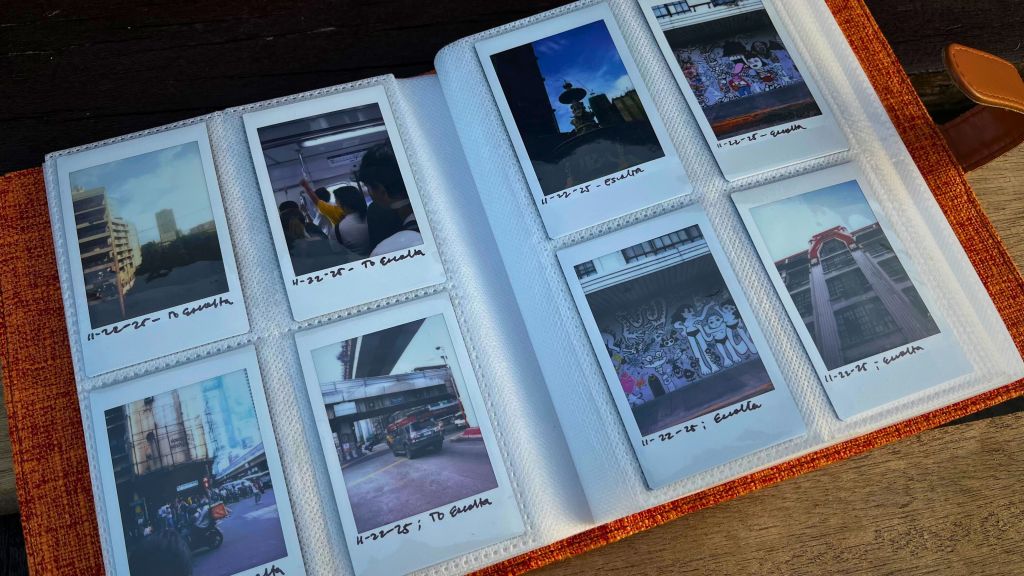
Image Quality (In the Context That Actually Matters)


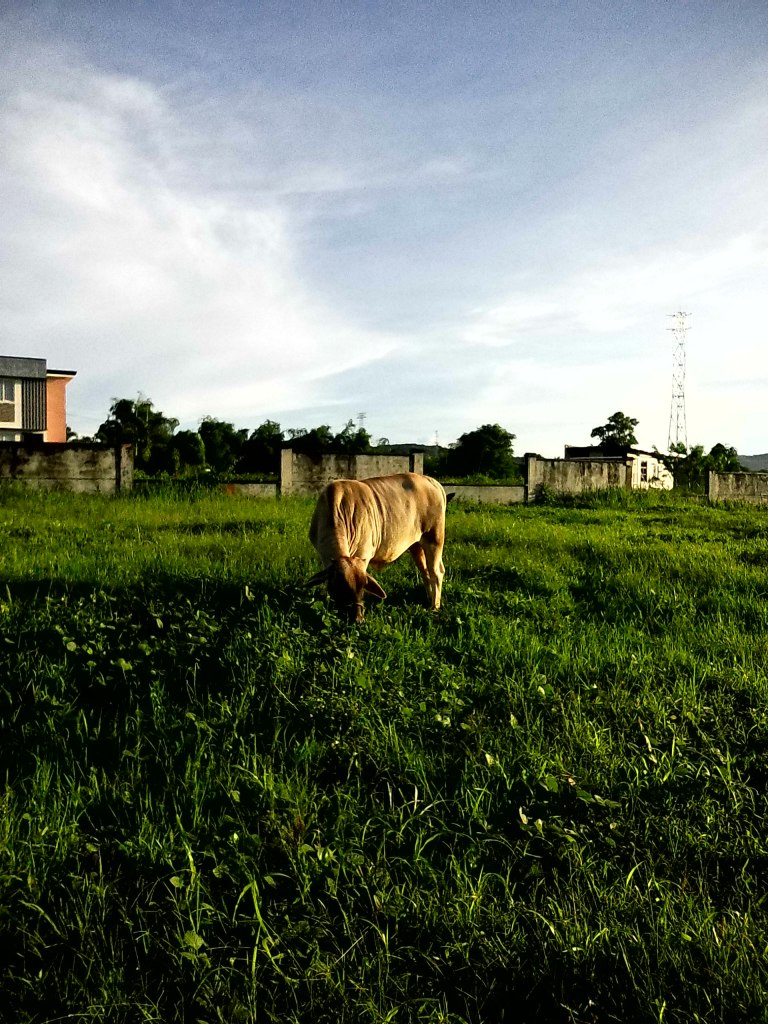
When I look back at Instax Mini Evo prints weeks after they were made, the first thing that registers is never sharpness or resolution. It’s always the mood and the moment. That order doesn’t change with time, and it’s important, because it reframes how image quality should be judged once a photo leaves the screen and becomes a physical object.
At first, there is often a slight sense of visual dissonance. Coming from a visual environment dominated by 4K video, high-resolution phone sensors, and aggressively sharpened digital images, Instax prints can feel understated when you encounter them immediately. The softness is noticeable. Fine detail is limited. Contrast is gentle rather than punchy. That initial reaction isn’t a flaw in the camera. It’s a calibration issue in the viewer.
The Mini Evo uses a small digital sensor paired with a fixed lens and outputs images optimized for Instax Mini film rather than for screen-based viewing. Resolution is modest by modern standards, and the camera does not attempt to compensate with heavy sharpening or aggressive noise reduction. In daylight or evenly lit environments, this restraint works in its favor. Images feel cohesive rather than over-processed, and colors settle into the familiar Instax palette rather than chasing realism.
Low-light conditions expose the camera’s limits more clearly. Noise becomes more visible, detail softens quickly, and dynamic range narrows. The Mini Evo is not designed to dominate darkness, and it doesn’t pretend otherwise. Instead of treating this as a reason to avoid low light altogether, it has made me more particular about how I shoot in those situations. Composition becomes simpler. Subjects become more deliberate. I’m no longer chasing technical perfection. I’m choosing moments that can survive translation into a softer, more fragile visual language.
What’s interesting is how perception changes over time. Images that initially felt visually disjointed, especially when compared mentally to high-resolution digital captures, tend to age better in memory. As the brain adjusts away from screen-based expectations, the Instax print starts to feel complete on its own terms. The limited resolution stops reading as a lack and starts functioning as a boundary that keeps the image anchored to a specific moment instead of letting it blur into endless comparison.
Color reproduction plays a big role here. The Mini Evo leans toward softer saturation and warmer tones, with highlights that need to be handled carefully to avoid blowing out. Shadows compress quickly, but not harshly. Instead of producing dramatic contrast, the camera tends to flatten scenes slightly, which paradoxically allows atmosphere to come through more clearly. Prints feel more like impressions than records, and that quality gives memory space to breathe.
There are situations where I already know the Mini Evo will struggle to translate what I’m seeing. Complex lighting, extreme contrast, or scenes that rely heavily on fine detail rarely play to its strengths. Even then, I still take the shot. Not because I expect technical success, but because the act of taking the photo still matters. The camera becomes a way of acknowledging the moment, even if the result is imperfect.
In that sense, image quality becomes less about optimization and more about honesty. The Mini Evo does not produce images that overwhelm with clarity or precision. It produces images that are willing to age, fade slightly, and change meaning as memory takes over. What it lacks in resolution, it often makes up for in emotional elasticity.
Judged purely by modern digital standards, the Mini Evo’s image quality is limited. Judged by how well a printed image carries a moment forward in time, it succeeds in a quieter, more durable way. The camera doesn’t chase technical dominance. It creates images that accept their own impermanence, and that acceptance is what allows them to last.
Battery Life, Storage, and Practical Use
In everyday use, battery life is something I rarely think about with the Instax Mini Evo, and that’s exactly how it should be. For a hybrid camera that handles both digital shooting and physical printing, the battery holds up well. Shooting throughout the day is not an issue, and even with intermittent printing, the camera never feels anxious or fragile in terms of power. It’s reliable enough that I don’t plan my usage around charging cycles, which matters when a camera is meant to accompany life rather than interrupt it.
Printing does consume more power than shooting, as expected, but the impact is predictable rather than disruptive. As long as printing is treated as a deliberate phase instead of a constant reflex, battery life remains steady. This naturally supports the workflow the Mini Evo encourages: shoot freely, print intentionally, and recharge when it makes sense rather than out of fear.
Storage is where the camera’s practicality really shows. While the Mini Evo does offer internal storage, I rely almost entirely on a microSD card. The reason is simple. It makes backing up and transferring images effortless. Files can be moved, duplicated, and archived across devices without friction, which aligns with my broader approach to preservation. Physical prints matter, but so does redundancy. Having digital copies that can live in multiple places reduces the risk of silent loss.
This dual-layer approach to storage feels appropriate for the kind of memory system the Mini Evo supports. Prints act as physical evidence. Digital files act as backups, references, and context. Neither replaces the other. They coexist.
In terms of reliability, the camera has never failed me mid-use in a way that disrupted a moment. No freezing, no unexpected shutdowns, no erratic behavior that pulled attention away from what I was trying to capture. That consistency matters more than any single specification. When a camera is meant to document transitions and quiet moments, the last thing it should do is announce itself through malfunction.
As for where the Mini Evo lives when it’s not actively in use, it stays in my bag. Always. Not because I expect to use it constantly, but because the moments it’s meant for aren’t predictable. The camera is light enough that carrying it never feels like a commitment, yet deliberate enough that pulling it out still feels like a choice. That balance makes it easy to keep close without turning it into background noise.
In practical terms, the Mini Evo integrates smoothly into daily life. It doesn’t demand maintenance rituals, constant charging, or special handling. It simply stays ready. And when a moment arrives that feels worth preserving, it’s there without hesitation.
Long-Term Use: What Changed Over Time
The most noticeable change after living with the Instax Mini Evo for a while wasn’t about how often I shot. It was about what disappeared from the process altogether. Post-production quietly fell away. I stopped thinking in terms of fixing images later, adjusting them after the fact, or rescuing moments in editing. Before I even press the shutter, I already know what I want and how I want to achieve it. The decision-making moved upstream.
That shift didn’t happen because the camera limits you aggressively. It happened because printing creates finality. When an image is meant to exist physically, indecision feels unnecessary. You either understand the moment well enough to take the photo, or you don’t. Over time, that clarity became habitual. I stopped outsourcing intent to editing and started resolving it in the act of shooting itself.
What surprised me most was how quickly this led to a deeper attachment to physical media beyond the camera. The Mini Evo didn’t just make me print photos. It made me plan for printing. Film became something I proactively stocked, not something I bought reactively. If I knew something important was coming up, I made sure I had film ready. Even during quieter periods, I still found myself buying film without a specific event in mind. The habit wasn’t driven by fear of running out. It was driven by alignment. Physical memory became something I prepared for, not something I improvised.
That behavior says more than any feature list ever could. The camera didn’t feel like a gadget I was evaluating anymore. It became infrastructure. Something quietly folded into how I think about preservation, evidence, and continuity.
What’s equally telling is that nothing about the Mini Evo that initially mattered has faded into irrelevance. There wasn’t a feature that lost its appeal or a design choice that became annoying with familiarity. The camera didn’t reveal hidden frustrations over time. It didn’t demand adaptation beyond what it asked for from the beginning. What mattered at first still matters now, which makes the relationship feel stable rather than novelty-driven.
At this stage, the Mini Evo doesn’t feel like a device I’m actively assessing. It feels like part of a system that’s already decided. The way I shoot, the way I print, and the way I think about memory all adjusted around it and then stopped shifting. That stillness is the clearest sign that it’s earned its place.
Who This Camera Is For (And Who It Isn’t)
The Instax Mini Evo will frustrate people who are deeply attached to modern digital aesthetics and technical dominance. If your baseline expectation is 4K sharpness, perfect low-light performance, and images that immediately look optimized for screens, this camera will feel limiting very quickly. The vintage-inspired design and softer output are not filters you can turn off. They are foundational. If nostalgia feels like compromise to you rather than intention, the Mini Evo will not win you over.
It also isn’t suited for people who treat photography as performance, for example, those who shoot travel moments to be consumed immediately rather than kept over time. If the main purpose of your photos is to circulate them quickly, optimize them for visibility, and move on, the friction built into this camera will feel unnecessary. The delay between shooting and printing, the cost of film, and the commitment required to make something physical all work against that mindset.
Where the Mini Evo quietly excels is with people who care about physical media without needing to announce it. The kind of people who keep things not for display, but for continuity. People who understand that preservation is a practice, not an aesthetic. If you’re already inclined toward holding onto objects, archiving memories, and letting things age rather than constantly upgrading them, this camera will feel immediately legible.
It especially suits those who value memory for themselves first. Not as proof for others, not as content, but as evidence that a moment existed. For that kind of user, the Mini Evo doesn’t feel slow or restrictive. It feels aligned.
What the Instax Mini Evo Makes Possible
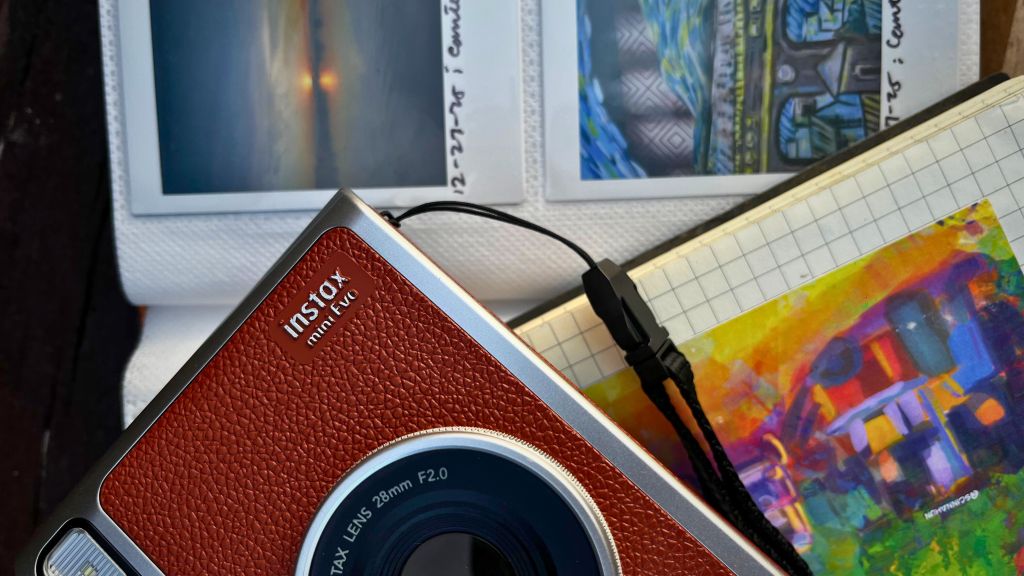
The Instax Mini Evo is not a camera that tries to win you over through performance or novelty. What it makes possible is a different relationship with photographs, one that separates capture from preservation and introduces intention without force.
Its limitations are visible and honest. Image quality is modest by modern digital standards. Low-light performance requires care. Printing costs accumulate over time. None of these are hidden, and none of them feel like design flaws once you understand what the camera is built to do. Those constraints shape behavior rather than restrict it.
Living with the Mini Evo reshaped how I think about memory in practical ways. Post-production stopped being a fallback. Decisions moved earlier in the process. Shooting became more deliberate because printing introduced finality. Over time, this wasn’t something I had to remind myself to do. It became automatic.
More than anything, the camera made preservation feel like a practice instead of an afterthought. Film was something to prepare for. Printing became an act of keeping evidence rather than creating souvenirs. The resulting images didn’t ask to be shared or optimized. They existed quietly, carrying weight without needing validation.
The Mini Evo doesn’t promise to capture everything. It makes it possible to let most things pass and still hold onto what matters. For people who care about physical media, continuity, and memory that can age in real space, that possibility is enough.
Disclaimer: This is a non-sponsored review. The product was purchased by me, and the opinions shared here are based on personal, long-term use.
If you found this piece insightful, consider supporting my work – every contribution helps fuel more in-depth stories, reflections, and meaningful content. Support here!
