
A Watching World, A Crowded Stage
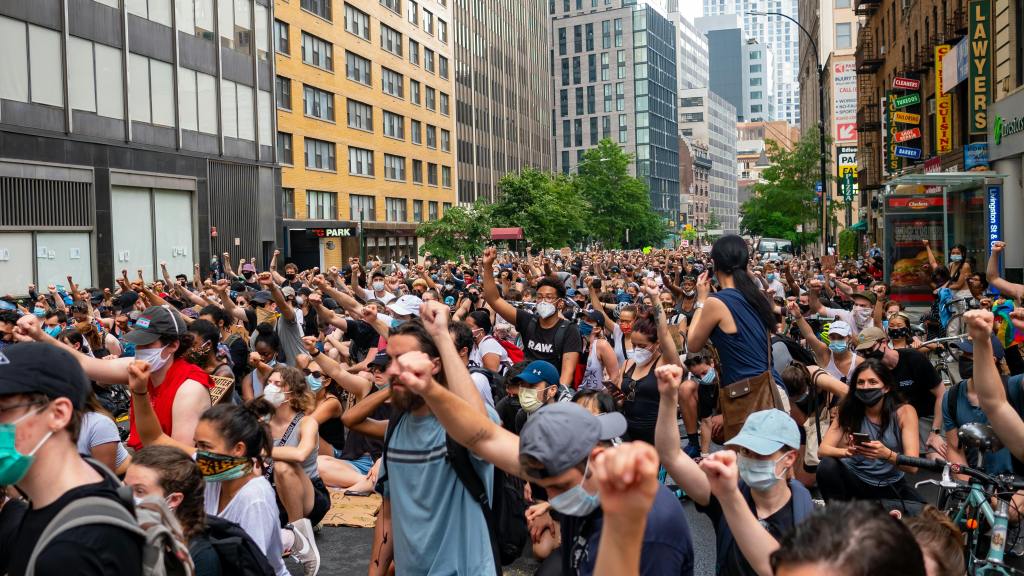
In Jakarta, students flood the streets against labor laws that gut their protections, chanting even as riot police close in. In Kathmandu, young activists rally against corruption, their voices rising through smoke and fire. In Manila, mothers kneel on sidewalks, placing candles for sons taken by extrajudicial killings. These are not private ruptures. They are grief staged under the glare of cameras, drones, and millions of scrolling eyes.
And in the United States, the spectacle turned on one of its loudest defenders. Charlie Kirk, who spent years reframing mass shootings as proof of progressive decay, was shot and killed while speaking at Utah Valley University. For years he said guns were freedom, that regulation was tyranny, that the problem was culture and not weapons. The irony is brutal. The very beliefs he preached hardened into laws and rhetoric that kept the cycle alive. Those same beliefs created the conditions for his death and continue to create fresh suffering for families across America. Kirk’s killing is not a tragic exception. It is a mirror held up to a movement that insists on weaponizing grief while producing it in endless supply.
This is the performance economy of suffering. Pain is no longer only lived. It is packaged, filtered, and pushed into circulation. Algorithms decide which faces of grief will trend. Institutions decide whose pain deserves dignity and whose should disappear. Audiences scrolling through feeds become gatekeepers, branding certain stories “brave” while condemning others as “too much.” Survivors, knowing the terms of the exchange, cut their stories down to fit the script: neat arcs, controlled tone, no rage too sharp for the public’s comfort.
And the performance does not stop with the individual. It spreads into the collective. Protests that should build solidarity are clipped into content for the next cycle. Families who want silence are pushed into press conferences. Commentators twist loss into talking points. Through it all, the rest of us keep watching, keep judging, keep consuming.
So the question is not a metaphor. It is blunt, present, and urgent: who gets to be the face of pain, and what does it cost — not only to the ones forced to perform their grief, but to all of us who have learned to consume it as if suffering were nothing more than a show?
- A Watching World, A Crowded Stage
- Distribution Decides the Damage
- When Public Pain Helps, When It Hurts
- Presentation That Multiplies Harm
- When Politicians Turn Grief Into Propaganda
- How to Witness Without Consuming
- Dwell, Then Interrupt
Distribution Decides the Damage
Pain does not move on its own. It has to be distributed, and that process decides whether grief leads to justice or deepens despair. A protest chant in Jakarta does not stay in the street. It becomes a clip, captioned and set to music, its urgency flattened for the feed. A grieving mother in Manila does not just speak to her neighbors. Her words are cut into a thirty-second segment slotted between commercials. What gets shared, when it circulates, and how long it lingers is what makes the difference between solidarity and silence.
Look at Palestine. Videos of children pulled from rubble and families mourning at funerals flash across screens worldwide. These images spark outrage, but they are also quickly buried under the churn of other stories, forced to compete with celebrity gossip and viral dances. The rawness of the grief is undeniable, yet the distribution system decides its lifespan. An algorithm can stretch attention for weeks or erase it in hours. That is how suffering is simultaneously hyper-visible and invisible, everywhere and nowhere.
The same is true in Nepal, where evidence of corruption spreads fast but fizzles out before reforms take hold. Or in the United States, where grief is politicized at industrial scale. Charlie Kirk made a career out of reframing mass shootings, flooding his audience with claims that blamed progressives instead of policies on guns. Each repetition hardened his narrative until it reshaped how his followers thought about violence. Even after his death, the echo of that rhetoric lingers. Distribution is not just about stories being told. It is about whose story is amplified long enough to alter public memory.
And then there are the stories that never make it far enough to be heard at all. Communities devastated by floods in South Asia, by famine in the Horn of Africa, by fires in Latin America. Their grief is just as sharp, just as urgent, but when no camera or network chooses to broadcast it, it disappears into silence. Distribution does not only carry pain. It selects, edits, and packages pain. It decides what is seen, what is palatable, what is monetizable, and what is left in the dark.
Distribution is never neutral. It is timing, repetition, amplification, and erasure. It decides whether pain becomes a rallying cry for justice, or a spectacle that numbs. It decides whose grief is remembered, whose is distorted, and whose is erased before it can even register.
When Public Pain Helps, When It Hurts
Public pain always exceeds the person who carries it. The moment grief enters circulation, it becomes raw material for politics, markets, and collective identity. The question is never simply “what happened” but “what will be done with this suffering now that it is visible.” That is where the fault lines appear.
Pain helps when it produces pressure that institutions cannot absorb without changing. When grief turns into a demand, when mourning becomes refusal, the system feels it. Public funerals become indictments. Testimonies become evidence. Tears gather into a counterweight strong enough to push back. In this mode, pain is not weakness but leverage. It names what power would rather keep hidden and forces that hidden thing into the open.
But pain hurts when its visibility is permitted only on the audience’s terms. The system does not just allow pain to be seen; it trains us on how it must be staged. Grief must be coherent enough to “make sense.” Anger must be controlled enough to feel “respectable.” Suffering must not spill over into accusation. In other words, public pain is tolerated as long as it does not implicate the ones watching. Survivors who do not follow this script are dismissed as hysterical, manipulative, or simply ignored. The tragedy is not just the original wound but the forced performance layered on top of it.
And then there is the churn – the endless circulation of pain that strips it of demand and leaves only repetition. A system built to maximize attention cannot help but recycle grief until it becomes static, another clip, another scroll. Each repetition without resolution breeds fatigue. People still watch, but less to respond and more to consume. Spectacle replaces solidarity. The wound becomes content, and the more it loops, the more powerless both the sufferer and the spectator feel.
The cruelest turn comes when pain is weaponized not to heal but to reinforce power. Grief can be captured, reframed, and redirected to serve agendas that thrive on division. In this capture, suffering is not simply ignored. It is inverted. Loss becomes propaganda. Trauma becomes justification for more violence. Public pain in this form does not demand change; it produces obedience.
And over all of this hangs the fact that we are never just telling stories into the void. We are telling them under surveillance. The audience does not simply watch; it polices. It decides what kind of tears look dignified, what kind of fury looks unhinged, what kind of mourning is “too political.” This is the Big Brother effect. Even without a single dictator at the screen, millions of small judges enforce the same control. Survivors edit themselves because they know they are being watched from every angle. The performance of pain is not chosen freely. It is shaped by the gaze that will consume it.
That is the paradox: public pain helps when it resists the gaze, when it interrupts the system instead of serving it. But it hurts when it bends to the gaze, when it is disciplined into neat arcs, when it is looped until it loses its edge, or when it is captured and turned against itself. Pain becomes power only when it breaks surveillance rather than submitting to it.
Presentation That Multiplies Harm
The way pain is presented is never neutral. It can heal, but it can just as easily deepen the wound. Presentation is power. Whoever frames grief decides whether it will spark action or reinforce despair.
Governments know this. Authoritarian regimes rely on spectacle. They will show the bodies of enemies to prove dominance, while hiding their own casualties to maintain control. Pain here is weaponized as a warning: step out of line and this is what happens. The presentation of suffering does not open empathy. It closes it, turning grief into intimidation.
Media institutions know this too. A story of loss can be packaged into a headline that flattens complexity. A protest becomes a “clash.” A massacre becomes “unrest.” In the process, the meaning of the pain is rewritten. Survivors watch their own suffering stripped of context, their grief reframed to fit the narrative of editors and advertisers. Harm multiplies not because of the event alone, but because of the way it is translated for consumption.
Platforms do it at scale. Algorithms reward what shocks. A killing circulates because it keeps people scrolling, not because it builds solidarity. Each replay retraumatizes those closest to it, while exhausting those who can only watch. Saturation without resolution breeds cynicism. It teaches audiences to expect tragedy as routine. The result is what power wants: outrage without direction, grief without demand, despair without uprising.
This is the logic of presentation as control. Pain is not only experienced. It is staged, curated, and projected to produce certain effects. Some presentations call people into the streets. Others leave people numb in front of their screens. And when pain is constantly displayed without resolution, it does not just describe suffering. It manufactures more of it.
The wound expands beyond the one who carries it. It spreads into the bodies of those who watch, until an entire population feels bruised and powerless. This is not accidental. It is a tactic. The wrong kind of presentation ensures that grief does not ignite change. It ensures that pain is recycled as spectacle until it becomes background noise.
When Politicians Turn Grief Into Propaganda
No one understands the power of presentation more than politicians. States and movements have always known that grief can be harnessed, not just expressed. Pain is staged, not to heal, but to tighten control.
Funerals become rallies. Leaders place themselves at the center of mourning so that sorrow bleeds into loyalty. The dead are framed as martyrs, their loss folded into the myth of the nation or the cause. Public grief becomes a resource, drawn on to stir rage against enemies and to cement obedience at home.
Violence is framed the same way. Massacres are renamed as victories. Civilian deaths are softened into “collateral damage.” The language itself becomes a weapon, bending the meaning of suffering until it justifies the very systems that produced it.
This is not accidental. It is choreography. By controlling how grief is seen, politicians can redirect its force. Pain that should indict the system is recast as proof that the system must be defended. Instead of solidarity, grief becomes fuel for vengeance. Instead of demands for change, it becomes evidence that nothing must change at all.
The effect is devastating. Communities are forced to mourn inside the script written for them. Their tears are not their own. Their rage is pre-directed. The wound is not allowed to breathe, only to serve.
How to Witness Without Consuming
If pain has been turned into performance, then audiences are not bystanders. Watching is an act. Every click, every scroll, every judgment is a small vote for how suffering will be treated. Pretending that watching is neutral is the first lie that keeps the system alive.
To witness without consuming, you have to refuse the habits that turn grief into spectacle. Do not scroll past a funeral clip like it is another meme. Do not share a protest video just because it shocks you. If all you do is watch, share, and move on, you are grazing on someone else’s wound. Witnessing is not grazing. Witnessing requires weight.
It begins with interruption. Stop yourself in the moment. Ask: why is this in front of me? Who benefits from me seeing it? What is this grief asking of me that an algorithm will never tell me? If you cannot name that, then you are complicit in treating suffering as disposable. The first act of witnessing is slowing down enough to see the frame around the pain.
To witness without consuming also means refusing to police grief. We have been trained to praise calm tears as “brave” and to dismiss rage as “too much.” That training is surveillance at work. It teaches us to enforce discipline on survivors, to reward only those who cut their grief into a neat arc we can swallow. Real witnessing breaks that habit. It honors the scream, the fury, the incoherence. It accepts grief in forms that do not flatter the audience. To consume is to demand tidiness. To witness is to take the wound as it comes.
But witnessing cannot stop at recognition. To look and do nothing is just another form of consumption. Witnessing must move. It must route grief into interruption: sharing resources, amplifying demands, showing up in the street, or even speaking where silence protects the wound-makers. The scale matters less than the refusal to let pain die in your feed. You cannot claim to witness if you leave the world unchanged.
To witness without consuming is to dwell. But dwelling is not endless doom-scrolling or wallowing in despair. Dwelling is a refusal to release the wound until it transforms you. To dwell is to let grief alter your pace, your priorities, your presence. It is to carry the weight long enough that it becomes unbearable to leave it unanswered. This is not sentimental. It is survival. If grief keeps circulating as content, the only way to break the cycle is to dwell in it until it cracks you open and forces you to act.
Witnessing is not a posture of empathy. It is a posture of disruption. It means you let someone else’s suffering rearrange your comfort, your schedule, your sense of safety. Anything less is not witnessing. Anything less is consumption. Anything less is submission to a system that thrives on turning pain into spectacle and leaving it there.
Dwell, Then Interrupt
The question is not rhetorical. Who gets to be the face of pain decides whose humanity counts and whose suffering can be ignored. It decides which grief is turned into a rallying cry and which is buried as background noise. It decides whether pain builds pressure for justice or is drained into obedience.
Every act of watching is political. Survivors already know this. They rehearse their own grief before releasing it, trimming away rage, stitching it into arcs that might pass the audience’s test. They beg for legibility because they know the price of being illegible is silence. And still the system finds ways to strip their grief of agency, flatten it into spectacle, or twist it into propaganda.
Do not pretend you stand outside of this. Every view, every share, every judgment feeds the machine. To reward neat grief and punish messy grief is to enforce the script. To keep scrolling is to let someone’s wound become disposable. To stay silent is to collude with power. The audience is not innocent. You are not innocent.
So dwell. Sit in the weight of suffering until it unsettles you, until it interrupts your comfort. But do not stop there. Let it bend your posture, reroute your habits, force you to move. To dwell is not to wallow. To dwell is to refuse to let grief dissolve into content. To dwell is to hold it until it cracks you open and makes you act.
Because the system will not stop. Politicians will keep choreographing funerals into loyalty. Platforms will keep looping tragedy into profit. Media will keep packaging pain into headlines that distort its meaning. This machine runs until it is interrupted.
The only question left is whether you will keep playing your part. Will you consume pain as if it were another show? Or will you witness it in a way that breaks the loop?
The first keeps the world as it is. The second is the only way anything changes.
If you found this piece insightful, consider supporting my work – every contribution helps fuel more in-depth stories, reflections, and meaningful content. Support here!
