
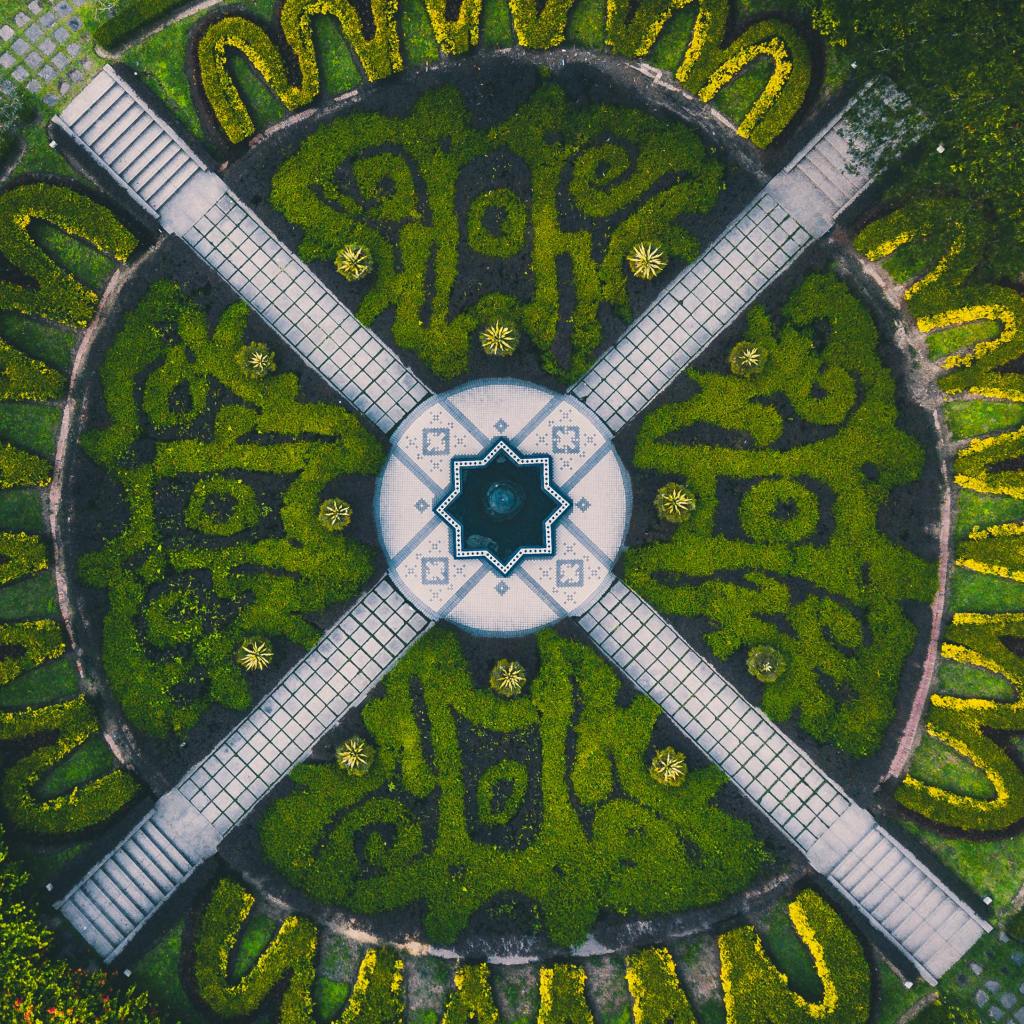
The Garden, The Cage, and the Breathing Shadow
There is a garden. It is beautiful in the way that makes people stop and smile, even if they’re rushing through the day. The grass is always even, the paths are clean, the flowers bloom like they’ve never been touched by drought or storm. To anyone passing by, it looks like peace. Like something gentle lives here.
In the center of this garden is a glass cage. It isn’t obvious at first. It was designed to blend in. No sharp lines, no metal, no warnings. Just clear walls polished to perfection, reflecting the light in ways that make you think maybe it’s not even there. But it is. You only start to notice it when you return to this place more than once. When something begins to feel… off. Too still. Too quiet. Like there’s movement being held in, not out.
Inside the cage is a figure. It doesn’t pace. It doesn’t cry. It sits, perfectly still, looking outward. Sometimes it breathes so shallowly you’d think it was asleep, but it never is. The eyes are open. Watching. Waiting. This figure doesn’t look like you, not exactly. It looks like the version of you that was asked to hold everything. The one that was applauded for being selfless, for holding it together, for sacrificing and smiling and showing up even when they were falling apart. This is the version of you that became so good at being useful, they forgot how to be whole.
The garden grew around the cage slowly, and because it was beautiful, no one questioned what it cost to keep it that way. You were told that what you were doing was noble. You were taught that the best kind of love is the one that asks for nothing. That showing up for everyone else was a kind of spiritual purity. That being tired was a badge. That your dreams were optional. That your voice was dangerous. You were told that it’s not enough to be good. You have to be useful. Every day. Without needing rest.
And so, you stayed. You cut yourself smaller and smaller to fit inside a role that didn’t end. You called it gratitude. You called it maturity. You called it love.
But something has shifted. You don’t remember when it started exactly, but the silence inside the cage doesn’t feel the same anymore. It used to be peaceful. Now, it’s tight. There’s a pressure in your chest. A friction between the you that stayed and the you that wants to leave. There’s a crack in the glass. Hairline. Maybe it started the day you said no for the first time in years. Maybe it came when you imagined what your life could look like if you weren’t always needed. Or maybe it came when you admitted to yourself (quietly, alone) that you’re tired of being the strong one.
You haven’t moved yet. Your hands haven’t pushed against the door. But your breath has changed. It’s deeper now. Sharper. There is a weight sitting on your ribcage, not because the cage is holding you tighter, but because something inside you is getting ready to move. And with that comes a flood of questions. What happens if I leave? Who do I become if I’m not of service? Will anyone still love me if I stop performing?
And the hardest one: Am I allowed to want something else?
No one prepared you for this part. The part where freedom doesn’t feel triumphant. It feels guilty. It feels selfish. It feels like betrayal. You thought the hard part was the fight to break free. You didn’t realize the real battle comes after… the moment when the door is open, and you’re still standing inside.
This is that moment. The breath before the step. The weight before the leap. The heartbeat before your life changes.
And that’s where this begins.
- The Garden, The Cage, and the Breathing Shadow
- The Role I Was Given – Service as a Survival Strategy
- The Symptoms of Disappearance (Before the Collapse)
- The Glass Breaks; But the Shadow Doesn’t Step Out
- Reclaiming the First Breath (Even If It Shakes)
- What It Means to Love Without Disappearing
- The Shadow Moves
The Role I Was Given – Service as a Survival Strategy
I didn’t choose this role. At least not consciously. It was handed to me slowly, piece by piece, dressed up as praise.
It began with little things. Being the one who knew how to fix things quickly. Being the one who could keep a level head when others were falling apart. Being dependable, responsible, thoughtful. At first, it felt good. Affirming. Safe. There was a quiet comfort in being the one people turned to. I learned early that stability, even if it cost me something, made everyone else breathe easier. So I made that trade often.
The problem is that over time, usefulness became my entire identity. I wasn’t just someone who helped—I became the one who always helps. The one who always understands. The one who gives even when they have nothing left. The one who doesn’t ask for too much. Or anything, really.
And people loved me for it. I was labeled “strong” and “grounded” and “mature for my age.” I was admired for how much I could hold. The more I held, the more I was praised. The more I gave, the more people said, “I don’t know what I’d do without you.” That line, in particular, hit something deep in me. It felt like worth. It felt like love.
So I kept going. Even when it hurt. Even when I was tired. Even when I wanted to fall apart myself.
Eventually, it didn’t feel like a role anymore. It felt like a requirement. Like a condition of being loved, or even just being safe. I started to believe that if I wasn’t of service, I wasn’t useful. And if I wasn’t useful, then I wasn’t wanted. It wasn’t just that I wanted to help – it was that I didn’t know who I was outside of helping.
I sacrificed sleep. Money. Time. Energy. Space. Creativity. Boundaries. Sexual freedom. Joy. But I never called it sacrifice. I called it being a good person. I called it loyalty. I told myself, “They need me. I can rest later.” I told myself, “This is what love is. This is what family is. This is what success demands.” Over and over. Until my own voice stopped sounding like mine.
There’s a specific kind of pain that comes when you realize you built your entire identity around disappearing for other people. You look back at years of selflessness and suddenly see it for what it was: a slow erasure. An unconscious exchange. I’ll be who you need, if it means I’m never left behind.
But now that I’ve cracked the glass, I can’t unsee the cost.
Because once you name it, you feel the grief. The grief of being everyone’s lifeline and no one’s priority. The grief of not knowing how to ask for help without feeling like a burden. The grief of wondering if the people who loved you for your usefulness will still love you when you finally stop performing.
And it’s hard. It’s hard to sit in that grief without rushing to fix it. It’s hard to stay in the discomfort of being human, not just helpful. It’s hard to admit that the role that once kept you safe has now become the very thing keeping you stuck.
But naming it matters.
Because you can’t walk out of the cage until you see what it’s made of. And mine was made of service. Wrapped in praise. Reinforced by fear.
And now, I’m just beginning to ask what it means to live outside of it.
The Symptoms of Disappearance (Before the Collapse)
Disappearance does not always come with silence or stillness. Sometimes it arrives in full motion, right in the middle of your most productive weeks. You answer every message. You show up to every responsibility. You keep giving, keep smiling, keep checking the boxes. And yet, deep underneath all of that movement, you are slowly fading.
It is not the kind of fading that anyone can see. That is part of what makes it so cruel. From the outside, you look fine. You are holding it together. You are still “you.” You are still dependable. Still grounded. Still competent. So no one asks if something is wrong. No one wonders if you are hurting. Because people only ask questions when you break things. Not when you quietly disappear inside a life that no longer feels like your own.
At first, the signs felt too small to name. There were tiny jolts in my chest every time my phone lit up with another request. Not panic, just something tight. Like my body bracing. And still, I replied. I said yes to things I wanted to say no to. I said, “Don’t worry about it” when what I meant was, “Please help me hold this.”
Then came the spacing out. I was there, technically. But inside, I was somewhere else. During conversations. During work. During meals. I began to notice the delay between what I felt and how I reacted. As if some part of me was standing outside my body, watching me move through the world like a role I had already outgrown.
I told myself it was just fatigue. I told myself I needed a break. A weekend. A change of scenery. A little more sleep. But even after sleep, I woke up tired. Even after time off, I returned more hollow. I started to feel like I was living in a body that was working for everyone except me.
There is a particular type of guilt that wraps around you when you feel this way. Because nothing has gone terribly wrong. No one has hurt you recently. Your house still stands. Your work still gets done. Your relationships still function. So you begin to ask yourself what is wrong with you. Why you feel numb. Why you feel so deeply alone when you are still surrounded. Why you can no longer find joy in the places that used to light you up.
This guilt is quiet, but it is brutal. It tells you that maybe you are ungrateful. That maybe you are being dramatic. That maybe you are simply not trying hard enough. So you try harder. You put more things on your calendar. You say yes to more things that don’t nourish you. You overcompensate. You double down. You give even more.
But what you are really doing is disappearing faster.
My body started giving me signals that I refused to acknowledge. My shoulders felt like concrete. My appetite became erratic. Some days, I craved food just for the distraction. Other days, nothing tasted like anything. I stopped reaching for water. I stopped going outside. I stopped stretching. Not because I did not care, but because something in me had gone dim. It felt like everything was happening through a screen. Even my own thoughts.
I found myself scrolling through content without remembering what I had just watched. I kept music on constantly, not to enjoy it, but to drown out the noise inside my head. I would stare at blank documents or unfinished messages for hours, unable to begin. Creativity vanished. Even fantasy (the soft place I once escaped to) went quiet. Desire felt like too much work. Pleasure felt unreachable. I was still technically living, but not from a place of presence. I was performing aliveness.
And no one noticed. That part is maybe the hardest. I was still checking in on people. Still showing up to help. Still being the listener. The problem-solver. The responsible one. So no one thought to ask if I was slipping. No one thought to say, “Are you okay?” Because my breakdown did not look like breaking. It looked like perfect functioning. It looked like being on time. It looked like remembering other people’s birthdays.
It is terrifying to realize how far you can disappear without anyone knowing. To realize how well you’ve trained yourself to perform stability. To realize that the parts of you that needed holding have gone untouched for so long, they have stopped asking to be held.
You start to notice how long it has been since you cried in front of someone. How long it has been since you said, “I need help,” without immediately following it with, “But it’s okay if you can’t.” You start to wonder if anyone has ever really seen you outside the role you’ve mastered.
And worst of all, you start to wonder if there is anything left to come back to.
Because when you have been performing for so long, rest does not feel like healing. It feels like guilt. It feels like failure. It feels like risk. And so you keep running on autopilot, afraid of what will rise to the surface if you ever truly stop.
But eventually, something breaks. Not loudly. Not all at once. Maybe it starts with not replying to a message. Or canceling a plan. Or sleeping too long on a Sunday and not feeling bad about it. Maybe it starts with a tiny moment of stillness where your body finally speaks.
And in that moment, you feel it.
You have been gone.
Not physically. Not entirely.
But the truest parts of you have been buried under the weight of your usefulness. And now, they are asking to come back.
The Glass Breaks; But the Shadow Doesn’t Step Out
It didn’t happen like I thought it would. No dramatic shattering. No thunderclap of realization. No furious breakdown that cleared the air like a summer storm. The break came quietly. Soft. Almost accidental.
One morning, I opened my eyes and didn’t reach for my phone. I didn’t check for messages. I didn’t rehearse the to-do list in my head. I just lay there, staring at the ceiling, and something in me refused to move. It was not depression. It wasn’t sadness. It was something else. Something older. Something more alert. A voice I hadn’t heard in years whispering, What if you didn’t? What if you didn’t do anything at all today?
That voice was the crack.
Later, it was a decision not to reply to a message immediately. A simple “seen.” No explanation. No overfunctioning. Just space. My heart raced as if I had broken a law. My skin felt warm, almost feverish, like my body was flushing out the chemicals of guilt before they could settle in my muscles. My hands tingled. I wasn’t in danger. But I felt hunted by the idea that I should be doing something.
I started noticing how much of my life was designed to preempt other people’s needs. How I moved through rooms quietly, how I answered questions before they were fully asked. How I softened my voice, my words, my desires. How I only took up space if I could justify it with usefulness. And once I saw it, I couldn’t unsee it.
That was when the glass cracked deeper.
I imagined that once I saw the cage, I would immediately break free. That I would leap through the opening, lungs full of fire, claiming my new life like a revolution. But that is not what happened.
Instead, I froze.
Not physically. I still moved through my day. But the shadow inside the cage, the part of me that had waited so long for freedom – it did not rush the door. It stood there. Breathing. Watching the light pour through the fracture. And it did not move.
Because leaving is not just about exiting a place. It is about unlearning the belief that you are only valuable inside the walls.
The moment the cage weakens is not just the beginning of freedom. It is the beginning of fear. Because now you know you can go. And if you don’t, the truth becomes undeniable.
You are the one choosing to stay.
The guilt comes in waves. It is not logical. It comes as a tightening in the chest when you choose yourself instead of responding to someone else’s urgency. It comes as a full-body ache when you say no, even softly. Your stomach knots. Your hands itch. You feel heat rising behind your ears. Your eyes sting… not from tears, but from the weight of restraint. You are fighting your own instincts, instincts you were taught were moral and good. And now you are asking, What if that goodness came at my expense?
Sometimes the guilt disguises itself as grief. Grief for the role you played. Grief for the comfort of being predictable. Grief for the identity that made you useful and safe. Grief for the version of you that everyone loved, even if that version was dying inside.
There is a phantom pressure that lives in your body after years of being needed. Even in stillness, your shoulders remain tensed, waiting for a call, a problem, a need to rise. The air around you feels full, like a presence is missing that you forgot how to live without. Sometimes you catch yourself making excuses, planning your retreat back into the cage – just one more task, one more favor, one more moment of being who they remember.
You light candles. You take longer showers. You try to enjoy the quiet. But your body twitches. Your mind searches for punishment. For consequence. For a hand to come down and tell you that you have done something wrong.
But no one comes.
And that might be the loneliest moment of all. Because now, the weight of your own freedom is in your hands. The door is open. The cage is cracked. The garden is still there, still pretending to be peace. But now you know the truth.
No one is stopping you.
You just don’t know how to leave.
You stand barefoot in the space between who you’ve always been and who you’re becoming. The floor is cold. Your legs are heavy. The air smells unfamiliar, like wet leaves and metal and memory. You hear birds outside the glass. Distant. Patient. You press your palm against the crack. The surface is cool. Almost soft now. Your breath fogs the glass. You can smell yourself. Your sweat. Your hesitation. Your aliveness. And still, you do not step through.
Because you are waiting for something. Permission. An invitation. A voice to say, “It’s okay now. You can go.”
But there is no voice.
Only yours.
And you are still learning how to use it.
Reclaiming the First Breath (Even If It Shakes)
The first breath is not a victory. It is not a declaration. It is not the euphoric gasp they show in movies when the hero finally surfaces from underwater. No music swells. No light floods the screen. The first breath is raw. Unstable. Clumsy. It enters your body like it does not belong there, like your lungs have forgotten how to receive anything without bracing for consequence. It stings.
It happened when I stopped replying. Just once. One message. It was late. I was tired. My hands hovered over the keyboard. I could feel the words forming like muscle memory. “Yes, of course.” “No problem.” “I got you.” But I didn’t type them. I locked my phone. I turned it face-down. I walked away.
And immediately, my whole body rebelled.
Not in relief – at least not at first. In panic. My chest tightened, like I had broken an invisible rule. My heart kicked into gear, not from fear of danger, but from the sheer absurdity of having chosen myself over someone else’s need. My skin prickled with heat. Not the comforting kind. The kind that says something is wrong, something is off, something is unfinished. I felt like I had committed a small violence by saying nothing. That silence, that absence of service, felt like betrayal.
This is what no one talks about. That sometimes, self-respect feels like doing something wrong. That even the gentlest forms of self-preservation can make your nervous system scream. It is not because you are broken. It is because you have trained your body for years to equate self-abandonment with goodness. You have built an identity out of responsiveness, out of consistency, out of being available. And when you finally disrupt that pattern, even slightly, your entire system interprets it as threat.
You walk through your house and feel it everywhere. The dishes in the sink you chose not to wash. The messages left unread. The phone on silent. The unanswered expectations. You look at these things, and they do not feel like liberation. They feel like danger. Like unfinished work. Like risk. You do not feel powerful. You feel exposed.
I tried to soothe myself with logic. I reminded myself that no one was angry. That nothing was collapsing. That I was allowed. And still, the guilt came. It rose like steam from my skin. It coated my tongue. It buzzed under my fingernails. I felt like a fraud. Like someone who had tricked people into thinking I was dependable. Like someone who would be found out for resting.
And yet, I breathed.
It was a shallow breath. My chest barely expanded. But it was different. I had not earned it through labor. I had not traded it for anything. I had not bought it with sacrifice. I simply allowed it.
That was the beginning.
Reclamation does not happen in bold declarations. It begins in the quiet. In the refusal. In the absence. It happens in the moment you choose to sit still while the voice in your head lists every reason why you shouldn’t. It happens in the moment you say no and then spend the next hour convincing yourself that you are not heartless. It happens when you close your laptop instead of pushing through. When you skip the gym without promising to “make up for it tomorrow.” When you let your body be tired without calling yourself lazy. When you let yourself be unreachable without panic.
Sometimes, that freedom is so new it feels like grief. You feel the absence of urgency and mistake it for loneliness. You feel the stillness and mistake it for laziness. You feel the slowness and mistake it for failure. It takes time to untangle those lies from your muscles.
You notice how hard it is to do small things just for pleasure. You cook a meal for yourself and find it hard to enjoy. You take a long shower and feel the itch to get back to work. You lay in bed without your phone and suddenly remember everything you didn’t do today. You journal but feel like you’re wasting time. You create but hesitate to post it. You dress up for no reason but feel the ghost of judgment hovering. You are trying to learn how to exist without transaction, and that terrifies every part of you that was raised to believe love is earned.
The world around you does not validate these quiet rebellions. It does not clap when you rest. It does not praise you when you cancel. No one sends flowers when you choose yourself. There are no standing ovations for boundaries. So your reward is internal. At first, it is small. Almost imperceptible.
But then something shifts.
You begin to hear yourself again. Not the performing voice. The real one. It is low, unfamiliar, almost hoarse. But it is yours. You feel the faint edge of desire again, even if it is fragile. You want color. You want softness. You want something that is just yours. Maybe music. Maybe writing. Maybe quiet mornings where no one asks for anything. Maybe the stretch of your own limbs in a room where no one is watching.
You begin to experience time differently. Not in panic. Not in survival. But in curiosity. You ask, “What if I did nothing today?” And not in a depressive spiral, but in wonder. In experimentation. You test the edges of your autonomy. You let the texts wait. You let the laundry sit. You sit in the quiet, not because you are shutting down, but because you are coming back.
That breath you took? The one that felt like sin?
That was your arrival.
Not a final destination. Not the climax of healing. Just the start. The first touch of air after years spent suffocating in obedience.
It will not feel beautiful at first.
But it is sacred.
And it is enough.
What It Means to Love Without Disappearing
I don’t want to just survive this life. I want to taste it. And not just in the metaphorical way people post about on the internet. I mean I want to feel it against my skin. I want to wake up and feel like the day ahead belongs to me – not in the way a job or a responsibility belongs to someone, but in the way a quiet morning belongs to the person who chooses to walk through it slowly, barefoot, with nothing to prove. I want to step into each day without preparing for war. I want mornings that do not require armor.
I want to love life again, but this time with my full body present. I want to sip hot drinks without looking at a clock. I want to cook for myself in a kitchen filled with music and light, not because someone needs to be fed, not because it’s the right thing to do, but because the act of caring for myself feels like art. I want food that lingers. Coffee that cools slowly while I write. A room that smells like cinnamon, rosemary, or whatever scent reminds me that I am not in a rush.
I want to walk down unfamiliar streets at dusk, wearing something that makes me feel cinematic even if no one else notices. I want to feel the weight of air before rain. I want to carry silence like it’s a song only I know. I want to pause in the middle of a conversation – not because I’ve lost my thought, but because the moment is full and it doesn’t need to be filled with more noise. I want space between my words. I want my life to have a rhythm that no one else wrote for me.
I want to feel my own weight in a room. Not the weight of expectation or duty or performance. I want to sit with my own posture and feel like I’m enough just because I’m breathing. I want to feel my feet on the floor and not brace for impact every time someone says my name. I want my name to sound soft when I say it. I want to enjoy the shape of it in my own mouth. I want to belong to it again.
I want to be generous without being emptied. I want to give without negotiating with exhaustion. I want to feel the warmth of caring for someone without the quiet dread that it will cost me parts of myself I can’t afford to lose again. I want to send voice notes to friends not just when they need something, but when I’m laughing alone in my room. I want my friendships to feel like a quilt – something warm I can wrap around myself, not another project I have to maintain.
I want my body back. The one I gave to pressure. The one I offered up to utility. The one I overextended for efficiency. I want my body in the way it responds to slowness. To warmth. To sleep without alarms. To sunlight through curtains at noon. I want to wake up to the sensation of softness beside me – blankets, skin, my own breath. I want to stretch without a timer. I want to move because it feels like worship, not penance.
I want silence again. Not the silence of distance or absence. The silence that smells like wood and books and morning. The kind of silence that makes room for clarity. The kind that lets ideas arrive on their own. The kind of quiet where no one’s watching and I still feel alive. Where I still feel wanted.
I want a life that isn’t measured by how needed I am. I want to measure it by the things I notice – the way the light hits my wall at 4:17 PM, the exact second a street dog stretches out in the sun, the way my own voice sounds when I’m talking to someone I trust. I want to measure life by how often I feel like I can breathe all the way down to my stomach without flinching.
And yes, I want beauty. Not expensive beauty. Not curated beauty. I want the kind that catches me off guard. A flower on the sidewalk. A stranger laughing like they mean it. A stretch of sky that looks like a painting I forgot I was allowed to see. I want the beauty that reminds me I am not late. I am not behind. I am not missing anything. I am just here, and this moment is mine.
I want all of this. And still, I deny myself pieces of it. Because I’ve lived too long under systems that reward exhaustion and call it excellence. I’ve lived too long shrinking my wants to fit someone else’s comfort zone. I’ve lived too long performing survival like it’s an identity I can’t put down.
But I don’t want to live that way anymore.
I want to belong to myself.
And if I must fight for that belonging – if I must choose it over and over, even when the guilt snarls and the impulse to explain comes rising up – I will. Not just once. Not just loudly. But every single quiet day that asks, “Will you stay with yourself this time?”
Yes.
Even when it’s inconvenient.
Even when no one claps.
Even when no one notices but me.
Because I notice. I notice every breath I take that doesn’t cost me my softness.
And that, to me, is what love really is now.
The Shadow Moves
It doesn’t happen in the way you’d think.
There is no breakthrough. No explosion of glass. No scream of arrival. No grand moment that declares, I have changed.
The shadow inside the cage doesn’t sprint toward freedom. It doesn’t run into the light like some reborn version of itself. It simply stands. It shifts its weight. It breathes all the way down to its belly. And then, without asking for permission, it takes one deliberate step forward.
Everything in the body resists it. The muscles remember every time forward meant danger. Every time visibility came with consequences. Every time presence was followed by punishment. The breath catches. The heart stutters. But it keeps going.
Because this time, the step isn’t about proving anything. It’s not for show. It’s not to prove strength. It’s not a performance of healing. It’s a declaration of presence. A whisper in the bones: I am still here. I’m not hiding anymore.
The cage doesn’t vanish. It stays behind like a ghost, like a shell you’ve outgrown. You can still feel it if you close your eyes. But it no longer fits. The walls feel too tight. Too quiet. The air too stale. You want warmth. You want color. You want mess and texture and risk.
You don’t want peace that costs you your voice. You don’t want stillness that starves you. You don’t want routines that keep you small and call it safety.
You want more than survival.
You want a life that responds when you reach for it. You want mornings that greet you like an open window. You want nights that hold you, not out of exhaustion, but out of choice. You want rooms where you don’t have to scan for where your softness is a liability. You want to wake up and not flinch when you remember you exist.
You don’t want to tiptoe anymore. You don’t want to apologize for needing rest, for saying no, for choosing quiet, for pulling back, for asking for more, for asking for less. You don’t want to keep proving you’re worth keeping just because you’ve made everyone else’s life easier.
You don’t want to be the one who holds it all anymore.
Because now you want to be held. By silence. By breath. By time that is slow and unstructured. By work that makes you feel alive, not just functional. By people who don’t require a diluted version of you. By moments that feel like yours again. Fully. Messily. Beautifully.
When the shadow steps out of the cage, there is no applause. No gold light. No sudden wave of validation.
There is just space.
And at first, it’s terrifying.
But slowly, that space becomes yours. It becomes a field. A room. A street. A sky. A sentence you whisper to yourself at midnight when the guilt tries to crawl back in.
I am allowed to be here.
Not because I earned it.
Not because I’m productive enough, helpful enough, healed enough, generous enough.
But because I am.
And now, you walk.
Not fast. Not loud.
But fully.
You carry every version of yourself – every time you stayed silent, every night you overworked, every time you said yes when you wanted to scream no. You do not pretend those parts of you are gone. You just stop letting them steer.
The garden still exists. The glass cage still glimmers somewhere behind you.
But you?
You are moving.
And for the first time, it’s not because anyone needs you to.
It’s because you want to.
And that, finally, is enough.
If you found this piece insightful, consider supporting my work – every contribution helps fuel more in-depth stories, reflections, and meaningful content. Support here!
