
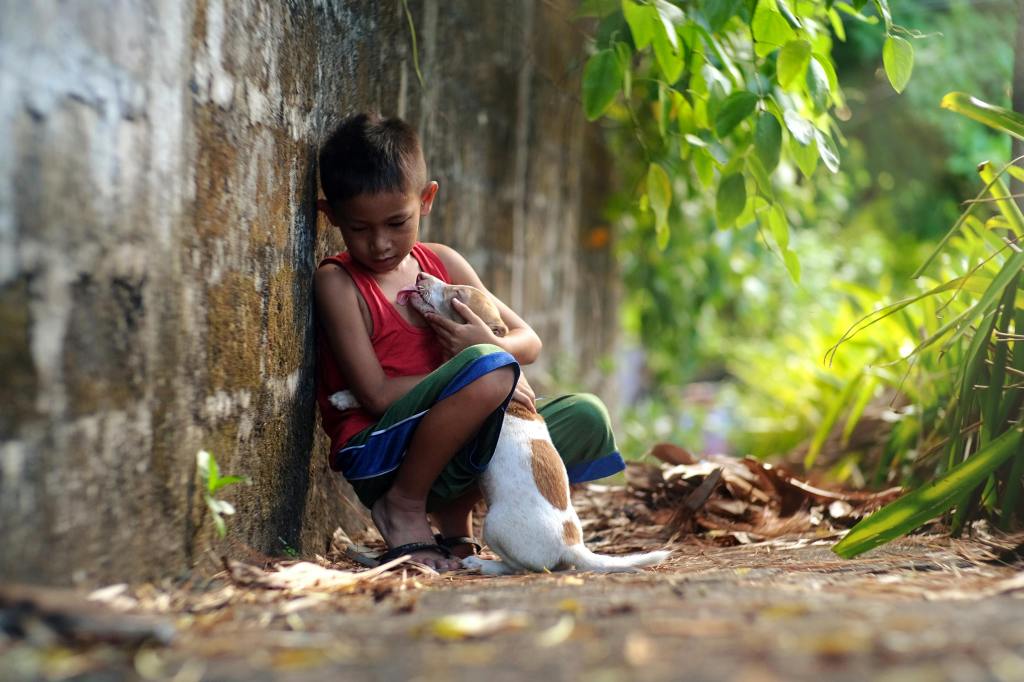
What It Means to Be Proudly Filipino Today If No One Is Watching
We cheer when we’re seen. When a Filipino wins on the global stage – whether in boxing rings, beauty pageants, viral moments, or international award shows – something stirs in us. That feeling of being represented, finally, in a world that often overlooks us, is powerful. These public victories feel like personal ones. For a moment, we are reminded that we exist, that we belong, that we are worthy of recognition.
But beyond the shared excitement of those highs, a quieter question lingers. What happens when the spotlight fades? Who are we when no one is clapping? What does it really mean to be proudly Filipino when there is no audience, no trending headline, no applause?
Filipino pride, as we’ve come to know it, is often tied to external achievement. It rises sharply when we are validated from outside, when the world sees us as worthy, exceptional, or entertaining. But pride that only lives in visibility is delicate. It becomes reactive, dependent on something we cannot always control. And over time, this kind of pride, no matter how sincere in the moment, begins to feel hollow. When we can only celebrate ourselves when others approve of us, are we really free?
To be proudly Filipino today requires a deeper look at where our pride comes from and who it is really for. We have inherited a complicated relationship with recognition, shaped by colonization, migration, and centuries of needing to prove our worth. It is not surprising that so much of our cultural identity has been funneled into symbols that are easy to showcase: the world-class performer, the ever-smiling citizen, the hardworking OFW, the colorful street festival. But pride cannot be reduced to a stage. It must be something we can carry even in silence.
This is not a rejection of joy, celebration, or recognition. It is an invitation to move inward. To reflect on the foundations of our cultural identity. To ask what kind of pride can exist without a hashtag or a headline. Because pride that is performed disappears. Pride that is lived remains.
And this is not just a Filipino question. Any culture that has been simplified, romanticized, or exported for consumption knows this tension. What gets celebrated is not always what gets protected. What becomes visible is not always what is most valuable. The work of reclaiming cultural pride is often quiet, sometimes lonely, and almost always uncomfortable, but it is also where sovereignty begins.
To be proudly Filipino today is to go beyond performance. It is to return to what sustains us, not just what sells us. It is to preserve what matters even when it is not admired. It is to choose care over spectacle.
Because when the clapping stops, the question remains:
Are we still proud?
Are we still rooted?
Are we still awake?
- What It Means to Be Proudly Filipino Today If No One Is Watching
- When Filipino Pride Is Reduced to Applause and Icons
- How Filipino Identity Is Flattened and Why It Deserves More Depth
- How to Love Filipino Culture Without Romanticizing It
- Quiet Nationalism in the Philippines and Why Small Acts of Pride Matter Most
- Beyond Flags and Festivals Turning Filipino Pride Into Real Power
- Filipino Pride Decoded for Today (FAQ Section)
- A Pride That Doesn’t Need Permission and Why Your Culture Is Enough
When Filipino Pride Is Reduced to Applause and Icons
Pride has long been a reaction, not a foundation. For many Filipinos, it rises in moments of public success. A singer is praised on an international stage. A Filipino-made product wins a design award abroad. A foreign celebrity compliments our food, our beaches, or our warmth. The internet erupts. “Pinoy pride!” floods the comments. We share. We celebrate. And for a fleeting moment, we feel seen.
There is nothing inherently wrong with these reactions. They come from somewhere honest. After centuries of colonization, erasure, and survival, recognition feels like restoration. We have been made invisible so many times that being acknowledged can feel like justice. But when pride only comes from outside validation, it becomes a cycle of dependence. It no longer grows from the inside out, but from the outside in. We begin to chase applause, not because we want to perform, but because it is the only time we believe we are allowed to feel proud.
This is why pride often becomes attached to icons. The overseas worker. The beauty queen. The undefeated athlete. The child genius. The viral sensation. These figures become carriers of national identity. They are tasked with embodying what it means to be Filipino, often without being asked. Their personal victories are transformed into collective redemption. And while these figures may inspire, the danger is that they begin to replace our sense of self. We start to see pride as something that must be earned, something that arrives when others recognize our excellence, not something that is already ours.
Other post-colonial cultures experience this too. In India, success stories in tech or beauty often become symbols of national pride. In Mexico, global appreciation for tacos or art becomes a way of feeling visible again. In South Korea, the global rise of K-pop and cinema is frequently linked to feelings of national validation. But when pride is reduced to icons and applause, the culture itself begins to shrink. It becomes curated, palatable, consumable. We become performers of identity instead of carriers of it.
To move forward, we have to name this pattern. We have to notice how often we wait for someone else to tell us we are worth celebrating. We need to ask why we still feel we need permission to be proud.
Pride that comes only when others are looking will always vanish when they look away.
How Filipino Identity Is Flattened and Why It Deserves More Depth
There is no shortage of ways to describe what it means to be Filipino. Ask someone and they might say it’s our warmth, our food, our faith, or our talent for hospitality. Others will mention our humor, our resourcefulness, our resilience. These answers are familiar, and often offered with pride. But when a culture repeats only its most celebrated traits, even the truth begins to feel narrow.
Filipino identity, as popularly portrayed, has been reduced to what is easiest to showcase: the tricycle squeezing through narrow streets, the hand-painted jeepney, the smiling face serving food in a bustling market. These images are sincere. They speak to real parts of who we are. But when they are elevated as the default symbols of an entire nation, they begin to obscure more than they reveal. They offer comfort and color, but not always complexity.
This flattening did not happen by accident. It is the result of centuries of colonization, tourism marketing, diaspora branding, and the need to appear pleasing to the outside world. It is not surprising that we have learned to curate ourselves. We highlight the traits that make us welcome guests or reliable workers. We emphasize the parts of our culture that are easiest to translate across borders. Over time, we start to internalize these versions. We begin to believe that being Filipino must always look a certain way, sound a certain way, behave a certain way.
But our cultural identity has always been much larger than that. It stretches far beyond the aesthetics of street festivals and exportable food. It is held in the knowledge systems that have survived colonization. In the stories passed through generations, unrecorded but deeply remembered. In the rituals practiced in the mountains, the weaving patterns in Mindanao, the chants still sung in Palawan. In the quiet resistance of indigenous communities who continue to protect land that modern maps do not even name.
It is also in the difficult parts – the contradictions, the forgotten beliefs, the fragmented archives of what we were before we were told who we had to become. It is in the tattoos once called barbaric that now speak of heritage. In the ancient script mistaken for art when it is actually language. In the names of rivers and mountains that predate conquest and commerce.
To flatten identity is to silence these things. It is to remember only what is convenient and to forget what is inconvenient, what is too raw or too quiet to be marketed. And yet, these are the things that keep a culture alive from the inside.
We must be willing to unlearn the idea that pride comes only from the vibrant or the visible. There is pride in remembering what was nearly lost. There is pride in refusing to let our complexity be collapsed into decoration. There is pride in asking harder questions – about what we’ve forgotten, what we were made to erase, and what we must now choose to recover.
To be Filipino is not just to be colorful, hospitable, or joyful. It is also to be layered, unfinished, and in many ways still returning to ourselves. The most powerful pride is not the kind that can be performed, but the kind that is felt in quiet knowing. That is the kind of identity worth protecting.
How to Love Filipino Culture Without Romanticizing It
Loving a culture is often confused with defending it. We are told that to be proud is to never speak ill. That to question tradition is to dishonor it. That to acknowledge the parts of our culture that hurt or harm is to be ungrateful. This belief runs deep, and it is one of the reasons why honest conversations about identity are so rare.
But love that cannot hold discomfort is not love. It is avoidance.
Filipino culture, like any other, is not perfect. And we do ourselves no favors by pretending otherwise. Beneath the warmth and hospitality, there are difficult truths we rarely say aloud. Colorism remains deeply embedded in our beauty standards. We still glorify whiteness while treating brownness as something to outgrow. Our media is saturated with colonial echoes, with Eurocentric ideals, with the praise of foreign influence and the suspicion of anything too indigenous.
There is also the issue of internalized shame. The way some of us downplay our accents, avoid speaking regional languages in public, or hide cultural expressions in fear of seeming “too provincial.” There is the normalized idea that to be truly successful, one must leave. And the unspoken pressure that if you stay, you are settling. These patterns are not accidents. They are the result of generations of training—passed down in subtle comments, reinforced in classrooms, and reflected in how we rank worth.
Even the things we often celebrate – like being polite, being adaptable, being resilient – can become masks. Hospitality, when forced, can be self-erasure. Adaptability, when unexamined, can lead to cultural loss. Resilience, when demanded constantly, can become a burden we mistake for virtue. These traits are not inherently harmful, but they must be held with context. They must be chosen freely, not expected automatically.
To love Filipino culture means loving all of it – not just the parts that photograph well or receive praise. It means loving it in its contradictions. Loving it enough to question what needs to change. Loving it enough to listen when younger generations begin to push back, and when older ones begin to reflect. It means making space for discomfort, without mistaking discomfort for disrespect.
Other cultures are having these conversations too. In the United States, young Black and Indigenous communities are reclaiming practices once erased. In South Asia, many are unlearning the legacies of caste and colonialism. In Latin America, people are challenging the myth of “post-race” identity. We are not alone in this tension. All cultures shaped by oppression, migration, and survival eventually face this choice: to stay in the safety of myth, or to move toward a deeper truth.
The truth is that critique is not the opposite of pride. Critique is an act of care. It is how we keep a culture alive – not just in memory, but in movement. If we want our pride to evolve beyond performance, it must pass through honesty first.
Loving Filipino culture should feel like coming home, not because everything is already right, but because it is where we choose to return and rebuild. That love is not blind. It is brave.
Quiet Nationalism in the Philippines and Why Small Acts of Pride Matter Most
In a world that rewards visibility, it is easy to mistake volume for value. The louder the celebration, the more valid it seems. The more people see you being proud, the more real your pride appears. But pride that depends on being seen is a performance. It begins to wither the moment the lights turn off.
There is another kind of pride, one that does not seek attention but insists on continuity. Quiet nationalism is not about denying emotion or resisting celebration. It is about understanding that real cultural pride does not always take the form of spectacle. Sometimes, it looks like discipline. Sometimes, it looks like stillness. Most of the time, it looks like work.
We are taught to celebrate pride through moments – flag-raising, parades, headlines, record-breaking achievements. These markers are not meaningless. They are often the few visible expressions of a culture that has spent centuries being erased. But pride is not built through moments alone. If there is no ground beneath those celebrations, they collapse as soon as the moment passes. Pride without practice becomes nostalgia. Pride without protection becomes branding.
Quiet nationalism does not reject expression. It rejects dependency. It asks: can you be proud of your culture when no one is clapping? Can you continue preserving it even when it is not profitable, trendy, or politically convenient? Can you love it not for what it does for your image, but for what it is?
In the Philippines, the forms of quiet nationalism are often overlooked because they do not resemble what we have been told pride should look like. There are no banners for someone choosing to stay in their province to revive their community’s language curriculum. There are no corporate partnerships for those writing children’s books in endangered dialects. No viral dance trends emerge from a farmer saving indigenous rice varieties from extinction. And yet, these acts are far more powerful than we admit. They keep a culture breathing when everything else tells it to become more marketable, more global, more digestible.
We also need to confront the way pride is often held hostage by external standards. A dialect is only “beautiful” once it gets featured in a Netflix documentary. A traditional textile is only valued when worn at an international fashion week. A folk practice is only “valid” once approved by the National Commission. This is not true sovereignty. This is dependence in disguise.
Quiet nationalism calls for a different standard. It asks us to live as if our culture is already enough – not because others say so, but because we believe it is. It is the student who insists on writing their thesis in their native language. The parent who refuses to raise their child to equate whiteness with success. The teacher who inserts history outside the textbook. The weaver who does not compromise on pattern just to increase export demand. These are not symbolic acts. These are structural refusals. They push against erasure in ways that cannot always be packaged or sold.
In a country where cultural pride is often linked to survival – where we must constantly prove we are “world-class” to be considered worthy – quiet nationalism is a rebellion. It shifts pride from performance to preservation, from export to grounding, from the global gaze to local responsibility.
And that shift changes everything. It tells us that pride is not what you post. It is what you practice. It is the things you do when no one is watching, because you believe they matter even when they are uncelebrated.
It is how you walk, how you speak, how you remember.
Because pride that is performed disappears. Pride that is lived remains.
Beyond Flags and Festivals Turning Filipino Pride Into Real Power
There is a moment after every celebration when things become quiet again. The parades end. The banners are taken down. The national costume is folded away. And we are left to face the question that lingers long after the noise fades: what was it all for?
Celebration is not the problem. Filipinos know how to celebrate. We know how to gather, how to decorate, how to perform joy even under immense weight. Our capacity to honor life through song, food, color, and community is part of what makes our culture expansive. But if celebration becomes the only expression of pride we recognize, it begins to trap us. We learn to think pride is something we exhibit, not something we build. Something we rehearse for the world, but never quite return to when the audience is gone.
This is not a judgment of flags or festivals. It is a call to ask whether those symbolic moments are connected to anything larger. What systems are we reinforcing when we celebrate? What stories are we telling about ourselves when we wrap pride in a costume but ignore what is happening in our classrooms, our rice fields, our local archives?
In many ways, Filipino pride has become both highly visible and deeply fragile. We are everywhere – on stages, in headlines, in global conversations. But visibility does not always translate to power. Representation does not guarantee protection. Being seen is not the same as being supported.
This is why we must begin to imagine pride not just as expression, but as infrastructure. Pride that becomes sovereignty does not stay at the level of symbolism. It takes root in systems. It asks whether the same pride we use to rally for a Miss Universe crown is present when we fight for access to public education. Whether we carry our pride into how we treat farmers, how we vote, how we remember the names of our rivers before the colonizers renamed them.
Real cultural power is not in what others say about us. It is in what we choose to preserve, protect, and pass on – especially when no one is looking. It is the community that fights for land rights in Mindoro, not for attention but for survival. It is the archivist who rescues decaying documents from flood-prone libraries, because our history is not just an elective. It is the teacher who slips decolonial lessons into a government-mandated syllabus. It is the local leader who chooses ancestral wisdom over foreign-funded development.
These acts do not always feel like pride. They do not get branded. They do not trend. But they are how cultures survive beyond slogans. They are how memory becomes law. How story becomes system.
We have already proven we can be proud. The question now is whether our pride can do more than celebrate. Whether it can rebuild. Whether it can refuse. Whether it can choose itself, even when the world is not clapping.
Because the goal has never been just to be seen. The goal is to stay standing. To stay rooted. To remain ours.
Pride that ends in a parade fades. Pride that becomes sovereignty lasts.
Filipino Pride Decoded for Today (FAQ Section)
1. What does it mean to be proudly Filipino today?
To be proudly Filipino today means living in alignment with cultural values even when no one is watching. It is not just about waving a flag or celebrating global success. It is about preserving traditions, protecting memory, and showing up for our communities in quiet, consistent ways. Pride becomes real when it is woven into our choices, not just our celebrations.
2. How can I show pride in my Filipino heritage without being performative?
Start with action. Speak your native dialect, support local businesses, choose to learn the parts of our history that were erased. Share stories not for validation but for truth. When pride is rooted in care and lived out in the everyday, it no longer needs to be visible to be powerful.
3. Why is Filipino pride often linked to global achievements?
Because of our colonial history and diasporic experiences, many Filipinos have been taught to seek pride through external approval. When someone of Filipino descent gains global recognition, it feels like overdue acknowledgment. While those moments are real, the danger lies in believing we are only worth celebrating when others say so. Real pride does not wait for permission.
4. What are real examples of Filipino pride in daily life?
Pride looks like a grandmother teaching precolonial folktales to her grandchildren. It looks like a public school teacher inserting indigenous names for plants in a science class. It’s in choosing to buy rice from local farmers instead of imported brands. It’s also in protecting ancestral land, archiving forgotten languages, and honoring cultural boundaries. These actions may be small, but they are sustaining.
5. Can I still love Filipino culture even if I criticize it?
Yes. In fact, you must. Loving a culture means caring enough to tell the truth about it. Criticism rooted in care is how cultures evolve and mature. Love without reflection becomes control. Pride without accountability becomes myth. True cultural love includes discomfort, honesty, and change.
6. What’s the difference between cultural pride and nationalism?
Cultural pride is grounded in identity, care, and complexity. It allows space for nuance and contradiction. Nationalism, on the other hand, often demands loyalty and suppresses dissent. One invites reflection. The other often polices it. Pride becomes dangerous when it turns into obligation. It becomes meaningful when it turns into responsibility.
7. I’m not Filipino. Why should I care about this topic?
If your culture has ever been reduced to a stereotype, commodified for tourists, or erased from history books, this conversation matters to you. Performative pride is not unique to the Philippines. It is a global pattern, especially among cultures shaped by colonization, migration, or systemic inequality. This is not just a Filipino story. It is a human one.
8. How do I celebrate Filipino culture without falling into stereotypes?
Go deeper. Move beyond food and fiestas. Learn about precolonial belief systems, study local art movements, listen to activists, writers, and scholars who are rooted in community. Let Filipinos speak for themselves. Celebrate not by consuming the culture, but by understanding it, protecting it, and engaging with it in full context.
A Pride That Doesn’t Need Permission and Why Your Culture Is Enough
Not all pride announces itself. Sometimes, it moves slowly. Sometimes, it grows underground, unnoticed, in the choices we make that no one else sees. And sometimes, it returns in silence, after the performances, after the headlines, after the world forgets to keep looking.
If we only know how to be proud when we are being celebrated, then we have not really claimed our identity. We have only borrowed it. Pride must not rely on applause to exist. Because applause fades. Public attention shifts. Validation dries up. What remains is what we choose to live by.
To be proudly Filipino does not mean we must stop celebrating. But it does mean we must start asking deeper questions about what that celebration is built on. Is it connected to the stories of our people? Does it serve our communities? Is it grounded in truth, not performance?
The shift from visibility to sovereignty begins in the quiet. It begins when we start honoring our culture without asking whether it will go viral. It begins when we stop needing to explain why something matters just because it is not profitable, entertaining, or global. It begins when we love what is ours even when it is inconvenient, imperfect, or unfinished.
Because pride is not just what we wear or say or post. It is what we protect. It is what we preserve. It is what we pass on.
And the truth is, we no longer need permission to feel this way. We do not need to be seen to be worthy. We do not need to be exceptional to be enough. Our stories, our languages, our rituals, our land, our contradictions, our quiet resistance – these are enough.
Pride that is performed disappears. Pride that is lived remains.
You do not need to be loud to be proud. But you do need to be awake. So ask yourself gently:
What is one quiet act you can take this week to honor your culture, not for clout, but for clarity?
If you found this piece insightful, consider supporting my work – every contribution helps fuel more in-depth stories, reflections, and meaningful content. Support here!
