
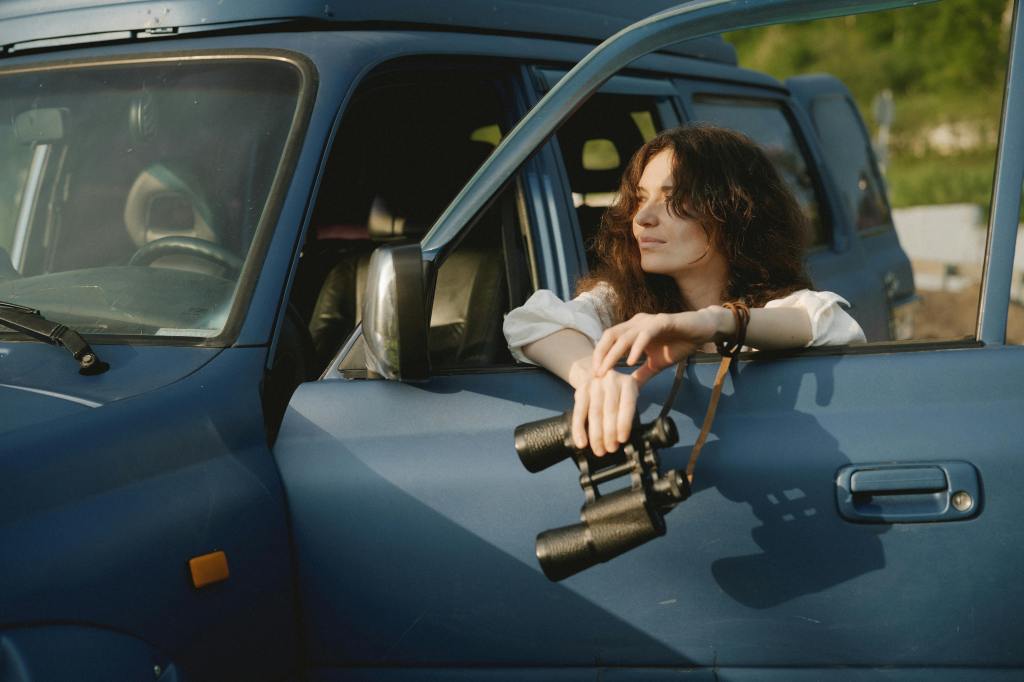
Everyone says, “Just book it.” They make solo travel sound like a rite of passage, like healing is guaranteed the moment your boarding pass hits your inbox. You scroll through reels of strangers sipping coffee in Lisbon, journaling by the sea in Siargao, dancing alone in Bali like their sadness never existed. And maybe, deep down, you want that to be you. You want proof that you’re capable of being alone and still okay.
But here’s the part they leave out:
The wrong place can break you faster than the right one can save you.
Your first solo trip isn’t just about location. It’s about capacity. Emotional, financial, logistical, energetic. You might think you want a beach. Or a hostel. Or a quiet mountain town. But what you think you want and what you actually need aren’t always the same. Sometimes, you choose a place to perform confidence you don’t have yet. Sometimes, you choose distance when what you’re really craving is stillness.
This isn’t one of those “10 best solo travel destinations” posts. This is a mirror, held up gently but clearly. Because your first solo trip sets the tone for all the ones that follow. Choose wrong, and it might take years to try again. Choose right, and it might quietly change your life.
Let’s talk about how to stop choosing based on fantasy and start choosing from truth.
- The Fantasy Trap – What Social Media Tells You to Want
- Who Are You Really Right Now? (The 5 First-Time Solo Travel Archetypes)
- 3 Signs You’re About to Pick the Wrong Place For Your Solo Vacation
- How to Choose a Place That Matches Your Nervous System
- The Solo Trip That Changes You Is the One That Meets You – Not the One That Tests You
- Go Where You Can Be Quiet With Yourself, Not Just Seen by Others
The Fantasy Trap – What Social Media Tells You to Want
It starts with a scroll.
Bali. Lisbon. Tokyo. La Union. A perfect cup of coffee by a foggy window. A girl laughing barefoot on the beach, her phone nowhere in sight, her face turned toward the sun like nothing in her life ever fractured. The captions are soft and seductive. “Healing era.” “Soft launch of my life.” “Main character unlocked.”
And maybe you double-tap. Maybe you save it for later. Maybe a part of you whispers, That could be me too. Not the actual experience, but the idea of it. The version of yourself who finally feels good enough to be alone, to look beautiful under golden hour light, to find peace somewhere quiet and far away. You start to believe that if you just choose the right place, everything stuck inside you will finally begin to move.
That’s when the trap begins.
You start planning your first solo trip based on what it will look like to others, not what it will feel like to you. The destinations that get pinned, bookmarked, and romanticized tend to follow a familiar script. Coastal towns. European cities. Spiritual retreats. Places that have already been shaped by someone else’s idea of freedom.
Social media doesn’t sell you the destination. It sells you relief. It sells you a shortcut to feeling alive again. It tells you that transformation is just a flight away. But what it never shows is the moments after the reel ends. The loneliness of eating alone when you’re not in the mood to romanticize it. The frustration of missed transport, language barriers, or unfamiliar systems. The quiet ache of sitting in a beautiful place that somehow still feels empty.
Those things don’t trend. But they happen. A lot.
The issue isn’t that these places are overrated. Some of them are deeply worth visiting. The issue is that they are often misaligned with what people actually need when they are choosing their first solo destination. And that misalignment can be subtle. It might not feel like a mistake until you’re three days in, tired, over-budget, overstimulated, and quietly wondering if you made a huge mistake.
If you choose a place because you want to feel brave, but you’re still learning how to speak up for yourself in a grocery store, you may end up feeling overwhelmed instead of empowered. If you pick a city because it looks cinematic, but you have social anxiety and low energy, then every subway ride might become a silent panic. If you go somewhere with the hope of finally feeling free, but you’ve never really learned how to sit with yourself without distraction, that silence may not be healing at all. It may be suffocating.
What you see online is a highlight reel of people who are already a few steps ahead in their self-trust. Maybe they have done the inner work already. Or maybe they’re pretending. Either way, it is a mistake to base your decision on the afterglow of someone else’s process.
Your first solo trip should not be a performance. It should not be something you design so it fits inside a carousel post. If anything, it should be something that lets you fall apart quietly or come together slowly – without having to prove anything to anyone.
This is why the solo trip you think you want is often the wrong one. Because the fantasy was never built for your nervous system, your grief, your energy levels, or your income. It was built for visibility. But healing rarely happens in visible spaces. The real solo trip you need might be slower, closer, less aesthetic. But it will be honest. And more often than not, honesty will hold you better than beauty ever could.
Who Are You Really Right Now? (The 5 First-Time Solo Travel Archetypes)
Before you start looking at flights, you need to look at yourself.
Not the version of you who exists on your best day. Not the one who’s mentally stable, financially secure, emotionally generous, and fully hydrated. Look at the version of you who’s reading this right now. The one who’s tired. The one who’s scrolling between shifts. The one who’s quietly hoping a trip will solve what the last few months have made blurry or unbearable.
That’s the person who’s going to be on this trip. So the destination you choose has to match them, not some aspirational version of you that only exists when conditions are perfect.
Most people make the mistake of planning a trip for their fantasy self. The bold one. The healed one. The version who strikes up conversations at beach bars and never cries in public. But if you’re not there yet—and you don’t have to be – it means the wrong destination will overstimulate you, underwhelm you, or worse, make you feel like the problem is you.
It’s not you. It’s misalignment.
Let’s get clearer. Here are five common archetypes of first-time solo travelers. Read each one slowly. Be honest. Your clarity starts here.
1. The Escapist
You’re exhausted. Not just from work, but from being everything to everyone. You don’t want to “explore.” You want to rest. You want to be left alone without guilt. You crave space where you don’t have to explain yourself.
But here’s the risk: You might book a faraway place just to get that silence, without realizing that silence, when unfamiliar, can turn into isolation. You want to vanish, but what you need is softness.
What you need:
- A location with a gentle pace.
- Easy access to quiet comforts.
- Somewhere that feels lived-in, not flashy.
Try: Luang Prabang. Sagada. A sleepy seaside town closer to home.
Avoid: Hyper-social hostels. Places with chaotic transport. Destinations with too much pressure to “do everything.”
2. The Performer
You’ve romanticized solo travel for months. You want to walk city streets in a statement outfit. You want your dinner to arrive with candlelight and background jazz. You want to look like a movie still.
But underneath that is something more tender. You want to prove you can do it. You want to show your independence, maybe even to people who once doubted you. There’s no shame in that – but be careful not to build a trip around a highlight reel.
What you need:
- A place where you feel safe and inspired.
- Somewhere you can move through confidently.
- A destination that still holds space for pause.
Try: Seoul. Tokyo. Lisbon.
Avoid: Remote towns with limited infrastructure. Destinations where content becomes your only form of connection.
3. The Burned-Out Savior
You’ve been holding everything together for too long. At work. At home. For your family. For yourself. You don’t want a party. You don’t want a cleanse. You just want one full day without responsibilities.
But you’ve also internalized the idea that travel must be “productive.” You’re tempted to cram your itinerary with healing rituals or self-discovery goals. That’s still pressure. You need a place that lets you stop performing survival.
What you need:
- A simple, stable environment.
- Time to just exist.
- One or two gentle activities. No more.
Try: Ubud (off-season). Baguio’s quieter corners. A slow province where no one expects anything from you.
Avoid: Trendy retreat centers. Cities that never sleep. Travel groups with fixed schedules.
4. The Restless Romantic
You’re not sure if you want connection, adventure, or just to feel something. A part of you is open to being surprised. You want to flirt with the unknown. There’s also a lingering hope that something (or someone) might find you.
But be mindful. If your trip is secretly built around waiting for a moment to happen, you may miss what’s already unfolding. You can want magic. But don’t mistake a change of scenery for emotional readiness.
What you need:
- A place with rhythm and spirit.
- Opportunities for spontaneous interaction.
- Nights that can be quiet or loud, depending on your mood.
Try: Siargao. Barcelona. Medellín.
Avoid: Remote silence unless you’re truly ready to be with yourself.
5. The Seeker
You want the real thing. You’re not here to distract yourself. You’re here to sit in the discomfort and listen for what’s underneath. This isn’t a getaway. It’s a confrontation. You’re willing to be cracked open if it means clarity.
This is a powerful place to be. But it can also be dangerous if you underestimate how heavy that clarity might be. Seek, but stay anchored.
What you need:
- A place with spiritual depth or raw presence.
- Space for slowness and reflection.
- Somewhere that doesn’t rush or entertain you.
Try: Sacred sites. Islands off the tourist track. Cities with complex textures and quiet corners.
Avoid: Loud beach towns. Places with too many “experiences” on offer.
Be honest with yourself. You can be more than one type. You can shift from one to another over time. But on your first solo trip, your goal should not be growth through force. It should be alignment through gentleness.
This isn’t about where you want to go. It’s about what version of you needs to be met there.
3 Signs You’re About to Pick the Wrong Place For Your Solo Vacation
Most people don’t realize they’ve chosen the wrong destination until they’re already there.
They’ve checked in. They’ve posted the first photo. They’ve tried to tell themselves they’re “just adjusting.” But underneath the curated story, a quiet panic starts to build. The streets feel unfamiliar in the wrong way. The locals are kind but hard to connect with. The food is good but never grounding. The silence is louder than expected. The noise is harsher than imagined. Everything feels slightly off, like the trip is wearing shoes one size too small.
That’s what misalignment feels like.
It’s not always dramatic. Sometimes it’s subtle. It shows up in the way you keep refreshing your phone for comfort. It shows up in how you begin counting the days until you go home. It shows up when you realize that what you thought would make you feel free is now making you feel stuck.
If you’re still in the planning stage, this is your chance to pause and recalibrate. Below are three major signs you’re about to pick a destination that doesn’t serve you. If one or more of these feels true, it’s not about canceling the trip. It’s about reconsidering where you actually feel safe, supported, and seen.
Red Flag 1: You’re Choosing a Place Because It “Looks Good” but You Have No Sense of How It Will Feel
You saw a reel. You saw the light hit the café window at 4:17 PM. You saw a person walking across a crosswalk in slow motion. And you said, that’s where I want to be – even though you’ve never asked yourself what it would actually feel like to wake up there, groggy and alone, on a rainy Tuesday morning.
Looks fade. Energy doesn’t.
If you’re choosing a place only because it photographs well, you may be building a trip around visual satisfaction instead of emotional fit. The best trips have texture. They hold your solitude without making you feel hollow. They give you space to sit in your body, not just capture it from the right angle.
Before you confirm your booking, ask: What is the emotional climate of this place? Does it match the kind of safety or aliveness I need right now?
Red Flag 2: You’re Copying Someone Else’s Trip Without Adapting It to Your Own Needs
You watched your favorite creator go to Bali and fall in love. Your friend went to Japan and came back transformed. You keep hearing that Portugal is “perfect for solo travelers.” So you follow the script. You copy the places, the cafés, the walking tours. You even plan to take the same kind of photos.
But here’s the thing: what worked for them worked because it was aligned with them. Their energy. Their intentions. Their capacity. Not yours.
Travel should be responsive, not performative. If you’re copying someone else’s path without checking in on your own bandwidth, you’re setting yourself up for quiet failure. The trip may be beautiful, but it may never be yours.
Ask yourself: Am I planning a trip that reflects what I want – or what I’ve been told to want?
Red Flag 3: You Feel the Need to Prove Something Through the Trip
Sometimes we say we want freedom, but what we really want is proof. Proof that we’re strong enough. Proof that we’re desirable. Proof that we’re interesting. So we plan trips that will generate evidence (content, stories, souvenirs) to show people we’ve arrived somewhere emotionally, even if we haven’t.
This is especially dangerous on a first solo trip. Because the minute something goes wrong, it doesn’t feel like a logistical hiccup. It feels like failure.
If your travel plans are built on the pressure to perform independence, the first hard moment will break the illusion. You’ll question not just the trip, but yourself.
You don’t need to prove that you’re healed, brave, or worthy. You don’t need to become the kind of solo traveler that people admire. You just need to go somewhere that doesn’t ask you to be more than you already are.
Ask yourself: If I couldn’t post a single photo from this trip, would I still want to take it?
These red flags don’t mean you shouldn’t travel. They mean you deserve a trip that supports your whole self, not just your strongest self. You deserve a destination that won’t punish you for being human.
If something inside you feels tense or hesitant about the place you’ve chosen, listen. The body often knows what the ego is still trying to ignore.
How to Choose a Place That Matches Your Nervous System
It’s easy to talk about destinations in terms of aesthetics, bucket lists, or top ten rankings. But most of those lists don’t factor in the one thing that will make or break your experience: your nervous system.
You can be in the most beautiful place in the world, but if your body doesn’t feel safe, you won’t feel free. You’ll feel like you’re constantly managing yourself. You’ll spend energy trying to stay grounded instead of being present. And what’s worse, you’ll start blaming yourself for not enjoying the trip enough. That’s not freedom. That’s quiet survival in a pretty backdrop.
Your nervous system is not something to push through. It’s something to listen to.
Before you decide where to go, start with what you need to function well. Not thrive. Not impress. Just function. The version of you who will wake up on this trip is the same version carrying your stress, your triggers, your hopes, your grief. Choose a place that can hold that version without demanding too much in return.
Here’s how.
1. Emotional Capacity: How Much Discomfort Can You Actually Hold Right Now?
Some people thrive on unpredictability. Others spiral. Some find growth in friction. Others find it in stillness. You have to ask yourself: do you need stimulation or softness? Are you in a place where challenges feel exciting, or will they drain you?
If you’re barely keeping it together at home, don’t book a trip that requires constant negotiation, foreign languages, or unfamiliar systems. There’s no shame in needing ease. There’s power in choosing gentleness on purpose.
Try this: Imagine your lowest moment from last week. Now picture that happening mid-trip. Would your chosen destination still feel manageable?
2. Energy Access: Are You Choosing a Place That Moves at Your Pace?
Not all places are created equal when it comes to tempo. Some cities never slow down. Some towns never speed up. Your solo trip should not require you to change your natural rhythm just to keep up.
If you’re in a state of recovery (physical, emotional, mental) choose a place where the default pace of life matches yours. That way, you’re not constantly in tension with the environment around you.
Ask yourself: Will I have to overextend myself just to “keep up” here? Or will I be able to move as slowly as I need to?
3. Financial Gentleness: Will This Place Let You Breathe – Or Will It Punish You For Being Practical?
Money anxiety doesn’t magically disappear when you land in a new country. In fact, it often amplifies. You’ll start rationing experiences. You’ll obsess over conversion rates. You’ll feel guilty every time you sit down to eat.
A truly supportive solo destination is one where your budget stretches without you needing to calculate every hour. Where you can say yes to something fun without spending the rest of the day punishing yourself for it.
Look into:
- Average daily costs
- Affordable meal options
- Reliable transportation
- Hidden fees or tourist traps
The more your finances are respected by the place, the more free you’ll feel in it.
4. Cultural Texture: Do You Feel Drawn In, Or Like an Outsider Managing Every Step?
Culture shock is real. And it’s not just about language. It’s about how people move, how they interact, how they interpret silence, eye contact, emotion, gender. You can admire a culture deeply while still not feeling emotionally compatible with it.
That doesn’t mean avoiding difference. But it means being honest about whether you have the internal space to meet that difference with curiosity instead of collapse.
If your current season requires safety and predictability, maybe now isn’t the time to immerse yourself in high-contrast unfamiliarity. Maybe you need a place that’s gently different, not radically disorienting.
Ask yourself: Will this place invite me to connect – or will it require constant decoding and vigilance?
The goal here is not to shrink your world. It’s to expand it in ways that your body, mind, and heart can actually hold.
When you choose a destination that matches your nervous system, you’re not just choosing where to go. You’re choosing how you want to feel when you’re there. That’s the kind of decision that turns a trip into a homecoming.
The Solo Trip That Changes You Is the One That Meets You – Not the One That Tests You
There’s a version of solo travel that gets sold like a dare. Go farther. Go bolder. Go alone with nothing but a backpack and a broken heart and prove you can survive anywhere. The unspoken message is this: the harder the trip, the more worthy the transformation.
But that’s a lie. Especially for your first solo trip.
Growth doesn’t have to be earned through exhaustion. Healing doesn’t have to be dramatic to be real. You don’t have to pick the most ambitious place just to feel like the trip was worth it. You don’t have to justify your rest.
The most powerful solo trip you can take isn’t the one that pushes you past your limit. It’s the one that gives you the space to be soft, even if softness is something you’re still learning how to hold. It’s the one that lets you wake up slowly. That lets you cry in peace. That doesn’t demand a breakthrough every single day. It’s the one that feels like safety before it feels like spectacle.
Sometimes that means going somewhere close, not far. Sometimes it means choosing a familiar language over an unfamiliar challenge. Sometimes it means walking the same street more than once because it brings you calm. That’s not failure. That’s alignment.
And here’s what most people forget: no one is watching. You don’t have to be impressive to be free. You don’t have to post anything. You don’t have to perform solitude as though it’s something rare or aesthetic. You just have to be there. Fully. Quietly. Honestly.
Because your first solo trip is not a performance. It’s not a storyline. It’s not a checklist of things you’re finally brave enough to do. It’s a mirror. And when chosen with care, it reflects a version of you that doesn’t need to prove anything at all.
So ask yourself, again: Where do I feel gently met – not glorified, not tested, just met?
Go there.
Go Where You Can Be Quiet With Yourself, Not Just Seen by Others
Your first solo trip is not about crossing something off a list. It’s not about becoming the kind of person who travels alone. It’s not about telling a better story when you get back. It’s about remembering what you actually need, and giving yourself the space to receive it without apology.
It doesn’t have to be far. It doesn’t have to be famous. It just has to feel honest.
Because the best destination isn’t the one that impresses people. It’s the one where you stop performing. The one that holds your sadness without needing it to be beautiful. The one where you can eat slowly, sleep early, walk without direction, and feel okay about not having much to say.
Go where you can be quiet with yourself. Go where you can feel the weight come off – not because something changed, but because nothing is asking you to be more than you are. That’s the trip you’ll remember. That’s the trip that will call you back to yourself long after you return home.
And if you’re still unsure? Start small. Start near. Start with a place that says, You don’t have to earn rest. You don’t have to earn joy.
Just come as you are.
If you found this piece insightful, consider supporting my work – every contribution helps fuel more in-depth stories, reflections, and meaningful content. Support here!
