
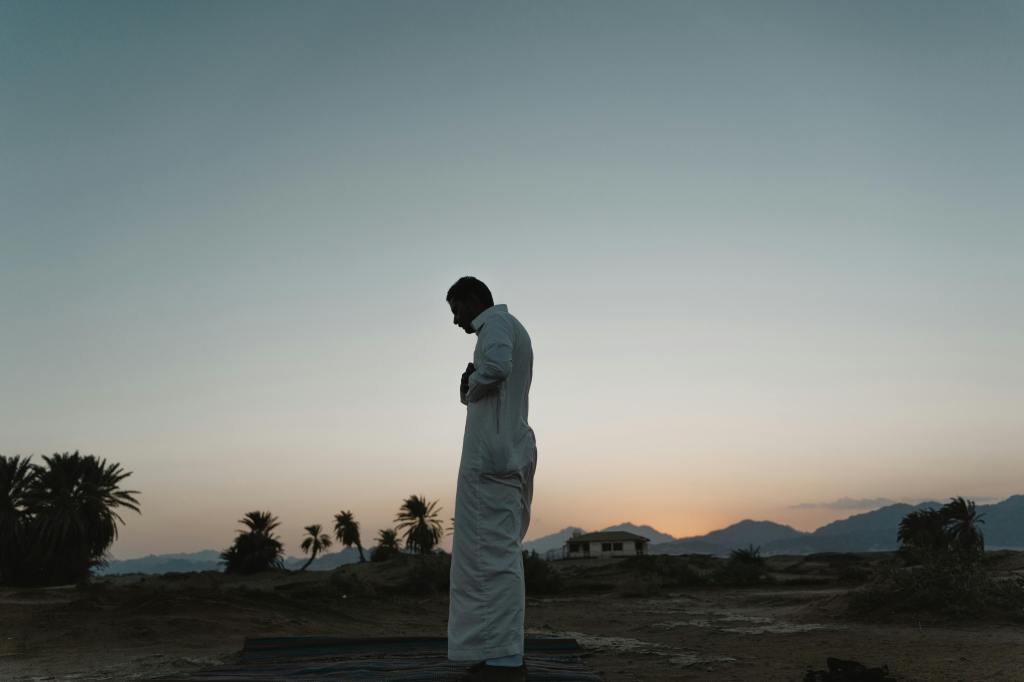
There’s a moment in the life of every believer where faith stops feeling like presence and starts feeling like performance. You’re still praying. Still whispering thanks. Still showing up in ways that used to feel sacred. But now, nothing echoes back. The rituals remain, but the meaning has faded. You repeat old phrases, hold onto spiritual practices, keep offering a devotion that no longer stirs anything in return. It’s not disbelief. It’s not doubt. It’s the hollowness that happens when you’ve kept giving without receiving, kept trusting without clarity, and now you’re too spiritually tired to keep pretending it still feels right.
This is the part of belief people rarely speak about. When connection goes quiet. When faith feels mechanical, like a language you’re fluent in but no longer feel inside your body. You try to stay open. You try to trust. But inside, there’s a silence you don’t know how to name. You’re not lost – you’re just depleted. And that depletion doesn’t mean you’ve failed. It means you’ve survived more than anyone knows. For many, this spiritual deadening follows the emotional weight of something deeper – something like the dark night of the soul, where burnout, bitterness, and abandonment don’t destroy your faith, they just strip it bare.
You don’t need anyone to tell you how to get back to God. You’ve tried. You’re still trying. What you might need instead is space to admit that you still believe, even when it no longer feels alive. That you’re still here, even if hope isn’t. And maybe that’s enough for now – not because it’s all you deserve, but because continuing in silence is still a kind of devotion. Even hollow faith has weight. Even your quiet staying matters.
- Why You Still Believe Even When It Feels Empty
- What Causes Faith to Feel Hollow (It’s Not What You Think)
- Why “Just Trust” Makes It Worse
- What Faith Burnout Actually Looks Like
- How to Stay Spiritually Alive When You’re Numb
- You’re Still Here. That Counts More Than You Know
Why You Still Believe Even When It Feels Empty
It’s disorienting to still believe in something that no longer moves you. To say the same prayers you’ve always said and feel nothing in return. To still love the idea of God while quietly wondering if you’re being ignored. You haven’t turned away from your faith, but it no longer feels alive. You repeat the rituals. You speak the words. You remember what it used to mean – but there’s no emotional response. The connection feels absent, and all that remains is spiritual muscle memory.
This state of spiritual numbness is more common than most people admit. Many search for answers about why their faith feels empty, especially when they’re still trying, still showing up, still believing. The truth is, this kind of disconnection rarely comes from doubt. More often, it comes from burnout. When you’ve endured prolonged emotional or spiritual strain (navigating pain, silence, disappointment, or exhaustion) your inner life begins to shut down. Your nervous system cannot distinguish between psychological stress and spiritual fatigue. So when the weight becomes too heavy, the emotional part of your belief goes quiet. Not because your faith is gone, but because your spirit is trying to protect you.
You’re not feeling disconnected because you’ve failed. You’re feeling disconnected because you’ve held on for too long without rest or return. And even though the connection feels distant, you still believe. Maybe not because of hope. Maybe not because you feel anything at all. But because something in you remembers that once, this mattered—and that faint memory is enough to keep you tethered.
When you still believe but feel nothing, it doesn’t mean your faith is broken. It means your faith is surviving in silence. That survival is not weak. It’s sacred.
Why does my faith feel empty even though I’m still trying?
This is one of the most searched and misunderstood questions about spiritual life. When your faith feels empty despite effort, it usually points to something deeper than doubt – it’s often the result of spiritual exhaustion or emotional burnout. You might be praying, attending worship, meditating, or trying to stay spiritually present, but none of it brings the connection it used to. That emptiness doesn’t mean your belief is gone. It means you’ve been giving more than you’ve received, possibly for a long time. Faith can become emotionally flat when you’ve been surviving on routine, carrying grief, or feeling unsupported by the very system you trust. The problem isn’t your belief—it’s that your spiritual energy has been depleted, and your body is signaling it through detachment.
Is it normal to still believe in God but feel nothing when I pray?
Yes, it’s not only normal—it’s extremely common. Many people continue to believe in a higher power, in God or the universe, but experience emotional numbness in prayer, especially during or after seasons of suffering, stress, or silence. Feeling nothing during prayer doesn’t mean your connection is broken. It may mean that your nervous system is still processing unacknowledged spiritual fatigue or disconnection from hope. You can be spiritually committed and still feel disconnected emotionally. Your continued effort is a sign of commitment – not failure. This is what many describe as spiritual disconnection without disbelief – a quiet survival mode that doesn’t invalidate your devotion.
What should I do if I feel spiritually disconnected but don’t want to lose my faith?
When you’re still praying but feel disconnected from God, the most important step is to stop pressuring yourself to feel inspired, aligned, or spiritually “awake.” Instead, begin by acknowledging that spiritual numbness is a protective response – your body and soul asking for rest, not performance. Let go of the need to force reconnection. Focus on doing less. Allow the silence. Let your practices be simple, unforced, and spacious. Often, the road back to presence is not through intense devotion, but through gentleness. Even if you don’t feel anything, the act of staying (of not walking away completely)is already a form of faith. Rebuilding connection takes time, and that time is sacred too.
What Causes Faith to Feel Hollow (It’s Not What You Think)
Most people assume that if your faith starts to feel hollow, it’s because you’re distracted, drifting, or doubting. But the truth is often the opposite. The people most likely to feel spiritually disconnected aren’t those who’ve walked away – they’re the ones who stayed too long without rest. The ones who kept showing up, kept surrendering, kept praying through every storm, only to find themselves emotionally burned out by the very thing they trusted to give them strength.
This state is commonly known as spiritual burnout, but many don’t realize that it doesn’t look like rebellion or crisis. It often looks like numbness. Like still attending services or sitting in meditation, but feeling nothing. Like praying more, not less, but getting no response. The cause isn’t always spiritual laziness – it’s usually emotional exhaustion that has crept into your faith space. When you’re carrying too much pain, performing too much resilience, or holding up too many others, your internal connection to the divine can begin to shut down.
Faith requires energy – mental, emotional, and spiritual. And when all that energy is spent surviving, you’re left with rituals that no longer restore you. This doesn’t mean you’ve lost your faith. It means your spiritual nervous system is trying to protect itself by going quiet. You’re not distant because you gave up. You’re distant because you kept giving.
Understanding this can change everything. It allows you to stop blaming yourself. It frees you from the shame of feeling spiritually numb. And it gives you the permission to name your disconnection not as failure, but as a signal that your spirit is asking for rest.
What are the symptoms of spiritual burnout?
Spiritual burnout often shows up as emotional numbness, loss of motivation to engage in spiritual practices, irritability toward faith-based conversations, and a sense of fatigue even after prayer or rest. You may find yourself still attending religious events or maintaining rituals, but feeling completely detached inside. Unlike doubt or disbelief, spiritual burnout is often the result of prolonged emotional strain, high responsibility, and unprocessed pain. It’s not that your faith has disappeared – it’s that your system is overwhelmed and needs recovery.
Can emotional exhaustion make me feel disconnected from God?
Yes. Emotional exhaustion is one of the leading causes of spiritual disconnection, especially when your faith has been your primary coping tool. Over time, using spiritual practices to constantly manage crisis or pain without meaningful rest can deplete your internal resources. When you reach that point, you may continue to believe in God but feel no connection. This is your body’s way of protecting you – not rejecting your belief, but asking for space.
Why does my faith feel hollow even when I’m doing all the right things?
You can be praying, meditating, journaling, and showing up with full intention and still feel like nothing is working. This happens when your faith becomes over-reliant on performance instead of presence. If you’ve been giving endlessly without replenishment, it’s normal for faith to feel hollow. This doesn’t mean your efforts are wasted. It means your spirit is likely in a recovery phase. It’s not failure. It’s fatigue.
Why “Just Trust” Makes It Worse
One of the most damaging responses to spiritual disconnection is the one that’s supposed to sound the most holy: just trust. When you say you feel nothing during prayer, or that you’re spiritually numb, people often rush to remind you that God’s plan is bigger than your pain. That you just need to surrender. That if you were truly aligned, you wouldn’t feel this distant. But the truth is, this kind of advice doesn’t soothe… it silences.
This is what many experience as spiritual gaslighting. You’re not being guided into deeper trust. You’re being told that your pain is inconvenient. That your anger, disillusionment, and numbness are signs of weak faith. When in fact, they may be the most honest part of your spiritual life. When someone tells you to “just trust God” while you’re in emotional or spiritual crisis, what they often mean is: stop making me uncomfortable with your truth.
Blind trust isn’t always safe. Sometimes, what’s needed isn’t more surrender, but more space to question, to rage, to doubt without consequence. Trust can’t be forced. It can’t be guilted into existence. And it certainly can’t be faked just to keep others comfortable. The deeper kind of trust (the one that actually heals) can only emerge when you’re allowed to be fully human first. That means being disappointed. Being numb. Being furious. Being disconnected. And being allowed to name that, without anyone rushing in to fix it with a verse or a mantra.
If spiritual advice makes you feel smaller, ashamed, or emotionally erased, then it isn’t guidance. It’s control.
What is spiritual gaslighting?
Spiritual gaslighting happens when someone uses spiritual language to dismiss or invalidate your emotional or psychological experience. It often sounds like “you just need more faith,” or “everything happens for a reason.” Instead of acknowledging your pain, it reframes it as your personal or spiritual failure. This kind of advice discourages emotional honesty and pressures people to perform trust instead of healing authentically.
Why does “just trust God” feel invalidating when I’m suffering?
Because it ignores the reality of what you’re carrying. When people say “just trust God” in response to your disconnection or numbness, they’re often bypassing your pain in favor of a polished narrative. Trust, when real, is earned through presence – not commanded through platitudes. It’s normal to feel more distant when you’re constantly being told that your suffering is a test you should embrace with gratitude.
Is it wrong to question God or feel angry during spiritual fatigue?
No. Questioning, doubting, and even feeling angry at God are valid spiritual experiences. Many people search is it okay to be mad at God because they’ve been taught that trust and peace are the only acceptable emotions in faith. But real faith includes tension. You can question everything and still remain deeply spiritual.
What Faith Burnout Actually Looks Like
Faith burnout doesn’t always look like walking away. More often, it looks like staying – while quietly shutting down inside.
You still show up. You still go through the motions. You say the prayers you were taught, even if they feel stale. You keep trying to stay hopeful, even when nothing inside you feels alive. From the outside, your faith might look intact. But inside, it’s a different story. You’re numb. You’re tired. You’re not expecting miracles anymore – just trying to get through the day without collapsing.
This is what burnout in faith often becomes: the hollow repetition of rituals that used to matter. Not because you’re ungrateful. Not because you’ve stopped believing. But because your body, your heart, and your spirit are stretched too thin. You’ve spent so long trying to carry yourself through every storm with grace that now, even stillness feels heavy.
There’s often guilt here, too. Guilt that you’re going through the motions. Guilt that prayer feels mechanical. Guilt that the flame inside has dimmed. But the guilt is misplaced. Because this version of you (exhausted, overextended, emotionally flat) is still trying. And in seasons like this, trying is sacred.
Burnout doesn’t ask you to abandon your faith. It just makes your connection quieter. It dulls the colors. It slows the rhythm. It makes devotion feel like effort instead of ease. That shift isn’t weakness. It’s your soul’s way of saying: I need to rest before I can feel again.
What are the signs of spiritual or faith burnout?
Signs of spiritual burnout include emotional numbness during prayer, feeling disconnected from God despite continued belief, irritability toward spiritual practices, difficulty focusing during worship or meditation, and a growing sense that your faith no longer “works” even when you’re doing everything right. These aren’t failures of belief. They are red flags that your spiritual and emotional energy are depleted.
Can I have faith burnout even if I’m still showing up?
Absolutely. Faith burnout is often invisible. Many people experiencing religious fatigue continue attending services, praying daily, or engaging in spiritual rituals out of discipline or obligation – but internally, they feel shut down. Just because you’re still participating doesn’t mean you’re spiritually well. Burnout hides behind routine.
How is spiritual burnout different from losing faith?
Spiritual burnout isn’t the same as losing faith. Losing faith often involves questioning your beliefs or changing your spiritual worldview. Burnout, on the other hand, is about emotional and energetic depletion. You may still believe everything you always did – you’re just too drained to feel connected to it.
How to Stay Spiritually Alive When You’re Numb
When you’re spiritually numb, survival becomes subtle. You’re not looking for answers. You’re not chasing clarity. You’re just trying to stay upright in a life that no longer feels animated by the faith you once leaned on. And that kind of survival doesn’t begin with sudden healing. It begins with permission – the kind no one gives you when you’re expected to glow, to trust, to surrender. But here, you’re allowed to not feel anything. You’re allowed to just stay.
A question many people ask in private, or search in quiet desperation, is: How do I keep praying when I feel disconnected from God? The answer is less about doing more, and more about doing less… intentionally. You don’t need to perform. You don’t need to craft long prayers filled with conviction. You don’t need to feel warmth in your chest. You just need to speak from where you are. One honest line is enough. “I don’t feel anything, but I’m still here.” That’s prayer. That’s faith. That counts.
What helps during spiritual burnout – especially when you’ve tried everything and nothing works—is to stop measuring progress by emotion. You don’t have to force a breakthrough. You don’t have to journal your way into clarity. Most people searching how to survive spiritual burnout aren’t looking for theology. They’re looking for breath. They’re trying to stay alive through the quiet. In these seasons, what helps is slowness. Stillness. Neutral acts like brushing your teeth, sitting in silence without calling it meditation, walking outside, or simply making it to the next hour. These are not small things. They are survival.
If you’re wondering, Can I survive spiritually even if I don’t feel close to God anymore? – the answer is yes. You already are. You don’t need emotional closeness to maintain spiritual presence. Many people stay connected through numbness. Not because they feel inspired, but because something in them refuses to let go. That’s faith too. Just because you can’t feel it doesn’t mean it’s not holding.
You don’t need to fix your faith to keep it. You don’t need to resurrect your old spiritual fire. Maybe that fire was never meant to stay lit in this chapter. Maybe all you need right now is the ember – the faint trace of what once kept you warm. Even numb hands can hold that. And even the act of holding is sacred.
You’re Still Here. That Counts More Than You Know
You may not feel spiritual. You may not feel grateful. You may not even feel like you’re connected to anything at all. But you’re still here. Still breathing. Still returning to the thread of faith, even if it no longer feels like it belongs to you.
That matters.
You’ve probably spent so long trying to explain your silence to yourself. You’ve tried to rationalize the numbness, fix the gap, recover the fire. But what if there’s nothing to fix? What if the most sacred thing about this season is that you didn’t disappear when it stopped feeling good? That you stayed not because you felt held, but because some part of you refused to let go completely?
People often think that real faith is passionate, vibrant, bursting with clarity. But some of the deepest forms of faith are quiet. They’re tired. They’re hidden. They look like endurance instead of ecstasy. They sound like silence. They take the shape of breath. Of barely hanging on. Of not knowing why you’re still holding, but holding anyway.
That’s the kind of faith no one applauds. It’s not the kind that makes for testimonies or transformation stories. But it’s the kind that keeps you alive. And sometimes, that’s all that’s needed.
There is no resolution here. No sudden return of feeling. No grand revelation. Just this: you’re still here. And in a world that constantly demands emotional performance, that quiet persistence is more than enough.
So if you’ve been surviving with numbness in your chest and emptiness in your prayers – if you’ve stayed present when everything inside you wanted to leave—know this: your staying counts. Even when it’s quiet. Especially when it’s quiet.
And if nothing else comes, let this truth settle where belief used to live. Presence is still devotion. Silence is still sacred. And staying is still an act of faith.
If you found this piece insightful, consider supporting my work – every contribution helps fuel more in-depth stories, reflections, and meaningful content. Support here!
