
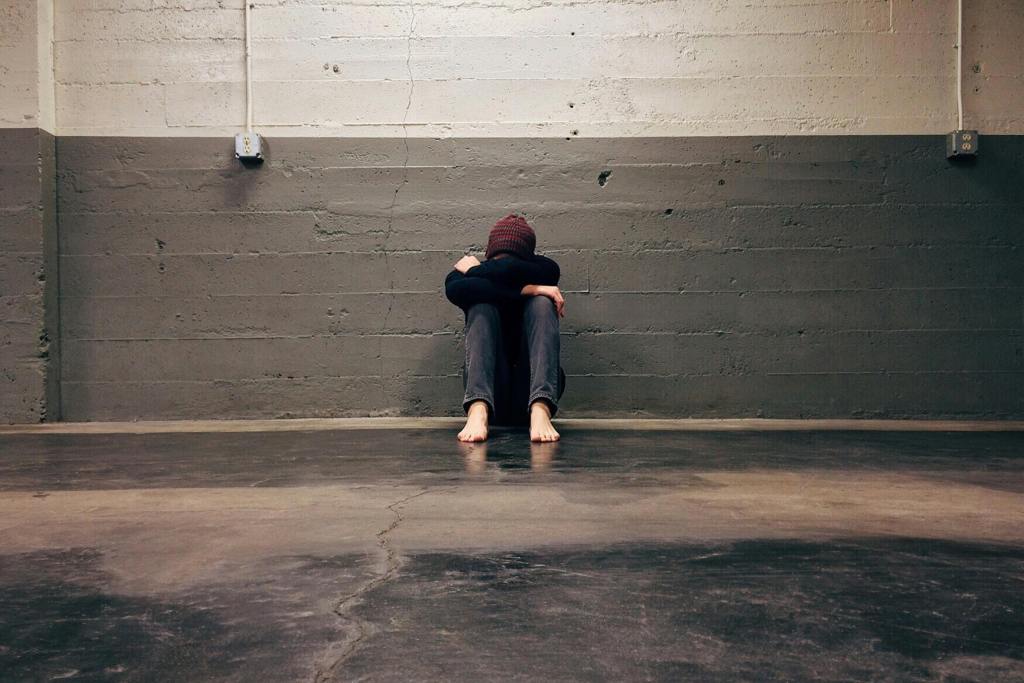
There comes a point when exhaustion stops being about sleep or energy. It becomes something else entirely – something heavier, quieter, more dangerous. It’s when you’ve been doing everything right (or at least trying to) and yet you’re still stuck. Still drowning in the same cycles. Still holding responsibilities that keep growing while the rewards stay invisible. It’s the moment when your body begins to drag even after a full night’s rest, when your prayers feel like background noise, and when hope itself starts to feel like a lie someone sold you. It’s not just emotional burnout. It’s not just existential fatigue. It’s what mystics once called the dark night of the soul, but no amount of spiritual poetry can capture what it actually feels like when you’re in it.
Because it doesn’t feel holy. It doesn’t feel like transformation. It feels like a slow, suffocating descent into a place you didn’t ask to enter. It feels like betrayal – by the universe, by life, by your own beliefs. One moment, you’re moving through life with whatever tools you’ve built: faith, discipline, resilience. And the next, you’re questioning everything. Why nothing’s working. Why you’ve been tasked with surviving so much. Why you feel punished for trying harder. Why, despite all the “alignment” and “spiritual awakening” content out there, your own pain feels ignored by the very systems that claim to heal. You are told to let go, to surrender, to trust the divine timing – but what if the divine feels indifferent? What if the timing never arrives?
This isn’t a self-help moment. It’s a reckoning. It’s the emotional and spiritual reality for so many people who are deeply tired – not because they’ve lost faith, but because they’ve carried too much, for too long, without relief. The spiritual exhaustion we’re talking about here doesn’t always look like despair. Sometimes it looks like functioning so well no one notices you’re fading. Sometimes it looks like being the dependable one, the strong one, the healer, the builder, the one who says “I’m okay” when you’re not. It’s the part of the spiritual path most people gloss over because it doesn’t photograph well. It can’t be sold. It doesn’t have a glow.
This article isn’t about solutions. It won’t give you steps to ascend, or affirmations to chant until the pain goes away. What it will do is name the place you might be in. The place where spiritual burnout, emotional numbness, and a crushing sense of being stuck in life all converge into one long, disorienting chapter. A chapter with no clear ending. A chapter where meaning might feel absent—and still, you survive. If that’s where you are, this isn’t a promise that things will get better. It’s an offering that you don’t have to lie about how hard it is. You don’t have to find the lesson. You don’t have to feel grateful. You only have to tell the truth.
And maybe that’s the beginning (not of light, not of healing) but of not disappearing inside the dark.
- What Is the Dark Night of the Soul (and How Is It Different from Depression)?
- Signs You’re in the Dark Night of the Soul
- The Invisible Burden: Why You’re Burnt Out but No One Sees It
- Spiritual Gaslighting: The Harm of “Just Trust the Universe”
- When the World Rewards Others for Doing Less (And You Still Get Nothing)
- How Long Does the Dark Night of the Soul Typically Last?
- What Actually Helps (When You’re Not Seeking Advice, Just Survival)
- No, You’re Not a Secondary Character
- The Dark Night Might Not End — And That’s Not Your Fault
- No Promises. Just Recognition.
What Is the Dark Night of the Soul (and How Is It Different from Depression)?
The term dark night of the soul didn’t originate on a meme page or in a coaching program – it comes from a 16th-century poem by Spanish mystic St. John of the Cross. He wrote of a terrifying yet sacred passage where one feels completely abandoned by God, emptied out by spiritual silence, and stripped of all the comforts of belief. It wasn’t metaphor. It wasn’t aesthetic. It was anguish. And yet, centuries later, the phrase is used to describe everything from breakups to burnout, which only makes it harder to name what this experience really is when it arrives in your own life – quietly, cruelly, and without invitation.
For many of us, especially those who’ve been running on empty for too long, the dark night doesn’t come with mystical poetry. It comes in the form of mounting emotional pressure and spiritual disorientation. It’s waking up one day and realizing that the rituals, routines, and spiritual frameworks that used to hold you up no longer make sense. They don’t soothe. They don’t save. The prayers feel mechanical. The guidance feels rehearsed. It’s not just confusion – it’s collapse. And yet, somehow, you’re still here. Still moving through the world, still performing your roles, still doing what’s “required” of you while your internal landscape goes dim.
This is where the difference between the dark night of the soul and clinical depression matters – not to separate them cleanly, but to acknowledge the nuance. Depression is typically understood as a mental health condition rooted in brain chemistry, trauma, or life circumstances. It often presents as persistent sadness, hopelessness, disinterest in daily life, or physical symptoms like disrupted sleep, fatigue, or appetite changes. It can and should be treated with care – from therapy to medication to medical support. But the dark night of the soul, as many experience it, doesn’t always meet the clinical thresholds. You might be functioning. You might be laughing at the right cues, working full time, even showing up for others. But inside? Something is dissolving. Not your will to live, but your orientation to life itself. It’s not just emotional. It’s existential. And that makes it terrifying in a different way.
You start asking questions no one can answer. Why am I still being asked to endure this much? Why do I feel like life keeps using me as a placeholder for someone else’s miracles? Why am I holding so much pain when I’ve done everything I could to be good, to be faithful, to do the work? You’re not looking for a diagnosis. You’re looking for a map. But none of the usual routes apply. You’re not stuck – you’re unanchored. Drifting in a place that has no signs, no guideposts, no reassurance.
Still, the danger isn’t just in the night itself – it’s in what the world expects you to do with it. To hurry up and heal. To alchemize it into wisdom. To turn the silence into strategy. But if you’re in this place, chances are you don’t want meaning. You want air. You want to breathe without being told it’s your mindset that’s suffocating you. You want to stop pretending that survival is some kind of moral victory.
What are the signs of experiencing a dark night of the soul?
Signs include emotional numbness, intense questioning of purpose, spiritual disconnection, and a persistent sense that life has lost meaning. Unlike general sadness, it often feels like your inner compass has vanished – even if you’re still functioning outwardly.
How can I differentiate between spiritual burnout and depression
Spiritual burnout often arises from overextension in purpose – driven roles, practices, or expectations. It’s the collapse that follows trying too hard to stay aligned. Depression, on the other hand, is a medical condition that can affect all areas of functioning. They can overlap – but spiritual burnout is more existential in tone, while depression tends to flatten all experience.
Signs You’re in the Dark Night of the Soul
It’s hard to tell when it begins – there’s no thunderclap, no revelation, no dramatic breaking point. It just starts. Quietly. Slowly. A dull ache that settles into your chest and refuses to leave. One day, you notice that the things that used to feel like lifelines (meditation, journaling, prayer, music, even rest) aren’t working anymore. You try anyway. You keep doing all the “right” things, not because they help, but because you’re afraid of what happens if you stop. You become a ghost version of yourself – moving through your routines, nodding in conversations, forcing a smile while something inside you fades into silence.
The signs are subtle at first. You find yourself getting more irritated by surface-level advice. You feel physically tired after doing nothing. You’re angry – not at any one person, but at everything: the world, the system, even whatever higher power you once trusted. There’s a kind of bitterness that begins to take root. Not because you’re ungrateful, but because you’ve been generous for too long. You’ve been showing up without being seen. Carrying weight without acknowledgment. Giving, understanding, performing, holding space – while quietly becoming undone.
Spiritually, you feel cut off. Not abandoned exactly, but unmoored. As if someone shut off the signal and left you to figure it out in the dark. It’s not disbelief. It’s not rebellion. It’s just silence. A long, heavy, painful silence that no mantra or oracle card can break. Even the idea of healing starts to feel suspicious. Even hope starts to feel like a trick.
And then there’s the apathy. Not depression’s apathy, which flattens everything into one dull note – but a different kind. The apathy of someone who has waited too long in the waiting room of transformation and is beginning to wonder if they were ever on the list to begin with. You start to fantasize – not about death, but about disappearance. About turning it all off. About finally being allowed to stop trying so hard to feel okay.
These are not symptoms of failure. They are the signs that you’re in the middle of something sacred and devastating – something too big to fix and too real to ignore. This is what the dark night of the soul looks like beneath the spiritual marketing. It doesn’t glitter. It doesn’t glow. It strips everything down until you’re left with nothing but yourself – and even that feels fragile.
Is it normal to feel numb or disconnected during a spiritual awakening?
Yes. Many people experience emotional numbness during intense spiritual shifts. It’s not a failure of your growth – it’s often a natural pause your psyche takes when everything familiar begins to dissolve.
Can the dark night of the soul happen more than once?
Absolutely. It isn’t a one-time event. You can move through multiple cycles in your lifetime, each one stripping away deeper layers of identity, faith, and illusion. Recurrence doesn’t mean regression – it often signals a new layer of spiritual recalibration.
The Invisible Burden: Why You’re Burnt Out but No One Sees It
There’s a particular kind of exhaustion that doesn’t look like falling apart. It looks like holding it all together. Day after day. Without pause. Without witness. Without acknowledgment. You show up to your job, your relationships, your obligations. You answer the texts. You meet the deadlines. You keep the rhythm of your life moving just enough so no one questions how much it’s costing you. On the outside, you’re functioning. But inside, something’s caving in. You don’t collapse because you can’t afford to. You’ve been conditioned to survive, and now survival has become so normalized that your pain doesn’t even register as pain anymore. It registers as “just life.”
This is what makes spiritual burnout and emotional labor fatigue so hard to name. It’s not just that you’re tired – it’s that you’re tired in ways that have no place to go. You’re carrying emotional weight that was never meant to be yours alone. You’re the one people come to for support, for grounding, for insight. You’re the one who listens without interrupting, who holds space even when your own needs have gone unmet for months, maybe years. And when the world looks at you, it doesn’t see someone in crisis. It sees someone who’s strong. Reliable. Balanced. Because strength, in this context, just means hiding your collapse well.
And here’s where the dark night of the soul becomes even more bitter: the world keeps rewarding people who do less. People who show up half-heartedly or receive grace simply because they expect it. Meanwhile, you’re pouring everything you have into surviving with integrity – and still, you’re the one overlooked. Forgotten. Held to higher standards with fewer returns. Even rest becomes something you have to justify. Even your breakdown has to be graceful, quiet, noble. You don’t get to scream. You don’t get to demand help. You have to package your pain in a way that’s palatable, or else it’s inconvenient.
So you push through. You regulate your tone. You hide your apathy behind competence. And every time you’re told, “You’re so strong,” something inside you flinches – because it doesn’t feel like a compliment. It feels like a sentence. A reminder that even your collapse has to look put-together.
But here’s the truth that no one says out loud: just because you’re functioning doesn’t mean you’re okay. Just because you’re composed doesn’t mean you’re coping. Being burnt out while looking fine is not a badge of honor. It’s a form of spiritual erosion that the world has no language for – so it praises your endurance instead.
You were never meant to carry this much without being held. You were never meant to live in a world that only sees your worth in what you produce, fix, or solve. And if you feel resentful, if you feel like the rage is building in the cracks – that’s not dysfunction. That’s your body and spirit remembering that they were built for more than just service. That you deserve to be seen not just for how well you survive – but for the fact that you shouldn’t have had to survive like this in the first place.
Spiritual Gaslighting: The Harm of “Just Trust the Universe”
There’s a violence in being told to trust the universe when you’re drowning. A kind of quiet cruelty wrapped in soft language. “Everything happens for a reason.” “You’re being prepared for something greater.” “Surrender and let it flow.” These phrases are often delivered with a smile, a crystal in hand, maybe even a well-meaning intention – but the effect is the same. They reduce real pain to a lesson. They frame your suffering as proof that you’re spiritually immature, not yet wise enough to see the bigger picture. And when you’re already at the edge, already barely holding it together, this kind of spiritual bypassing doesn’t just feel hollow – it feels cruel.
You’ve trusted. You’ve let go. You’ve surrendered. And still, the ground collapsed. Still, the silence stayed. Still, the things you prayed for never arrived. So when someone looks at you (tired, numb, furious) and says, “You just need to raise your vibration,” what they’re really saying is: your pain is your fault. That you’re not enlightened enough to alchemize it. That if you were more spiritually evolved, this wouldn’t be happening. And that’s the heart of spiritual gaslighting – it doesn’t comfort the wounded. It blames them for bleeding.
This is where the “love and light” narrative begins to fall apart. Because there are seasons where love isn’t enough. Where light feels artificial. Where what you need isn’t another affirmation, but someone to look you in the eye and say, “Yeah, this is unfair. Yeah, it’s too much. Yeah, it hurts – and it shouldn’t.” You don’t need spiritual language that repackages your grief into growth. You need space to rage. To be bitter. To sit in the ashes without being told they’re just the foundation for a better future. Because maybe they’re not. Maybe they’re just ashes. And maybe that’s okay to say out loud.
Real spirituality must be spacious enough to hold contradiction. It has to make room for your numbness, your rage, your fatigue – not just your gratitude. If it only works when you’re thriving, then it was never real to begin with. A true spiritual framework doesn’t shame you when you’re in the dark. It sits beside you. It listens without correcting. It lets you hate God, question everything, walk away for a while – and welcomes you back without keeping score.
You don’t have to accept everything as a lesson. You don’t have to frame your suffering as sacred. You’re allowed to be angry. You’re allowed to say, this shouldn’t be happening. And you’re allowed to want more from your spiritual practice than another polished lie dressed up as faith.
Why doesn’t “trust the universe” always feel helpful during a crisis?
Because when you’re deep in emotional or spiritual burnout, the phrase “trust the universe” can feel like a dismissal – especially when it’s used as a blanket response to real, ongoing pain. Trust requires safety. It requires evidence that you are being supported, held, or guided. But if you’re barely surviving, if you’ve been facing endless spiritual exhaustion or dealing with wave after wave of personal hardship with no return, then being told to simply trust can land more like blame than encouragement. It bypasses the very real need for recognition, rest, and rage. What many people truly need in these moments is not more abstraction, but grounding. Not a mantra, but someone to say, “This is hard. And you’re allowed to be angry that it’s hard.” If spiritual language can’t hold pain with dignity, then it’s not healing—it’s repression.
What is spiritual gaslighting?
Spiritual gaslighting is when spiritual beliefs or language are used to deny, invalidate, or minimize someone’s lived experience of pain. It often sounds like, “You manifested this,” or “This is your karma,” or “Everything happens for a reason,” and it positions the person’s suffering as a personal or spiritual failure. In reality, people going through a spiritual crisis or a dark night of the soul are not always being punished or prepared – they’re often just overwhelmed, unresourced, and unsupported. Gaslighting in spirituality is especially dangerous because it hides behind good intentions and soft words, making the person question their own right to grieve, to be bitter, or to feel exhausted. It reinforces the belief that they must be more aligned, more forgiving, more grateful – even when they’re drowning. Toxic positivity in spirituality creates a culture where only light is welcome, and anything shadowed is treated like a flaw to fix. But real growth comes from truth, not pretending.
How do I recover after being spiritually invalidated or bypassed?
Healing after spiritual betrayal or bypassing starts with reclaiming your emotional truth. You have to give yourself permission to name what was denied: the anger, the bitterness, the grief that was swept under someone else’s idea of enlightenment. Recovery isn’t about becoming peaceful – it’s about becoming honest. It means stepping away from belief systems or people who made your suffering feel like a personal failure. It means redefining spiritual healing on your own terms: maybe through solitude, maybe through rest, maybe through silence that expects nothing from you. You don’t have to forgive everyone. You don’t have to turn the pain into a breakthrough. You just have to return to yourself – to the part of you that always knew something was off, even when the world was applauding your ability to stay calm while falling apart. That’s where real restoration begins – not with light, but with integrity.
When the World Rewards Others for Doing Less (And You Still Get Nothing)
There’s a specific pain that comes when you’ve done everything you were supposed to do (spiritually, emotionally, even morally) and still, nothing changes. Or worse, everything gets heavier. Meanwhile, the people around you, the ones who never showed up, never tried, never questioned anything, are rewarded for simply existing. They fall into grace. They rest and are held. They receive abundance without having to beg for it. And you? You’re still stuck. Still solving problems that never end. Still pouring from a cup no one bothers to refill. Still hoping that maybe, this time, something will return to you. But nothing does. Or when it does, it’s temporary, conditional, fragile.
This is the part of the dark night of the soul that no one teaches you how to survive. Because it’s not just about exhaustion. It’s about unfairness. Cosmic unfairness. It’s the ache of watching people receive what you’ve bled for. It’s the feeling of being passed over by the very universe you trusted. And as much as your higher self might whisper about detachment or divine timing, there’s still a version of you sitting in a corner, fists clenched, jaw locked, thinking: But I’ve been good. I’ve been faithful. Why not me?
The betrayal isn’t only spiritual. It’s systemic. Because for many of us, especially those raised in environments that equated value with performance or sacrifice, this moment isn’t just about God. It’s about the programming that taught us to earn love, to prove worth, to suffer well. And so when we don’t receive anything in return (not validation, not recognition, not reward) we begin to spiral. Not because we’re entitled. But because somewhere deep inside, we were told that if we did everything “right,” we’d be chosen too.
But some of us are not chosen. Some of us are the ones who build the foundation others dance on. The ones who clean up the mess, hold the tension, and carry the spiritual weight of entire relationships, families, and communities. And we are never praised for it. We are told we’re resilient. We are told we’re strong. We are told we’re “old souls.” But we are not told the truth: that our strength has become convenient for others. That our spiritual labor is being exploited. That our burnout is invisible because it’s easier for the world not to look.
It’s okay to want more. It’s okay to want to be seen, not as a martyr, but as someone who deserves ease. Deserves joy. Deserves miracles that aren’t preceded by collapse. And it’s okay to be angry that others seem to get those things so easily. That their lightness isn’t the result of depth, but of not having to go through what you’ve endured.
This isn’t envy. This isn’t immaturity. This is the grief of knowing that sometimes the world rewards people for doing less, and punishes those who try too hard to survive with grace. And if you feel like screaming into the sky because of it, do it. Because this chapter of your spiritual path isn’t about learning how to love everyone. It’s about learning how to love yourself enough to say, I deserve better than this.
How Long Does the Dark Night of the Soul Typically Last?
One of the hardest parts about surviving the dark night of the soul is that it doesn’t come with a clock. There’s no countdown. No guaranteed expiration date. No moment when the clouds part and someone announces, “It’s over now.” And that not-knowing can feel just as devastating as the pain itself. Especially when you’re in it – and have been for what already feels like a lifetime.
The truth is, there is no standard timeline for spiritual collapse. Some people move through it in a matter of months. Others remain inside it for years. And for some, the “night” never really ends – it just becomes quieter. Less suffocating. More livable. That doesn’t mean they failed at healing. It means they learned how to walk with the silence rather than wait for it to leave.
If you’re in the middle of it, people may try to comfort you with ideas like “it’s all part of your awakening” or “this is just a season.” And while those words might be meant to soothe, they often hurt more than they help. Because when you’ve already been surviving for so long, when you’ve already surrendered everything, when you’ve already lived through cycle after cycle without reward, it’s hard to keep believing that relief is just around the corner. The idea of “temporary” starts to feel like a lie.
It’s important to understand that this isn’t a spiritual growth phase in the way we’ve been taught to see them. This isn’t about transcendence. This is about survival. This is about waking up each day with no proof that anything will change, and still deciding to keep breathing. Not because you’re hopeful, but because your soul (whatever is left of it)refuses to disappear completely.
And that alone is sacred. Not pretty. Not transformative. Not empowering. Just sacred.
So how long does it last? As long as it needs to. As long as your spirit takes to rearrange itself. As long as it takes to finally admit what hurts, to grieve what’s never coming, to unclench from the idea that pain is proof of purpose. No one gets to decide when you should be done. No one gets to tell you you’ve been in it “too long.” If you’re still in the night, there’s nothing wrong with you. There’s only the truth: some of us were never meant to rush back into the light. Some of us are still remembering how to hold the dark without guilt.
How long does the dark night of the soul usually last?
There is no universal timeline for the dark night of the soul. For some people, it lasts a few weeks or months, especially if it’s tied to a specific emotional event or transition. But for others, especially those navigating chronic spiritual fatigue, emotional burnout, or long-term disillusionment, the dark night can last for years. This doesn’t mean you’re stuck. It means you’re still in a space where the old systems (emotional, spiritual, even physical) are being dismantled, and the new ones haven’t emerged yet. If you’ve ever found yourself searching “why do I feel spiritually disconnected for so long?”, this is your answer: the night lasts as long as it needs to. You’re not behind. You’re not broken. You’re just in it – and that’s enough.
Can spiritual awakenings last for years?
Yes. Despite what some content online might suggest, spiritual awakening symptoms aren’t always euphoric or blissful. Many people experience long-term spiritual awakening phases that involve years of inner disorientation, grief, ego loss, or even apathy. This process can be prolonged further if you’re also experiencing existential crisis, identity fatigue, or healing from toxic spiritual environments. If you’re searching for answers like “is it normal to feel lost during a spiritual awakening?” – know this: yes, it’s not only normal, it’s more common than people admit. An awakening isn’t always a breakthrough. Sometimes, it’s a slow burn that strips you bare before it rebuilds you. And that burn can take years. That doesn’t make your journey less valid – it makes it real.
What if the dark night never ends?
There are people who never feel a full “exit” from the dark night. Instead, they learn to integrate spiritual suffering into a quieter, slower way of existing. They stop seeking deliverance and start finding meaning in presence. This isn’t failure. This is evolution. If you’ve ever googled “what if I never heal spiritually?” or “why can’t I get out of this spiritual void?”, the answer is layered: not every soul journey ends with clarity. Some just deepen into wisdom. You may not go back to your old light, but you may create a new kind of stillness – one that holds truth without pretending to resolve it. This isn’t a lesser path. It’s a slower one. And it’s still sacred.
What Actually Helps (When You’re Not Seeking Advice, Just Survival)
You don’t need another checklist. You don’t need another well-meaning video telling you to “reclaim your joy” or “choose peace.” Because if you’re in this place – the slow, bitter, disorienting fog of spiritual collapse – you already know that peace doesn’t arrive just because you say the word. You don’t need a new mindset. You need a way to stay alive without betraying your pain.
What helps isn’t always healing. Sometimes it’s something far more basic. Like drinking water. Getting out of bed, not to be productive, but just to let your body feel like it still belongs in this world. Sometimes what helps is sitting in complete silence, not meditating, not manifesting, just existing in the quiet because any more input feels unbearable. Sometimes it’s turning off every voice that tries to interpret your experience for you, even the ones that sound spiritual or wise. Especially those.
Real survival during a dark night of the soul doesn’t look like breakthroughs. It looks like breath. One quiet inhale. One non-performative hour. It’s choosing not to push yourself toward optimism when your body is begging for neutrality. It’s letting the bitterness be there without trying to reframe it. It’s walking slowly, lying on the floor, watching the wall, writing a sentence and then deleting it. It’s unceremonious. And it’s still holy.
Sometimes, what helps most is rejecting the idea that you have to be grateful for your pain. You don’t. You never had to be. You’re allowed to look at your suffering and say, No, this didn’t make me stronger. It just hurt. And if there is any strength in you now, maybe it’s not because of the pain but in spite of it. Maybe you survived not to be reborn – but simply to still be here. That’s not a failure of spirituality. That’s its truest form.
And if you need anything, it’s probably not advice. It’s permission. Permission to not care. To not heal. To not optimize your suffering into a lesson. To just stay here (resentful, tired, disillusioned) and know that this version of you is just as worthy of protection as the version who once believed in transformation.
Let that be enough.
No, You’re Not a Secondary Character
There’s a quiet devastation that settles in when you begin to believe that life simply favors other people. That somehow, they were cast as the leads while you were handed the background role. You’re the friend in their breakthrough. The support act in their miracle. The side character who holds the camera for someone else’s main story. It’s not always said out loud. But it’s felt – in the moments when you show up, again and again, for others… and realize no one’s showing up for you.
You wonder what you did wrong. You wonder what makes them more chosen, more protected, more rewarded for doing less. You tell yourself maybe your purpose is to be the grounding force, the resilient one, the old soul who carries wisdom while everyone else gets softness. You try to make peace with the idea that you were made for the hard things. But deep down, you’re asking a question you’re afraid to admit: Why not me?
This is one of the most painful elements of the dark night of the soul – not just that you’re suffering, but that you’re suffering invisibly, while others are allowed to thrive. You’re not just exhausted. You’re grieving the version of your life that never arrived. The grace that passed you over. The miracle that went to someone else. And the world, with its obsession with resilience and emotional stoicism, expects you to accept it quietly. With maturity. With detachment. With perspective.
But what if the mature response is actually honesty? What if the strongest thing you can do is say: I’m tired of not being seen. I’m tired of being strong. I want someone to fight for me the way I’ve fought for everything and everyone else. That’s not ego. That’s not entitlement. That’s a soul that remembers what it feels like to matter – and is aching to matter again.
You are not here to be the supporting character in a story that demands your energy and gives you no reward. You are not here to clap from the sidelines while other people receive the softness you’ve only ever imagined. And no, your suffering doesn’t make you more spiritual. It just makes you more human. You are allowed to want more than survival. You are allowed to want to be chosen too.
The Dark Night Might Not End — And That’s Not Your Fault
We’re told that everything passes eventually. That all storms break. That all darkness lifts. But what if it doesn’t? What if, despite the rituals, the surrender, the waiting, the rebuilding, the belief – you’re still here? Still stuck in the grey. Still carrying the weight. Still waking up inside a life that feels like it forgot you.
There’s a cruel expectation buried inside most healing narratives: that everything painful must lead to something redemptive. That if you suffer long enough, with enough grace, the universe will eventually reward you. And when that doesn’t happen – when the night lingers for months or years or lifetimes – people start to look at you differently. You’re not seen as someone navigating mystery. You’re seen as someone who’s resisting growth. As someone doing something wrong.
But not all pain has a purpose. Not all nights end with clarity. Some people walk with the dark for so long, it becomes their atmosphere. Not because they didn’t try. Not because they didn’t ask. But because some lives don’t unfold in arcs. They unravel in spirals. In echoes. In long silences that no affirmation can reach.
And if that’s you – if you’ve survived more than you can explain, if you’ve done everything you could and it still hasn’t shifted – then the problem isn’t you. The problem is a culture that treats healing like a reward system, that tells people they need to glow in order to be believed. Your stillness is not stagnation. Your numbness is not failure. And your long night is not a sign that you’re broken.
Some of us were never meant to rush toward the light. Some of us were meant to live in the dark without having to justify it. Some of us are here not to inspire others with how well we rose – but to tell the truth about what it costs to stay. If you never get the breakthrough, if you never get the miracle, if all you get is the fact that you’re still here, then that is enough. Not because it’s beautiful. But because it’s real.
No Promises. Just Recognition.
There’s nothing more I can tell you that you don’t already know in your body. You’ve lived the long nights. You’ve sat in the silence. You’ve grieved the grace that never came. And still, you’re here. Maybe not whole. Maybe not hopeful. But here.
If you’ve made it this far into the words, it’s probably because something in them named what you’ve been carrying. Not for clarity. Not for closure. Just so you wouldn’t have to carry it alone. That’s all this was ever meant to do. Not fix. Not frame. Just stand beside you in the dark and say, yes, this too is real.
You don’t have to be grateful for this season. You don’t have to forgive the silence. You don’t have to pretend you’re okay. There’s no reward for softening your grief into something inspirational. Sometimes survival is jagged. Sometimes the truth is bitter. And sometimes, naming what hurts is the most sacred thing you can do.
This isn’t a story of healing. It’s a record of presence. You’re not wrong for feeling what you feel. You’re not failing because you’re still in it. You’re not weak for not wanting to keep going. You’re just tired. And tired people deserve rest – not redemption arcs.
So if there’s anything you take with you, let it be this: you don’t have to rise right now. You don’t have to transform. You don’t even have to believe. Just breathe. Just exist. Just let the night be what it is.
And maybe, in some small way, let yourself be too.
If you found this piece insightful, consider supporting my work – every contribution helps fuel more in-depth stories, reflections, and meaningful content. Support here!
