

Thinking about getting a traditional Kalinga tattoo from Apo Whang-Od in Buscalan Village? Follow my firsthand experience of traveling to the heart of the Cordilleras, receiving the iconic three-dot tattoo, and witnessing the legacy of the legendary mambabatok. From the journey itself to the cultural significance behind the ink, this is a story of connection, tradition, and the enduring spirit of Filipino heritage.
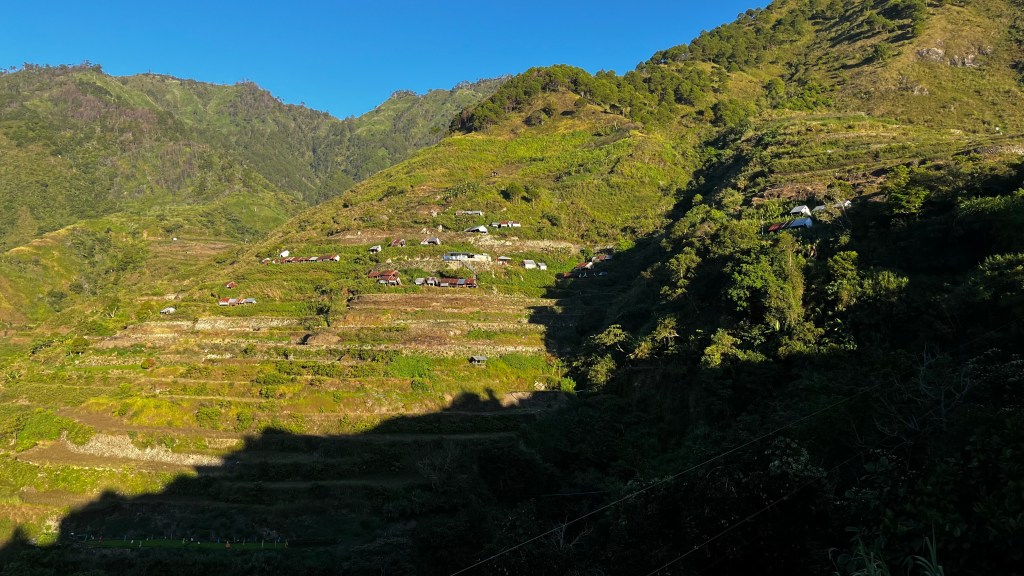
Twelve hours on the road from Manila – with three or four of those spent on passing through tight zig-zag roads, no lamp posts, passing by the side of the mountain that has evidentiary history of landslides and potential for danger. That’s what I had to experience before I could even reach the Buscalan village in Tinglayan, Kalinga. However, with the knowledge that I’d be able to get a tattoo from Apo Whang-Od, the world’s oldest living tattoo artist, I just knew that everything was worth the trip.
I’d consider this as the second time that I’ve faced my fears, ignored my doubts, and travelled to a place I haven’t been before. A year ago, I’d always wanted to go to a place that will ideally give me peace, or somewhere I could ignore all of my problems and responsibilities, and just have fun. Now, I wanted to go somewhere that is purely solemn, where I can connect with unadulterated culture, where I can transmute all of my energies to something blank.
It’s been a long time since I started thinking of going to Buscalan – even before I started working and hustling. However, I had an internal dilemma. How do I draw the line between going there because of the noise and going there because I want to be deep into my spirituality? Is going there for a few days enough? I had to find the silver lining and go there by myself.
This reel captures fragments of that experience – fog drifting past rooftops, locals sharing stories over tin cups of coffee, and the anticipation that builds before a traditional hand-tapped tattoo.
For anyone planning their first trip to Buscalan, know that it’s not just a destination. It’s a cultural journey that stays with you long after you leave.
- The Call of Buscalan: Why I Chose to Get a Kalinga Tattoo from Whang-Od
- The Road to Buscalan: A Travel Experience Through the Cordillera Mountains
- First Impressions: Experiencing the Culture and Everyday Life in Buscalan Village
- The Tattoo Session and Reflections: My Experience Getting a Kalinga Tattoo from Whang-Od and Its Deeper Meaning
- Beyond the Ink: Embracing the Responsibility of Wearing a Kalinga Tattoo
The Call of Buscalan: Why I Chose to Get a Kalinga Tattoo from Whang-Od
Getting a tattoo is often seen as an act of self-expression, rebellion, or personal storytelling. But for someone like me, a spiritual seeker navigating the complexities of modern life, it became a deeply intentional decision. Buscalan Village, home to Apo Whang-Od, the world-renowned mambabatok (traditional tattoo artist), called to me not only as a traveler but as someone yearning for connection: to culture, heritage, and a lineage of resilience.
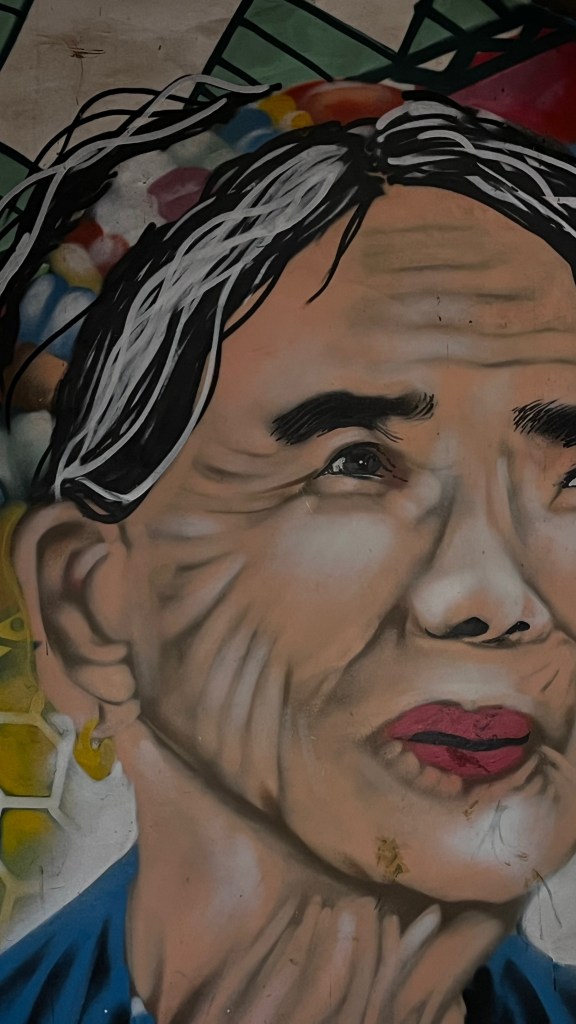
In many cultures, tattoos hold spiritual significance. For the indigenous Kalinga people, batok tattoos are far more than body art; they are rites of passage, symbols of strength, and markers of identity. Traditionally, Kalinga warriors earned their tattoos through acts of bravery in battle. Women, too, bore intricate patterns to signify beauty, social status, and spiritual protection. To the untrained eye, these tattoos may appear as mere adornments. Similarly, receiving a tattoo in today’s world can be misjudged as an attempt to gain personality or clout. However, for those who understand the cultural weight of these markings, the experience is far deeper.
Each pattern tells a story. From sacred geometric shapes to symbolic representations of nature, Kalinga tattoos carry the spirits of ancestors and the essence of the land. The permanence of the ink speaks to the enduring strength of the wearer and their community. Receiving a tattoo was not a fleeting act; it was a declaration of belonging and resilience.
While I was aware of the rich cultural significance of Kalinga tattoos, the act of getting one was not just about honoring tradition. I wanted to recognize something for myself. In the middle of balancing responsibilities, financial pressures, and societal expectations, I desired a moment that was solely mine. Despite participating in rallies and confronting the effects of neocolonialism and historical revisionism, I longed for something tangible to symbolize this personal commitment. Traveling to Buscalan and receiving a tattoo from Whang-Od allowed me to carve out this space for myself.
The scars of colonialism are still etched into the fabric of the Philippines. Western influence and historical revisionism have marginalized indigenous practices, often reducing them to exotic spectacles rather than living traditions. Yet the Kalinga people have held steadfast to their customs. Whang-Od’s story is one of defiance. As a woman in a patriarchal society, she has preserved a practice that was once feared and suppressed. Every tap of the thorn, dipped in charcoal and water, resonates with the stories of those who came before her.
It felt like Buscalan was the only place where the noise of modernity couldn’t reach me. The journey there was arduous, with winding roads and steep inclines that made every kilometer feel like a test of patience. But the anticipation of meeting Whang-Od and witnessing the tradition she carried kept me going. The mist that clung to the mountains, the sound of roosters echoing through the valley, and the warmth of the villagers created a sense of grounding I didn’t know I needed.
To witness Whang-Od’s presence is to confront the contradictions of our history. She is a reminder that while colonial forces attempted to fracture our identity, the spirit of our people remains intact. Visiting Buscalan was not only a pilgrimage to receive a tattoo; it was a conscious act of remembrance, a step toward reclaiming the pride that colonialism tried to take away.
Unlike the elaborate designs traditionally bestowed upon Kalinga warriors and women, Whang-Od’s signature tattoo is simple yet profound. Three dots, placed in a linear formation, symbolize the artist’s lineage. It is a mark that represents not just her craftsmanship but the continuity of a sacred tradition. The simplicity of the three-dot tattoo belies its significance. It is a tribute to Whang-Od’s role as the last traditional mambabatok and her commitment to passing down her knowledge to the younger generation. Each recipient of the three dots becomes a carrier of her legacy, forever linked to the history and resilience of the Kalinga people.
For me, receiving the three dots was not about aesthetic appeal. It was an acknowledgment of lineage, not my own by blood, but one I chose to honor. It was a way of saying, I see you. I remember. I will carry this forward. To bear this mark is to shoulder the responsibility of understanding its meaning and respecting the stories it represents.
Traveling to Buscalan was more than a physical journey; it was a symbolic one. As someone navigating the pressures of financial responsibilities, societal expectations, and the weight of family obligations, I wanted to break free from the invisible tattoos of inherited trauma and limiting beliefs. The act of receiving a tattoo from Whang-Od felt like shedding layers, a silent rebellion against the generational patterns that no longer served me.
The cultural wounds inflicted by colonization are often mirrored in our personal lives. Many of us carry generational burdens, unspoken expectations, and cycles of sacrifice. But healing does not come from simply rejecting these narratives. It comes from understanding them, honoring the resilience of those who came before us, and choosing which stories to continue.
In that remote mountain village, surrounded by mist and echoes of ancient chants, I chose to mark my body with a symbol of resilience. The three dots were not just ink; they were a commitment to honor heritage, to embrace growth, and to carry forward the stories that colonialism could not erase.
My call to Buscalan was answered. And now, it lives on my skin, a reminder that even amidst the noise of the modern world, some stories are too sacred to forget.
The Road to Buscalan: A Travel Experience Through the Cordillera Mountains
Reaching Buscalan from Manila is not for the faint of heart. It is a journey that demands patience, endurance, and an unwavering sense of purpose. For me, that purpose was clear. I was heading to the home of Apo Whang-Od to receive a tattoo that carried centuries of tradition. But before I could experience the rhythmic tapping of the thorn against my skin, I had to navigate the serpentine roads of the Cordillera Mountains.
I chose to go with FD Travel and Tours. Having an organized group removed the stress of planning, though it did little to ease the anticipation building inside me. The ride itself was relentless. Twelve hours on the road, with the occasional flicker of city lights fading into the shadowy vastness of the countryside. We had two major stops: the first in Pangasinan, where the sun still lingered, offering warmth and a brief respite. I stretched my legs, sipped on a bottle of water, and tried to suppress the nerves that fluttered beneath my excitement.
The second stop wasn’t particularly special. It was a familiar sight — a brightly lit 7-Eleven, standing in stark contrast to the deepening night. Still, it served its purpose. We stocked up on snacks, drinks, and other essentials, uncertain about what we’d find in the village. The thought of being unprepared in such a remote place wasn’t something I wanted to risk.
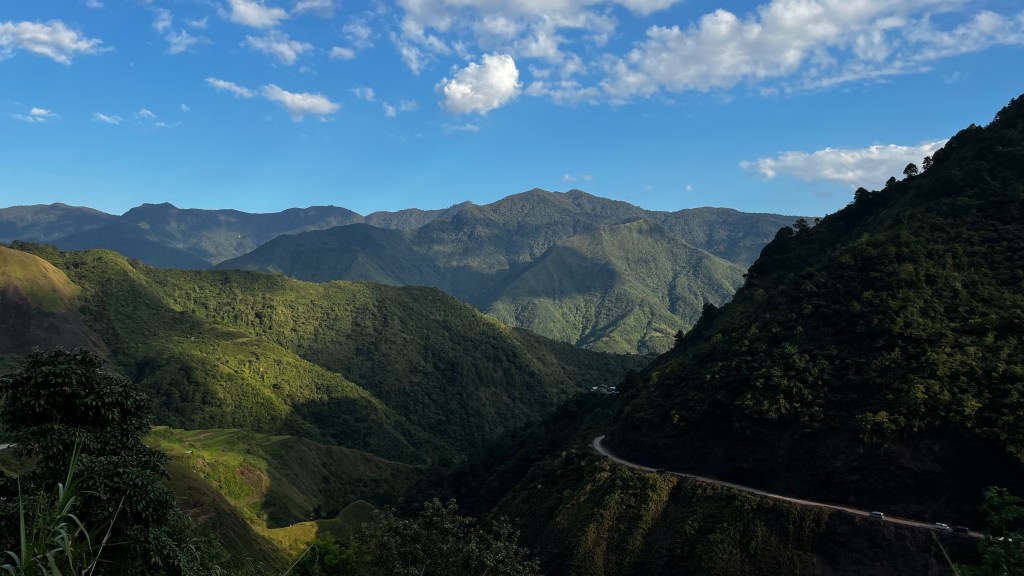
After that, the landscape shifted dramatically. Just before entering the Mountain Province, we stood on the edge of a vast expanse of mist and ridges. The air was noticeably cooler. It was as if the mountains themselves announced our arrival. At this point, the road narrowed and twisted. Gone were the flat highways, replaced by zigzagging paths that hugged the sides of cliffs. Every sharp turn revealed either a breathtaking view of mist-covered mountains or a sobering reminder of landslides that once carved through the earth.
What struck me most was the silence. There were no towering billboards or blaring horns, just the hum of the engine and the occasional rustle of trees. It was beautiful, but unsettling. With no phone signal, I had no choice but to sit with my thoughts. For hours, I watched the sky deepen into navy blue, the headlights illuminating only a small piece of the road ahead.
The looming cliffs and scattered landslides served as reminders of nature’s unpredictability. Every trip to Buscalan carries an element of risk, but for the locals who traverse these roads regularly, it is simply a part of life. The resilience of the people here mirrored the resilience of the mountains themselves.
We reached Buscalan around midnight. The village was still tucked in darkness, save for the soft glow of distant homes. The cold was immediate and biting. Even with a jacket layered over my t-shirt, I could feel the chill creeping into my bones. Every breath formed wispy clouds in the air. It was a far cry from the humidity of Manila.
Our decision to arrive early was deliberate. Whang-Od’s popularity had grown immensely, with more people making the pilgrimage to receive her signature three-dot tattoo. Even though we were the first group to arrive that day, we were informed that a backlog of people from the previous day would be served before us. It was a humbling reminder that, despite planning and preparation, time in Buscalan moved at its own pace. No amount of urgency could change that.
But the wait didn’t bother me. Getting there first was never about cutting in line or racing to the front. It was about giving myself the best chance to receive something meaningful. If that meant waiting, so be it. The anticipation only made the experience more precious.
At various checkpoints along the way, we had signed our names in the visitors’ logbooks. Each checkpoint served not just as a safety measure but as a reminder that we were guests in this land. It felt like a respectful acknowledgment of our presence — and of the privilege it was to be here.
Essential Travel Tips for Buscalan:
- Start early. Arriving at Buscalan in the early hours gives you a better chance of securing a spot with Whang-Od. However, even being first doesn’t guarantee an immediate session due to possible backlogs.
- Prepare for the cold. Temperatures in the Mountain Province can drop significantly at night. A thick jacket, layered clothing, and warm socks are essential.
- Expect no signal. Most of the Cordillera region has little to no cell reception. Download offline maps and inform loved ones of your plans ahead of time.
- Carry cash. There are no ATMs in Buscalan, and digital payments are not widely accepted. Bring enough cash for accommodation, food, and the tattoo session.
- Be patient. Delays are common, and plans may shift. Embrace the slower pace of life here. The experience is worth it.
- Respect local customs. You are stepping into a community with deep cultural roots. Greet locals respectfully, ask before taking photos, and be mindful of your behavior.
- Pack light but smart. A sturdy backpack, comfortable shoes, and essentials like water, snacks, and a flashlight will make your trip smoother.
The road to Buscalan was tough, but every twist and turn felt purposeful. With the mountains towering around me, I realized the journey wasn’t just a physical one. It was a shedding of the familiar, a slow surrender to the unknown. And as the first light of dawn crept over the peaks, painting the village in shades of gold and green, I knew that whatever awaited me in Buscalan would be worth every mile.
First Impressions: Experiencing the Culture and Everyday Life in Buscalan Village
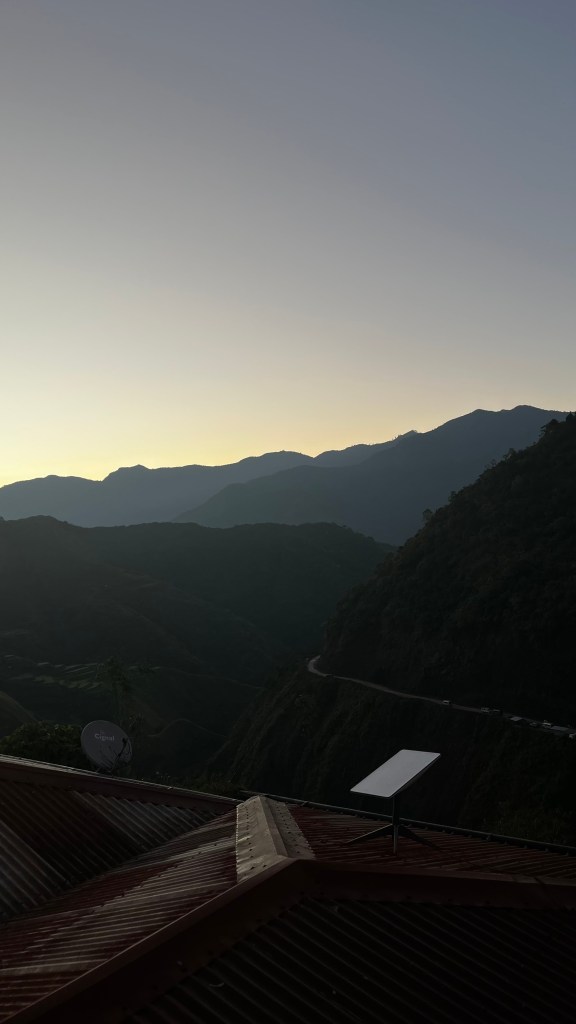
The trek to Buscalan Village was something I had mentally prepared for, but no amount of preparation could match the actual experience. After the long hours on the road, we finally arrived at the foot of the mountain, greeted by the towering peaks and a cool breeze that swept through the valley. From there, it was time to hike. Traditionally, the journey would have taken an hour or more, but thanks to the recently constructed bridge, it was now just a 30-minute climb. Not that it made it much easier.
I wasn’t as physically prepared as I thought. Every step reminded me how steep the path was, and my breaths grew heavier with each upward push. But with the sun rising and the view opening up around me, there was no room for complaints. The mountains stretched endlessly, with green terraces carved into their sides. The air was crisp, and the silence was interrupted only by the occasional rooster crowing from afar.

As we made our way up, locals passed by with ease, carrying supplies or leading animals along the familiar trails. Every time we encountered someone, they greeted us with a polite “Good morning.” It felt like second nature to them, a small gesture that made the path feel less daunting. After a while, we started offering the first greetings, mirroring the warmth they showed us.
When we arrived, we were welcomed at Grace’s house. Grace, a direct descendant of Whang-Od, wasn’t there since she had been invited to Manila to do tattoos. Instead, it was her mother and our coordinator who greeted us. They immediately made us feel at home, offering us coffee that was hard to resist. The coffee had the perfect balance of sweetness and strength, warming us up from the chilly mountain air. I lost count of how many cups I had, but each one tasted just as good as the last.
The house itself was a living testament to the many travelers who had come before us. The exterior was filled with markings from tourists who wanted to leave a piece of themselves behind. Scribbled names, dates, and short messages covered the walls, like a collage of memories. Inside, photographs of past visitors lined the space. What caught my eye the most were the countless 2×2 photos — small, standard portrait shots that people had left behind. Some were simple snapshots of smiling faces, while others were actual ID photos, which made me chuckle. There was something oddly charming about seeing these formal images displayed in such a personal space. It was as if people wanted to say, “I was here” in the most practical way possible.
We weren’t alone on this journey. Our group was a mix of people from different walks of life. There were teachers, remote workers who had simply taken a break from their laptops, and even a couple who had traveled all the way from Mindanao. Their story stood out to me. They had visited Buscalan before in 2020, but for some reason — one that I can’t quite recall — they hadn’t gotten a tattoo from Whang-Od. Instead, they left with only a photograph with her and a three-dot tattoo from Grace. But they made a pact. One day, they would return and receive the three dots from all three — Whang-Od, her niece, and her grandniece. And here they were, years later, following through on that promise.
At first, they were a bit shy, exchanging only a few words during the hike. But once we settled into Grace’s house, the atmosphere shifted. As we sipped our cups of coffee, conversations started to flow. We talked about the journey, the anticipation of getting a tattoo, and even shared a few laughs about how out of breath we had all been from the hike. Moments like these reminded me how shared experiences have a way of breaking down walls.
Despite being deep in the mountains, staying connected wasn’t an issue. Starlink WiFi was available, something we had been informed about ahead of time. While it felt strange at first to have a stable connection in such a remote setting, it came in handy. I messaged my mom to let her know I’d arrived safely and even managed to order her some fast food while she was home alone. It was a small thing, but it reminded me how far technology had come.
Still, what left the biggest impression on me wasn’t the WiFi or the coffee. It was the people. The Kalinga people have a quiet pride about their heritage, and it’s evident in how they go about their day. Life in Buscalan is not curated for visitors. The routines continue, the conversations flow, and the laughter carries through the air. The villagers welcomed us, not because we were tourists, but because hospitality is simply woven into their way of life.
In the middle of all this, I couldn’t help but think about how the village existed both as a destination for people like me and as a home for those who lived there. I wasn’t just an observer; I was a guest. And while I was only there for a short time, that realization made me approach everything with a little more care and respect.
Buscalan wasn’t trying to impress anyone. It didn’t have to. It was a place that thrived on authenticity. And before the tattooing even began, I already felt like the experience had left its mark on me.
The Tattoo Session and Reflections: My Experience Getting a Kalinga Tattoo from Whang-Od and Its Deeper Meaning

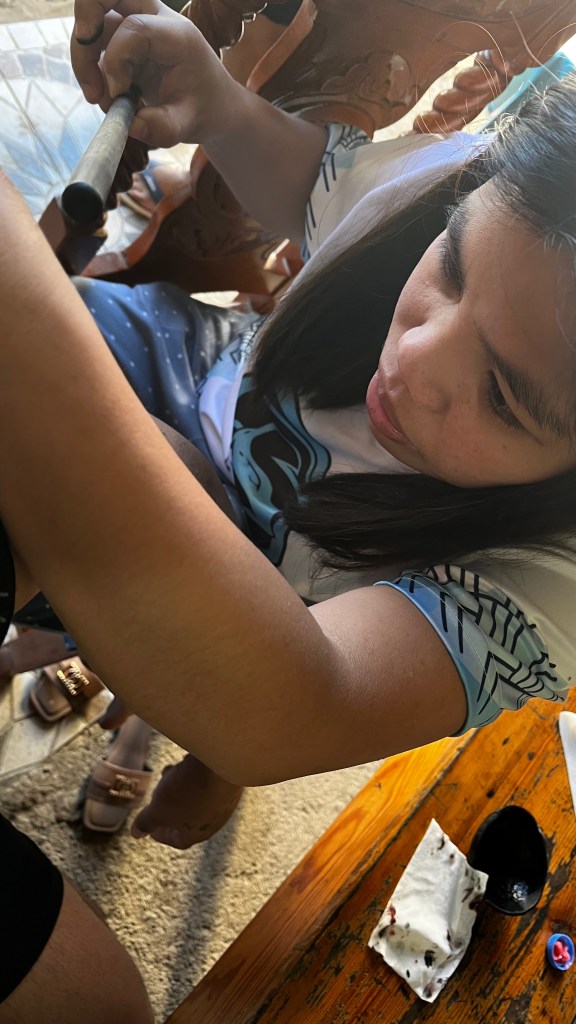

The anticipation built steadily throughout my stay in Buscalan. Getting a tattoo from Whang-Od was the highlight, the very reason I had made the long journey. But by the time we arrived, it became clear that her schedule was tight. Due to her age, her tattooing pace had naturally slowed down, and there was already a backlog of visitors from the previous day. Knowing this, I decided to embrace the experience fully, not just as a recipient of Whang-Od’s signature three dots but also by getting a traditional design tattoo from one of the local artists.
The local artists of Buscalan, trained by Whang-Od and her successors, continue to preserve the ancient art of batok. It felt right to honor their craftsmanship and dedication. I chose two designs: the traveler and the serpent eagle. The traveler design resonated deeply with me. It symbolized the path I had taken — not just the physical miles from Manila to Kalinga, but the metaphorical journey of self-discovery. The serpent eagle, known as a guardian spirit, represented protection. With everything I had been navigating in my personal and professional life, this symbol of resilience and strength felt like a grounding presence I could carry forward.
The tattoo session itself was a reflection of the tradition’s simplicity and significance. Instead of modern tattoo machines, the artists used a bamboo stick with a pomelo thorn attached at the end, which served as the needle. This tool, dipped in a mixture of charcoal and water, created the ink. Before starting, we had the option to purchase the stick and thorn used during the session for PHP 150, a small price for a piece of the experience to take home. There was something humbling about the process — no buzz of machines, just the rhythmic tapping of the bamboo against my skin.
Maribel, the artist who tattooed me, took immense care in every tap. While the designs I chose were from the traditional set, she added personal touches that made them uniquely mine. Each line carried intention, and the slight variations in the patterns reminded me that this was no factory-made print. It was a living piece of art. Surprisingly, the pain was minimal. The gentle, consistent tapping was more relaxing than I had expected. I’ve heard many people brace themselves for the sting of a tattoo, but for me, the experience was almost meditative.
When it was finally time to receive the three dots from Whang-Od, the weight of the moment settled in. She is a living legend, the last of the traditional mambabatok of her generation. Her presence was unassuming yet commanding, and the warmth in her eyes spoke of years of stories, struggles, and resilience. Despite her frailty, she held the bamboo stick with practiced hands. I could feel every deliberate tap. The sensation wasn’t unbearable, but it was undeniably raw. The sound of the stick striking against my skin became a rhythmic reminder of the centuries-old tradition being carried forward.
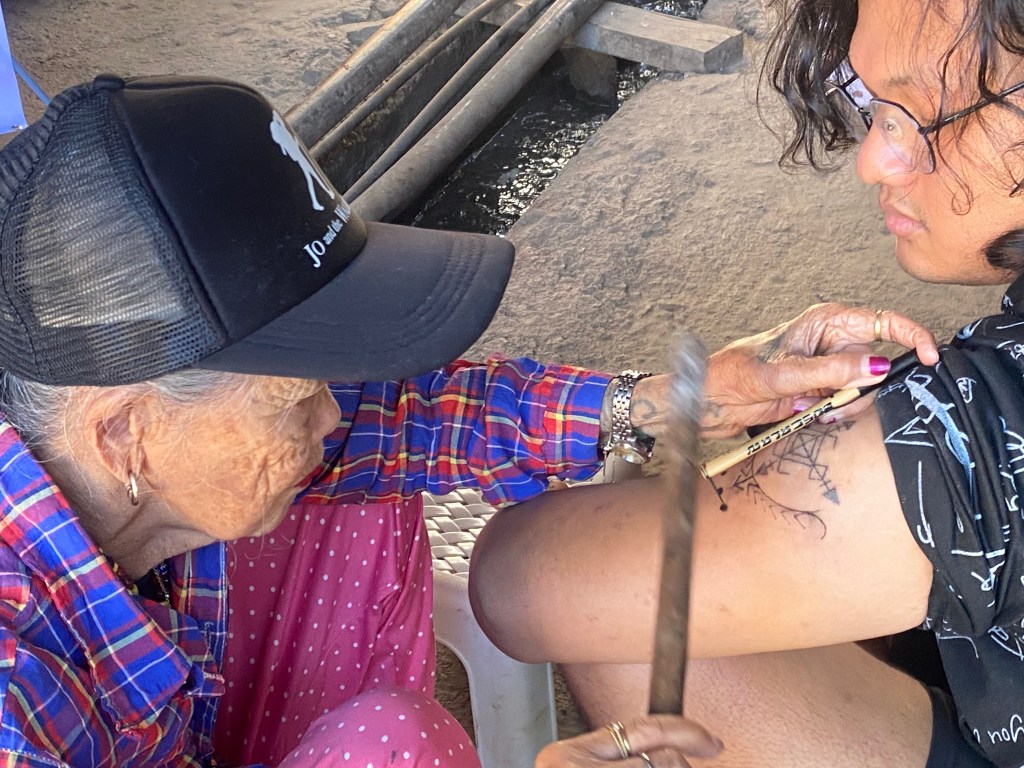
She smiled when she saw the tattoos Maribel had completed. There was a sense of pride in knowing that the younger generation was keeping the practice alive. Even though I had opted for a modern experience by getting customized tattoos, the significance wasn’t lost. The three dots she marked on me, aligned in a linear formation, were a direct representation of her lineage. It was as though she had inscribed a piece of her own story onto my skin.
But perhaps what struck me most about the experience was how the entire process reflected the communal spirit of Buscalan. Unlike in modern tattoo parlors, where the artist sets their own rates, the system in Buscalan is different. Whang-Od has her own fixed fee of PHP 300 for the three-dot tattoo, while the local artists have their own rates depending on the size and complexity of the design. Yet, all the funds are collected and redistributed within the community. The income doesn’t just support the artists but benefits the entire village. I even heard that a portion goes toward the education of local children. Some teenagers walk long distances to attend high school, and the tattooing tradition has helped fund opportunities that might otherwise be out of reach.
It was a reminder that traditions like these are not just preserved for nostalgia. They are living, evolving practices that sustain a community’s livelihood. Every visitor who comes to Buscalan seeking a piece of its heritage indirectly supports its future. Whang-Od’s legacy isn’t just about the ink she imprints on others. It’s about how she has safeguarded the spirit of the Kalinga people through her art.
Reflecting on the experience, the tattoos were more than just body art. They were symbols of growth, resilience, and connection. The traveler design spoke of my willingness to step out of my comfort zone. The serpent eagle embodied the strength I hoped to carry in the face of challenges. And the three dots — they were a quiet acknowledgment of the history I was now a part of.
It wasn’t about claiming an identity that wasn’t mine. I didn’t come to Buscalan to romanticize culture or chase clout. I came to acknowledge, to witness, and to carry a small but meaningful reminder of resilience and tradition. To be a part of that, even in the smallest way, felt like an act of remembrance — both for the culture and for myself.
The echoes of the bamboo tapping stayed with me long after I left the village. And whenever I catch a glimpse of my tattoos, I am reminded of that journey — the mountains I climbed, the people I met, and the stories I now carry with me.
Beyond the Ink: Embracing the Responsibility of Wearing a Kalinga Tattoo
As I traced my fingers over the freshly marked dots on my arm, a thought lingered in my mind — what happens when Whang-Od is no longer with us? It’s a question that feels inevitable, yet impossible to answer. She has become a symbol of resilience, heritage, and cultural pride, but the future of batok doesn’t rest solely on her shoulders. It also rests on those of us who have been entrusted with a piece of her legacy.

Getting a tattoo from Whang-Od was never about the ink alone. It wasn’t a fleeting decision made for aesthetic reasons or for the sake of novelty. The marks I now wear carry the weight of centuries. They are living symbols of stories that colonialism tried to erase. And while I am not part of the Kalinga community, I now share a responsibility — a commitment to remember, respect, and honor what this tattoo represents.
The reality is that the batok tradition is evolving. While Whang-Od remains the most well-known mambabatok, she has passed down her knowledge to her grandnieces and other local artists. Their hands will continue the legacy, ensuring that the stories etched in ink are never forgotten. But the survival of the tradition is not solely dependent on them. It’s also shaped by how we, as visitors and recipients, choose to carry the experience forward.
Supporting the village of Buscalan doesn’t end when the tattoo is done. The funds from each tattoo session are circulated throughout the community, helping sustain their way of life. Knowing that the money I contributed went toward the village’s development, the children’s education, and the preservation of the land adds an even deeper significance to the experience. It’s a reminder that this tradition isn’t stagnant; it continues to nourish the community that keeps it alive.
But beyond the financial support, the real responsibility lies in how I choose to talk about and represent my tattoo. Wearing a Kalinga tattoo means becoming a storyteller in my own right. It means sharing the truth of the tradition, rejecting the commercialization of cultural heritage, and amplifying the voices of the Kalinga people. It’s a reminder that these markings are not trends to be appropriated — they are symbols of resilience that deserve reverence and understanding.
There’s a certain humility that comes with wearing a tattoo like this. It’s not a badge of ownership, but rather a reflection of the interconnectedness we all share. Whang-Od’s legacy serves as a powerful reminder that the spirit of a people cannot be erased. Even in a world that often prioritizes the new over the old, traditions like batok persist. And as I carry these marks with me, I carry that persistence too.
While I may not know what the future holds for Buscalan or for the Kalinga tattoo tradition, I do know this — I will continue to support, listen, and remember. The tattoo is permanent, but so is the responsibility it carries. And as the stories of the mountains, the people, and the hands that marked me linger in my memory, I am reminded that some traditions are simply too sacred to forget.
It’s easy to romanticize the experience. The mist-covered mountains, the rhythmic tapping of the thorn against skin, the stories whispered through patterns of ink. But once the tattoo is done, the question remains: how do we honor what we’ve been given? The truth is, getting a traditional Kalinga tattoo is not a claim to culture. It’s not a badge of authenticity. It’s a responsibility.
Travelers often arrive in Buscalan with their own expectations, sometimes wearing their perceived enlightenment like a badge. But this place, with its stories and traditions, is not a stage for our self-discovery. It’s a living, breathing community that has graciously opened its doors. And as visitors, we don’t get to dictate the terms of that exchange. We are the ones who must adapt, listen, and learn.
Respect isn’t just about paying the tattoo fee or snapping a photo with Whang-Od. It’s about recognizing the emotional and cultural weight of the tradition. It’s about understanding that the people of Buscalan are not there for our entertainment. They are caretakers of a legacy that has survived generations of erasure. To truly honor that, we have to move beyond passive admiration. We have to commit to being respectful, intentional, and conscious of the impact we leave behind.
That means being mindful of how we speak about our experience. It means not reducing the village to a picturesque backdrop for social media, but acknowledging the resilience and strength that sustains it. It means making space for the voices of the locals, rather than centering our own narratives.
Respect also looks like taking care of the environment — recognizing that the mountains that surround Buscalan are not just scenery, but sacred landscapes woven into the identity of the Kalinga people. It means leaving no trace, being mindful of waste, and treating the land with the reverence it deserves.
But perhaps the most meaningful form of respect is how we treat the people. Tourism, even when well-intentioned, has the power to overwhelm communities. It can strip away authenticity and turn cultural traditions into spectacles. In Buscalan, there is no illusion of luxury. What you’ll find instead is sincerity — in the way the locals greet you, the warmth of a shared cup of coffee, and the stories told through the ink on your skin. Reciprocating that sincerity means supporting the community, not just through money, but through kindness, curiosity, and genuine connection.
When Whang-Od’s time on this earth ends, the tradition she has carried for nearly a century will endure. But the way it endures depends on all of us. By walking into Buscalan with humility and leaving with gratitude, we help ensure that the stories, the strength, and the spirit of the Kalinga people continue to thrive.
The three dots on my arm are a reminder of that responsibility — a silent promise to remember not just the experience of receiving the tattoo, but the people and the place that made it possible. And that promise, like the ink beneath my skin, is one I intend to keep.
Getting a hand-tapped tattoo in the Philippines – especially here in Whang-Od’s village – isn’t just about the ink. It’s about stepping into a legacy, meeting the mambabatok who keep the practice alive, and understanding why this sacred ritual continues to draw people from across the world.
For anyone thinking of their first time in Buscalan, know this: the mountain may give you a mark, but it will also give you a mirror.
If you found this piece insightful, consider supporting my work – every contribution helps fuel more in-depth stories, reflections, and meaningful content. Support here!
